Pessentheiner Ariane R, Huber Katharina, Pelzmann Helmut J, Prokesch Andreas, Radner Franz P W, Wolinski Heimo, Lindroos-Christensen Josefine, Hoefler Gerald, Rülicke Thomas, Birner-Gruenberger Ruth, Bilban Martin, Bogner-Strauss Juliane G
Institute of Biochemistry, Graz University of Technology, Graz, Austria.
Institute of Cell Biology, Histology, and Embryology, Medical University of Graz, Graz, Austria.
FASEB J. 2017 Sep;31(9):4088-4103. doi: 10.1096/fj.201601337R. Epub 2017 May 30.
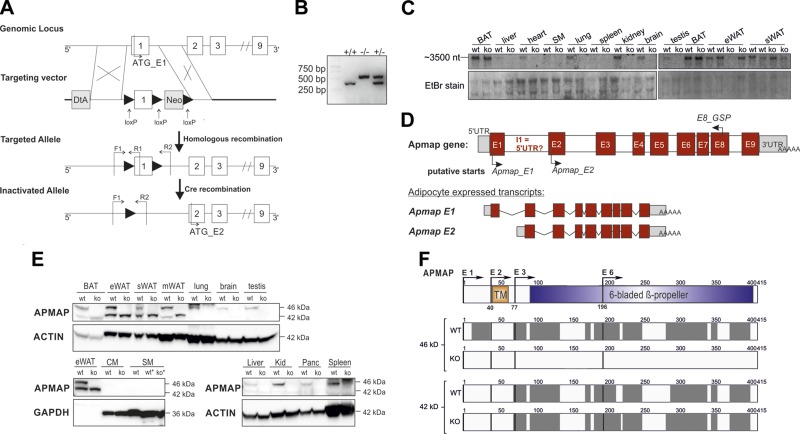
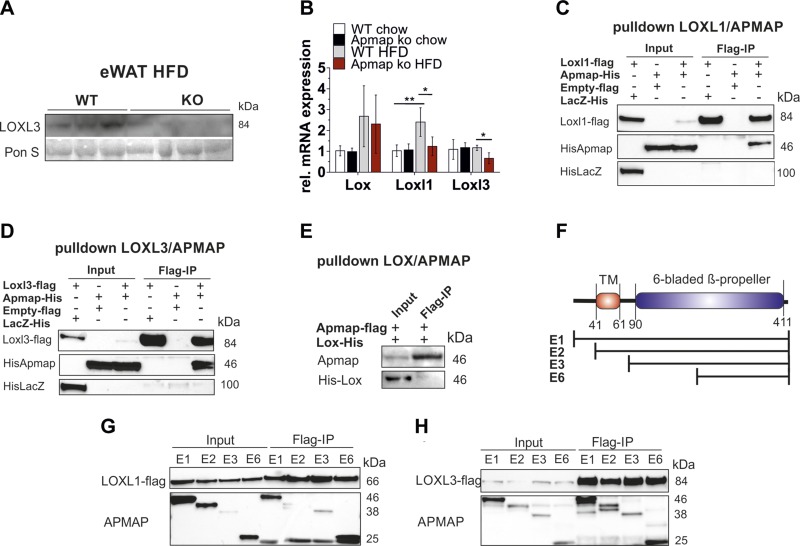
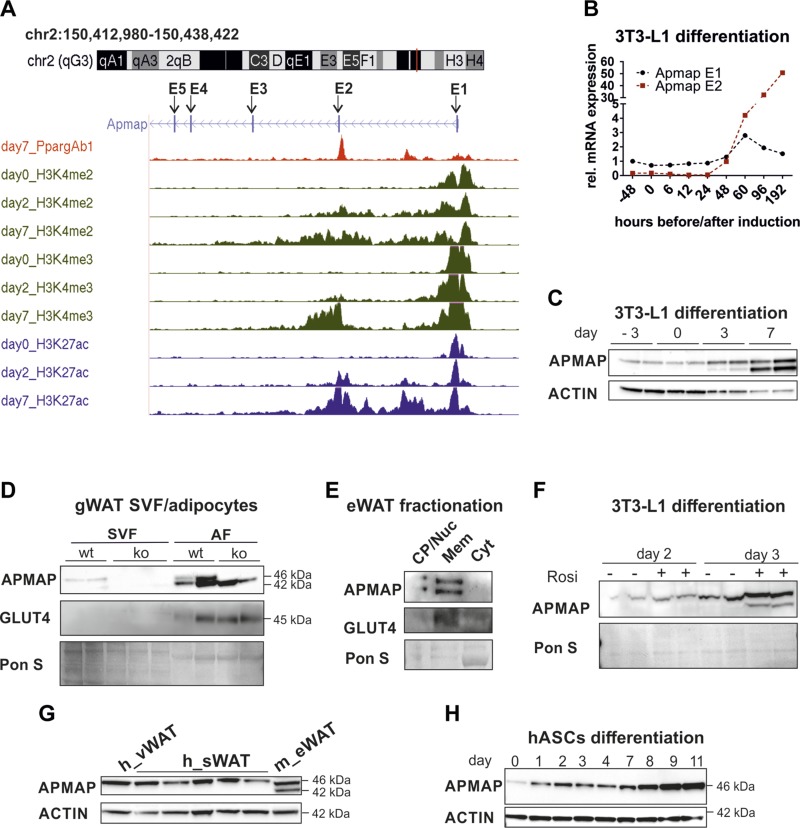
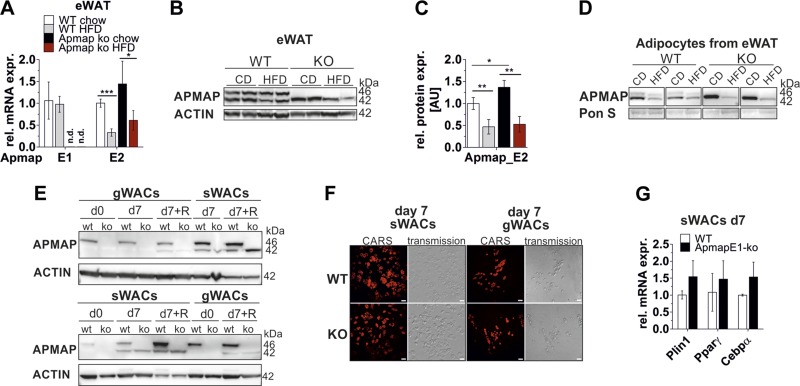
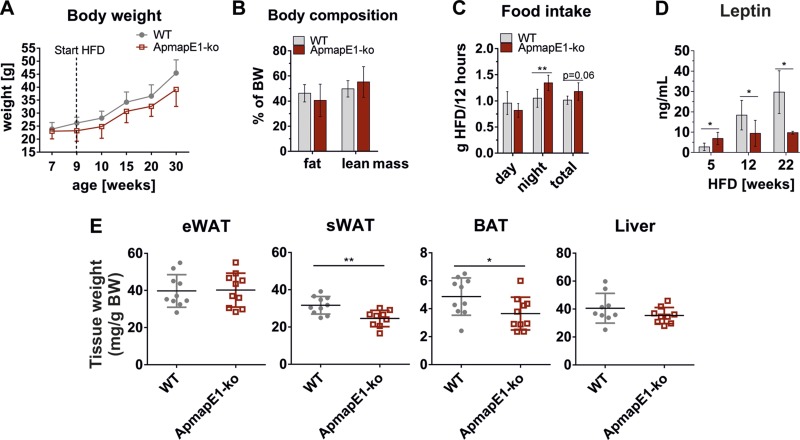
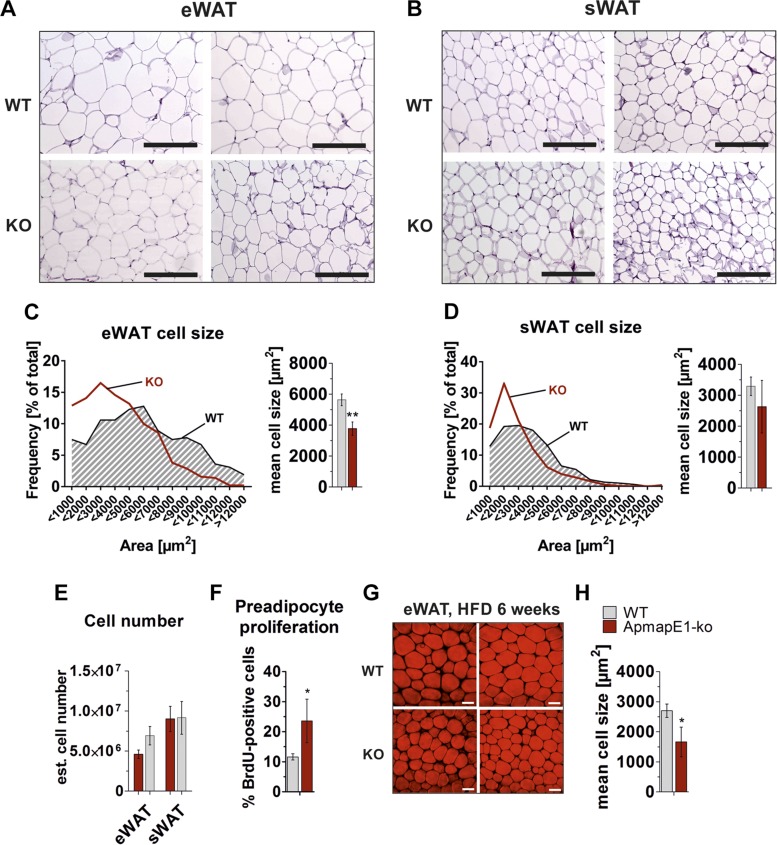
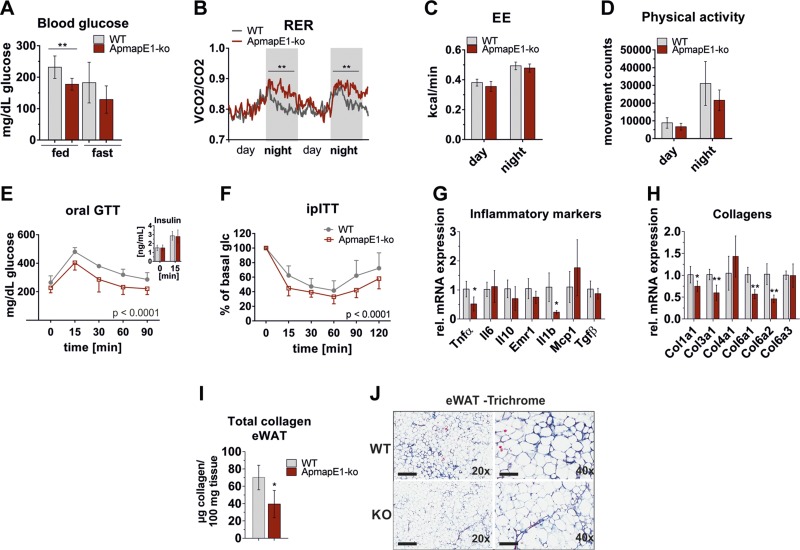
Adipocyte plasma membrane-associated protein (APMAP) has been described as an adipogenic factor in 3T3-L1 cells with unknown biochemical function; we therefore aimed to investigate the physiologic function of APMAP We generated Apmapknockout mice and challenged them with an obesogenic diet to investigate their metabolic phenotype. We identified a novel truncated adipocyte-specific isoform of APMAP in mice that is produced by alternative transcription. Mice lacking the full-length APMAP protein, the only isoform that is expressed in humans, have an improved metabolic phenotype upon diet-induced obesity, indicated by enhanced insulin sensitivity, preserved glucose tolerance, increased respiratory exchange ratio, decreased inflammatory marker gene expression, and reduced adipocyte size. At the molecular level, APMAP interacts with the extracellular collagen cross-linking matrix proteins lysyl oxidase-like 1 and 3. On a high-fat diet, the expression of lysyl oxidase-like 1 and 3 is strongly decreased in Apmap-knockout mice, paralleled by reduced expression of profibrotic collagens and total collagen content in epididymal white adipose tissue, indicating decreased fibrotic potential. Together, our data suggest that APMAP is a novel regulator of extracellular matrix components, and establish that APMAP is a potential target to mitigate obesity-associated insulin resistance.-Pessentheiner, A. R., Huber, K., Pelzmann, H. J., Prokesch, A., Radner, F. P. W., Wolinski, H., Lindroos-Christensen, J., Hoefler, G., Rülicke, T., Birner-Gruenberger, R., Bilban, M., Bogner-Strauss, J. G. APMAP interacts with lysyl oxidase-like proteins, and disruption of leads to beneficial visceral adipose tissue expansion.
脂肪细胞质膜相关蛋白(APMAP)在3T3-L1细胞中被描述为一种脂肪生成因子,其生化功能未知;因此,我们旨在研究APMAP的生理功能。我们构建了Apmap基因敲除小鼠,并用致肥胖饮食对它们进行挑战,以研究其代谢表型。我们在小鼠中鉴定出一种新的截短的脂肪细胞特异性APMAP异构体,它是由可变转录产生的。缺乏全长APMAP蛋白(人类中唯一表达的异构体)的小鼠在饮食诱导的肥胖状态下具有改善的代谢表型,表现为胰岛素敏感性增强、葡萄糖耐量保持、呼吸交换率增加、炎症标志物基因表达降低以及脂肪细胞大小减小。在分子水平上,APMAP与细胞外胶原交联基质蛋白赖氨酰氧化酶样蛋白1和3相互作用。在高脂饮食下,Apmap基因敲除小鼠中赖氨酰氧化酶样蛋白1和3的表达强烈降低,同时附睾白色脂肪组织中促纤维化胶原蛋白的表达和总胶原蛋白含量也降低,表明纤维化潜力降低。总之,我们的数据表明APMAP是细胞外基质成分的新型调节因子,并证实APMAP是减轻肥胖相关胰岛素抵抗的潜在靶点。-佩森泰纳,A.R.,胡贝尔,K.,佩尔兹曼,H.J.,普罗凯施,A.,拉德纳,F.P.W.,沃林斯基,H.,林德罗斯 - 克里斯蒂安森,J.,赫夫勒,G.,吕利克,T.,比尔纳 - 格伦贝格尔,R.,比尔班,M.,博格纳 - 施特劳斯,J.G. APMAP与赖氨酰氧化酶样蛋白相互作用,其缺失导致有益的内脏脂肪组织扩张。