Institute of Chemistry and Biochemistry, Free University BerlinBerlin, Germany.
Parasitology Unit, Max Planck Institute for Infection BiologyBerlin, Germany.
Front Cell Infect Microbiol. 2017 May 16;7:183. doi: 10.3389/fcimb.2017.00183. eCollection 2017.
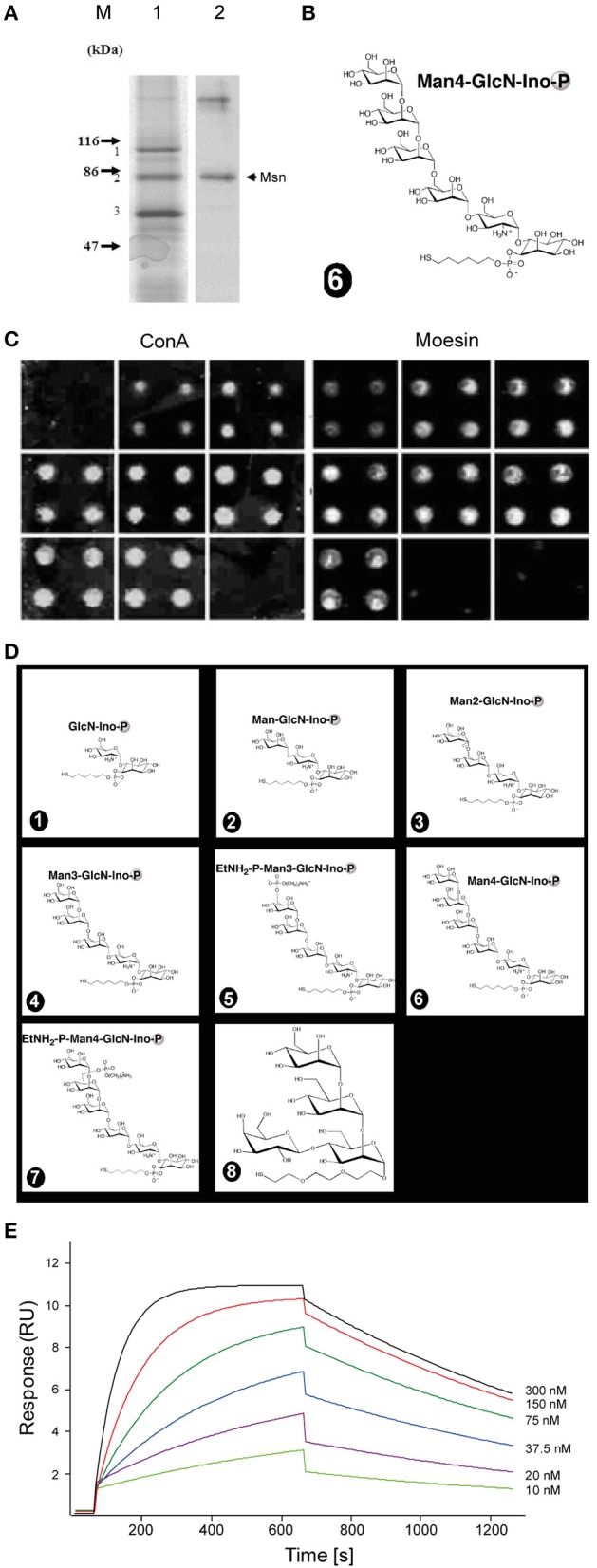
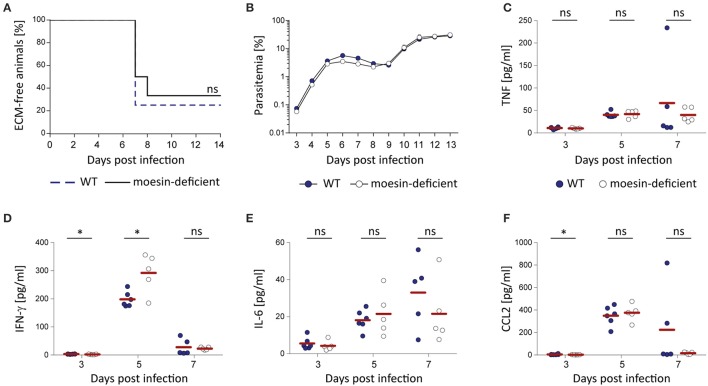
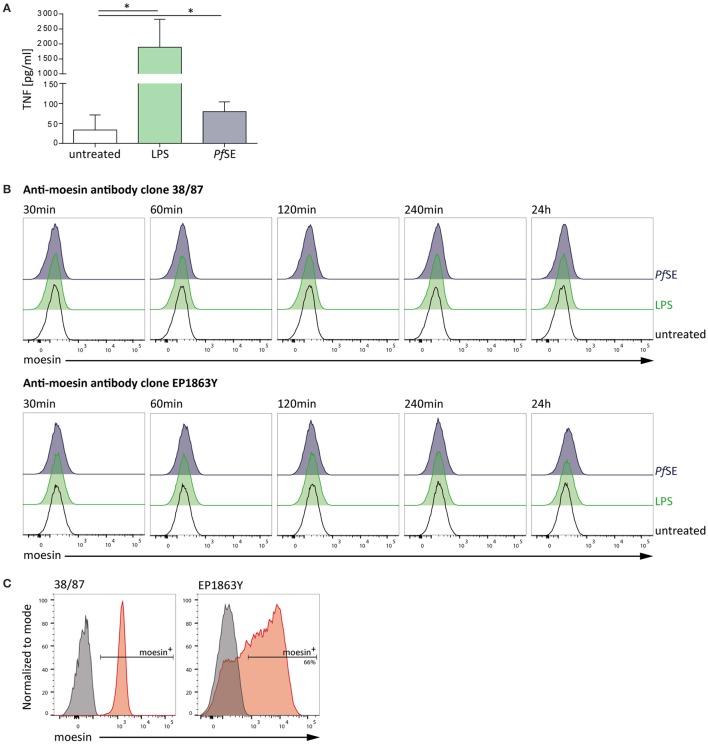
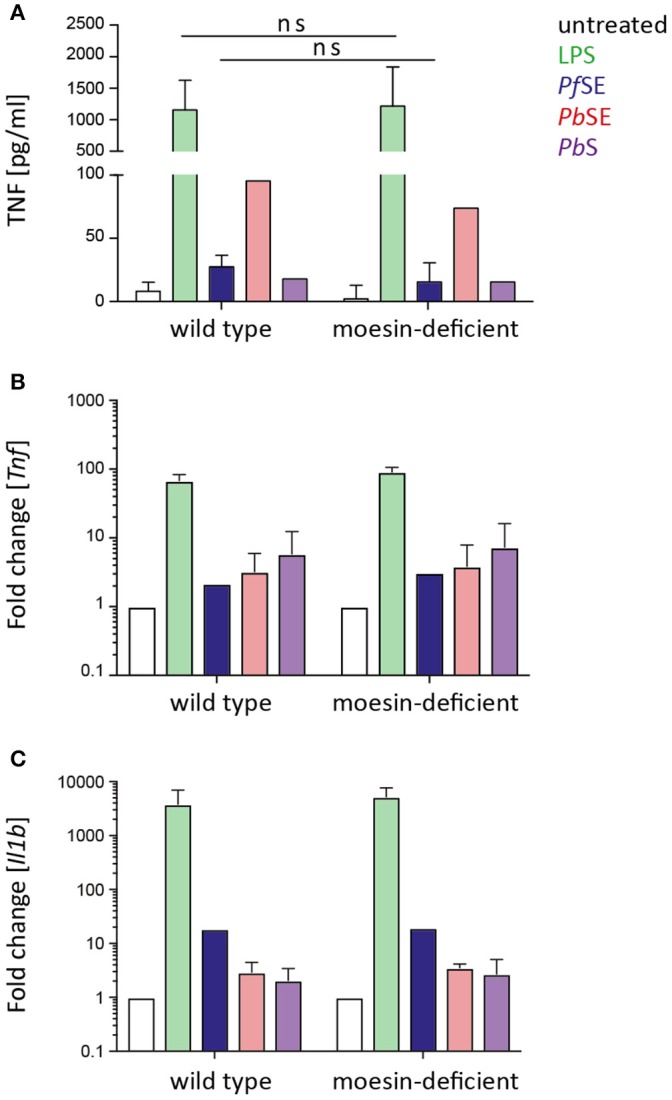
Glycosylphosphatidylinositol (GPI) anchor of origin is considered an important toxin leading to severe malaria pathology through stimulation of pro-inflammatory responses from innate immune cells. Even though the GPI-induced immune response is widely described to be mediated by pattern recognition receptors such as TLR2 and TLR4, previous studies have revealed that these two receptors are dispensable for the development of severe malaria pathology. Therefore, this study aimed at the identification of potential alternative GPI receptors. Herein, we have identified the host protein moesin as an interaction partner of GPI . Given previous reports indicating the relevance of moesin especially in the LPS-mediated induction of pro-inflammatory responses, we have conducted a series of and experiments to address the physiological relevance of the moesin- GPI interaction in the context of malaria pathology. We report here that although moesin and GPI interact , moesin is not critically involved in processes leading to -induced pro-inflammatory immune responses or malaria-associated cerebral pathology.
糖基磷脂酰肌醇(GPI)锚定原点被认为是一种重要的毒素,通过刺激先天免疫细胞的促炎反应导致严重疟疾病理。尽管 GPI 诱导的免疫反应被广泛描述为通过模式识别受体(如 TLR2 和 TLR4)介导,但先前的研究表明,这两种受体对于严重疟疾病理的发展是可有可无的。因此,本研究旨在鉴定潜在的替代 GPI 受体。在此,我们已经确定了宿主蛋白膜突蛋白作为 GPI 的相互作用伙伴。鉴于先前的报告表明膜突蛋白在 LPS 介导的促炎反应诱导中具有相关性,我们进行了一系列 和 实验,以解决疟疾病理背景下膜突蛋白- GPI 相互作用的生理相关性。我们在这里报告,尽管膜突蛋白和 GPI 相互作用,但膜突蛋白在导致 - 诱导的促炎免疫反应或疟疾相关的大脑病理的过程中并不是至关重要的。