Calvert Andrea E, Chalastanis Alexandra, Wu Yongfei, Hurley Lisa A, Kouri Fotini M, Bi Yingtao, Kachman Maureen, May Jasmine L, Bartom Elizabeth, Hua Youjia, Mishra Rama K, Schiltz Gary E, Dubrovskyi Oleksii, Mazar Andrew P, Peter Marcus E, Zheng Hongwu, James C David, Burant Charles F, Chandel Navdeep S, Davuluri Ramana V, Horbinski Craig, Stegh Alexander H
Ken and Ruth Davee Department of Neurology, The Northwestern Brain Tumor Institute, The Robert H. Lurie Comprehensive Cancer Center, Feinberg School of Medicine, International Institute for Nanotechnology, Northwestern University, Chicago, IL 60611, USA.
Division of Health and Biomedical Informatics, Department of Preventive Medicine, The Robert H. Lurie Comprehensive Cancer Center, Feinberg School of Medicine, Northwestern University, Chicago, IL 60611, USA.
Cell Rep. 2017 May 30;19(9):1858-1873. doi: 10.1016/j.celrep.2017.05.014.
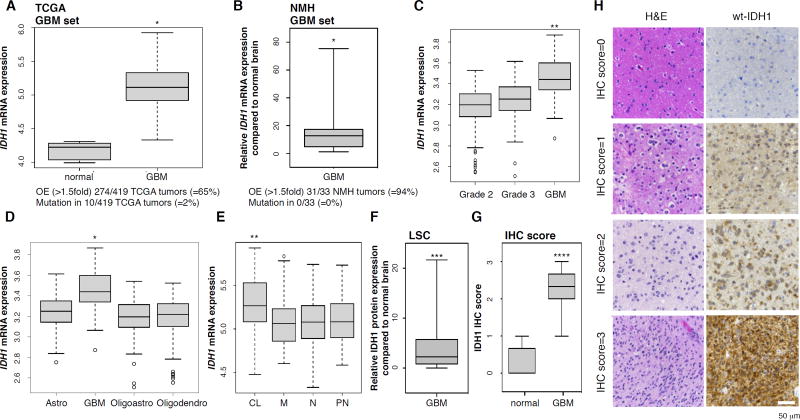
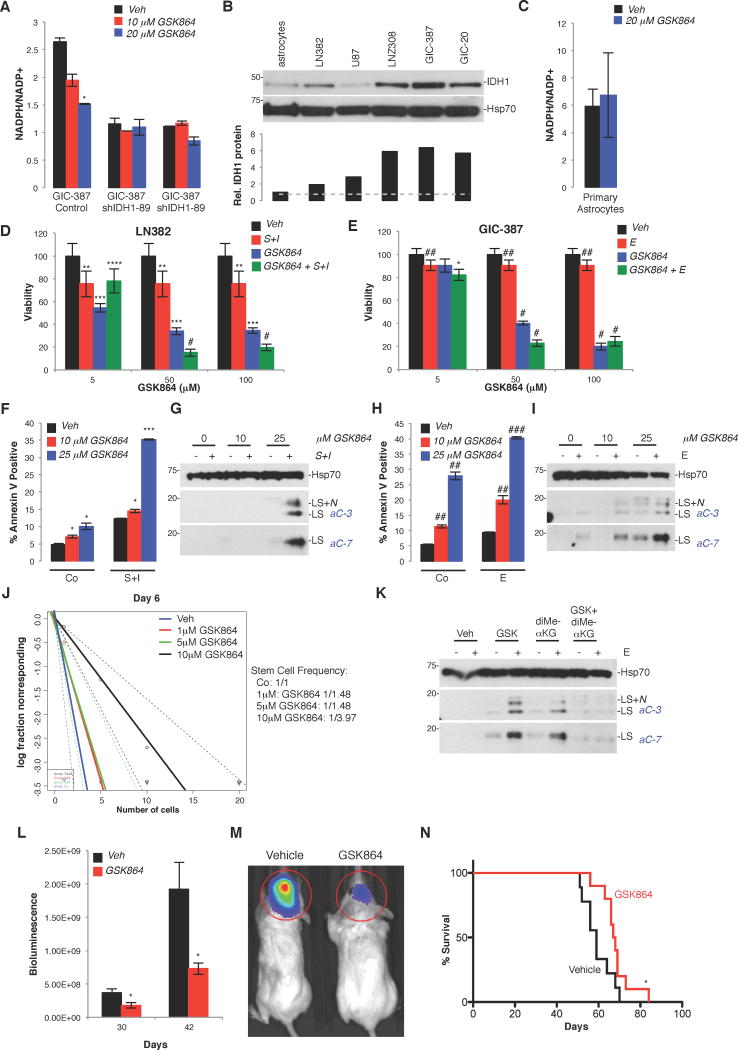
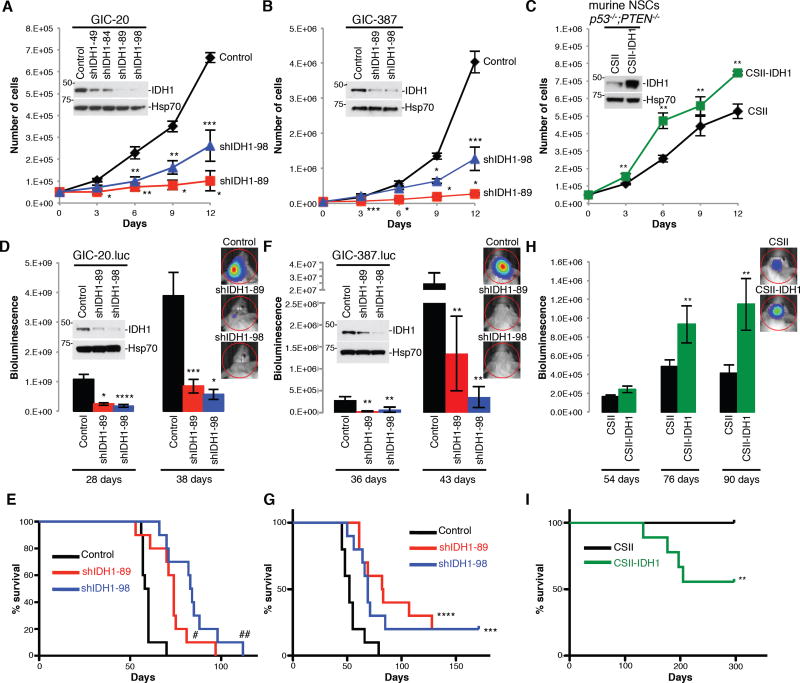
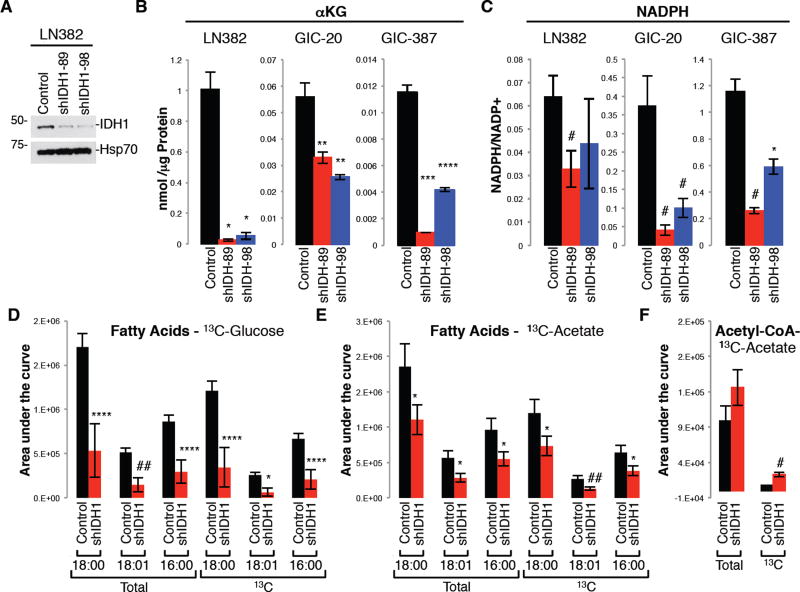
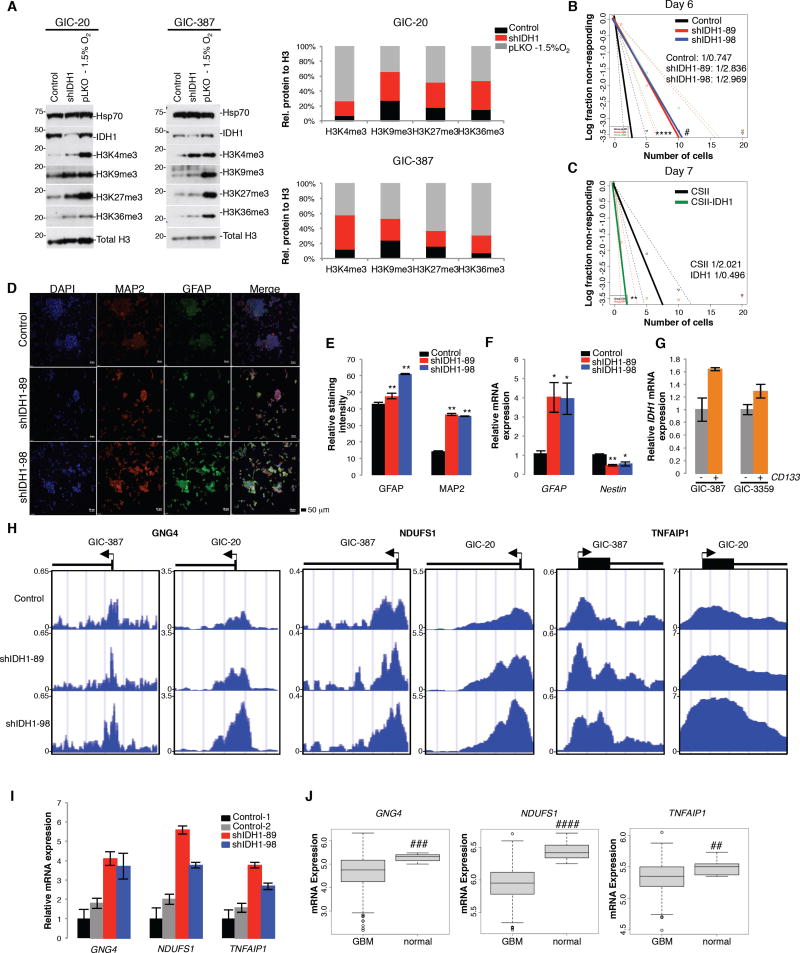
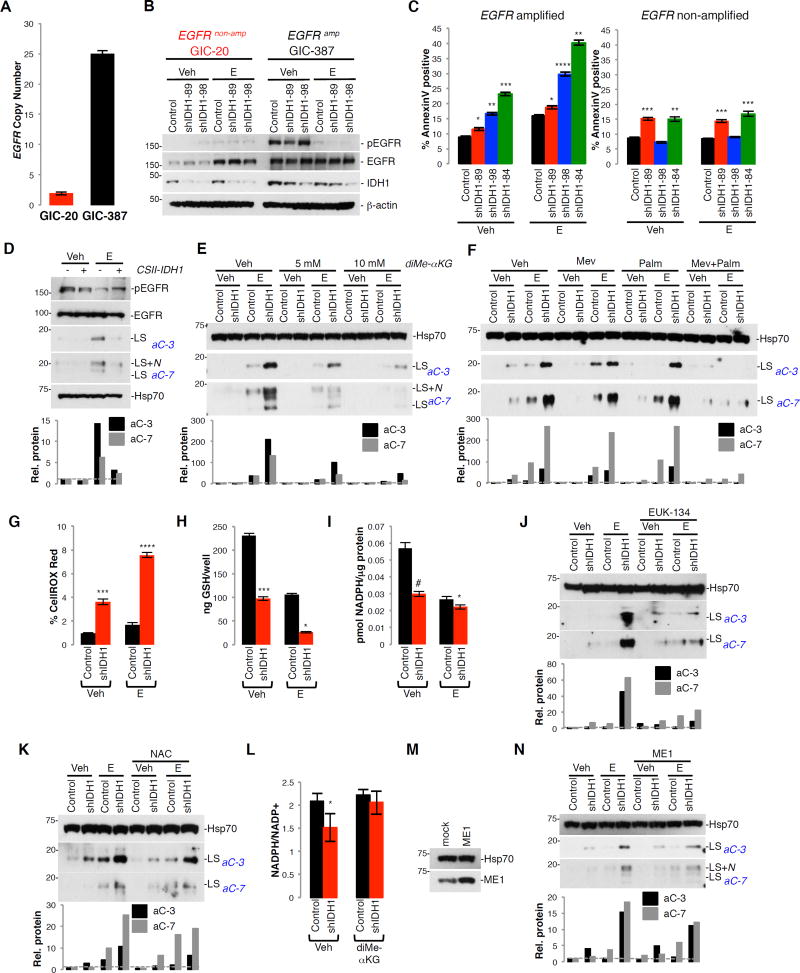
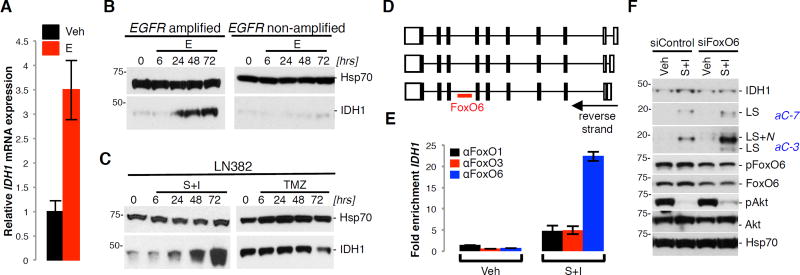
Oncogenic mutations in two isocitrate dehydrogenase (IDH)-encoding genes (IDH1 and IDH2) have been identified in acute myelogenous leukemia, low-grade glioma, and secondary glioblastoma (GBM). Our in silico and wet-bench analyses indicate that non-mutated IDH1 mRNA and protein are commonly overexpressed in primary GBMs. We show that genetic and pharmacologic inactivation of IDH1 decreases GBM cell growth, promotes a more differentiated tumor cell state, increases apoptosis in response to targeted therapies, and prolongs the survival of animal subjects bearing patient-derived xenografts (PDXs). On a molecular level, diminished IDH1 activity results in reduced α-ketoglutarate (αKG) and NADPH production, paralleled by deficient carbon flux from glucose or acetate into lipids, exhaustion of reduced glutathione, increased levels of reactive oxygen species (ROS), and enhanced histone methylation and differentiation marker expression. These findings suggest that IDH1 upregulation represents a common metabolic adaptation by GBMs to support macromolecular synthesis, aggressive growth, and therapy resistance.
在急性髓性白血病、低级别胶质瘤和继发性胶质母细胞瘤(GBM)中已发现两种异柠檬酸脱氢酶(IDH)编码基因(IDH1和IDH2)发生致癌突变。我们的计算机模拟和实验分析表明,未突变的IDH1 mRNA和蛋白在原发性GBM中通常过表达。我们发现,IDH1的基因和药理学失活可降低GBM细胞生长,促进肿瘤细胞向更分化状态转变,增加对靶向治疗的凋亡反应,并延长携带患者来源异种移植瘤(PDX)的动物受试者的生存期。在分子水平上,IDH1活性降低导致α-酮戊二酸(αKG)和NADPH生成减少,同时伴随着葡萄糖或乙酸盐进入脂质的碳通量不足、还原型谷胱甘肽耗竭、活性氧(ROS)水平升高以及组蛋白甲基化和分化标志物表达增强。这些发现表明,IDH1上调代表GBM的一种常见代谢适应,以支持大分子合成、侵袭性生长和治疗抗性。