Yan Qiang, Luo Hao, Wang Baoyao, Sui Weiguo, Zou Guimian, Chen Huaizhou, Zou Hequn
Department of Nephrology, Guilin 181st Hospital, Guangxi Key Laboratory of Metabolic Diseases Research, Guilin, Guangxi 541002, P.R. China.
Department of Oncology, No. 454 Hospital of the PLA, Nanjing, Jiangsu 210002, P.R. China.
Exp Ther Med. 2017 May;13(5):2217-2224. doi: 10.3892/etm.2017.4261. Epub 2017 Mar 24.
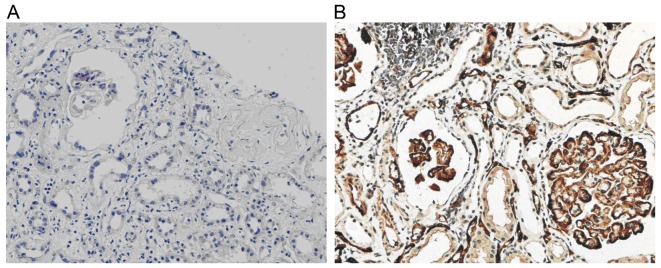
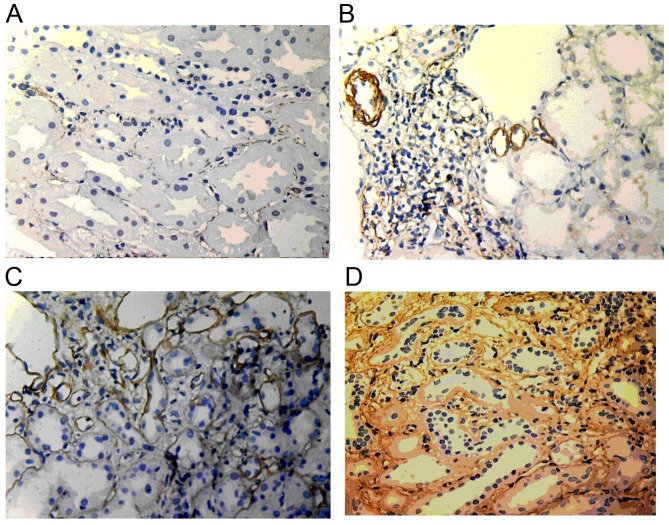
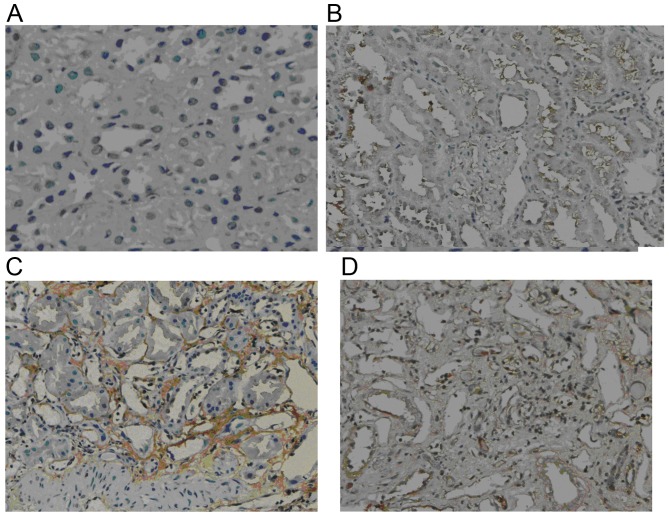
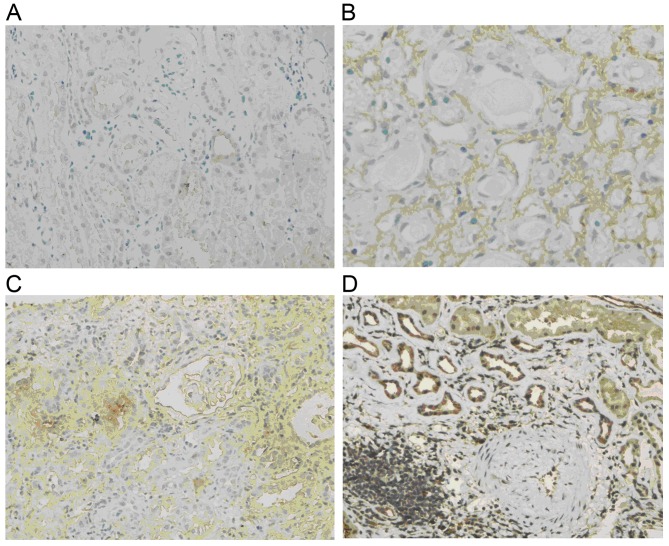
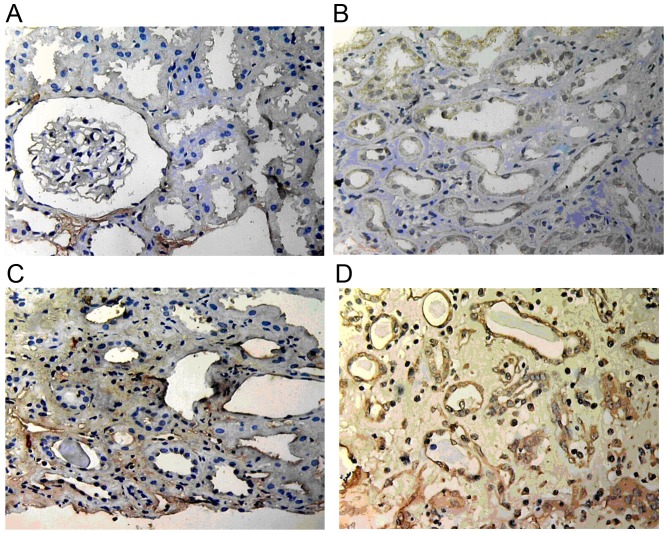
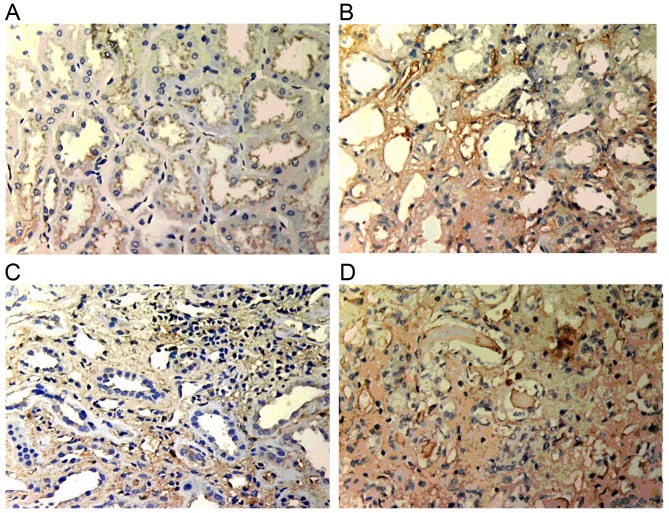
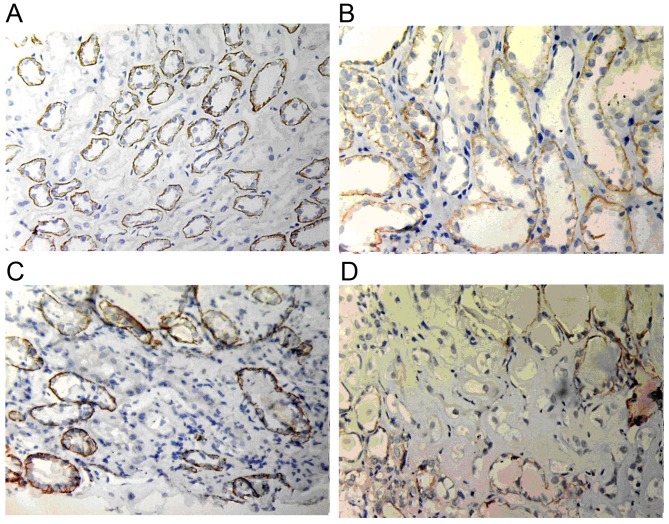
Chronic antibody-mediated rejection (ABMR) is a major cause of the transplant renal interstitial fibrosis and transplanted kidney epithelial cell transdifferentiation is one of the main mechanisms. The transforming growth factor (TGF)-β1/integrin-linked kinase (ILK) signaling pathway has a significant role in the epithelial-mesenchymal transition (EMT) of renal tubular epithelial cells; however, the molecular mechanisms of this process have remained elusive. The present study confirmed that Akt and glycogen synthase kinase (GSK)-3β, as TGF-β1 downstream signaling factors, are involved in fibrotic processes caused by kidney disease, which, however, has been rarely reported in the kidney transplant field. Based on the Banff 2009 standard, transplanted kidney specimens were classified according to the fibrosis level. The results showed that with the reduction of the interstitial fibrosis level, E-cadherin expression was gradually reduced, while α-smooth muscle actin expression progressively increased. The expression of Akt and GSK-3β in normal human kidney tissue was not obvious but showed a marked increase with the aggravation of the interstitial fibrosis level, which confirmed the occurrence of EMT during the fibrosis process, and that phosphorylated (p)-Akt and GSK-3β have an important role in the EMT process in the transplanted kidney. A correlation analysis of p-Akt, GSK-3β, TGF-β1 and ILK suggested that overexpression of p-Akt and GSK-3β may induce and mediate the transdifferentiation of renal tubular epithelial cells to myofibroblasts and that this proceeds via TGFβ1/ILK signaling pathways.
慢性抗体介导的排斥反应(ABMR)是移植肾间质纤维化的主要原因,而移植肾上皮细胞转分化是主要机制之一。转化生长因子(TGF)-β1/整合素连接激酶(ILK)信号通路在肾小管上皮细胞的上皮-间质转化(EMT)中起重要作用;然而,这一过程的分子机制仍不清楚。本研究证实,作为TGF-β1下游信号因子的Akt和糖原合酶激酶(GSK)-3β参与了肾脏疾病引起的纤维化过程,然而,这在肾移植领域鲜有报道。根据Banff 2009标准,根据纤维化程度对移植肾标本进行分类。结果显示,随着间质纤维化程度的降低,E-钙黏蛋白表达逐渐降低,而α-平滑肌肌动蛋白表达逐渐增加。Akt和GSK-3β在正常人体肾脏组织中的表达不明显,但随着间质纤维化程度的加重而显著增加,这证实了纤维化过程中EMT的发生,且磷酸化(p)-Akt和GSK-3β在移植肾的EMT过程中起重要作用。对p-Akt、GSK-3β、TGF-β1和ILK的相关性分析表明,p-Akt和GSK-3β的过表达可能诱导并介导肾小管上皮细胞向肌成纤维细胞的转分化,且这一过程通过TGFβ1/ILK信号通路进行。