Pajoro A, Severing E, Angenent G C, Immink R G H
Laboratory of Molecular Biology, Wageningen University and Research, 6708 PB, Wageningen, The Netherlands.
Bioscience, Wageningen University and Research, 6708 PB, Wageningen, The Netherlands.
Genome Biol. 2017 Jun 1;18(1):102. doi: 10.1186/s13059-017-1235-x.
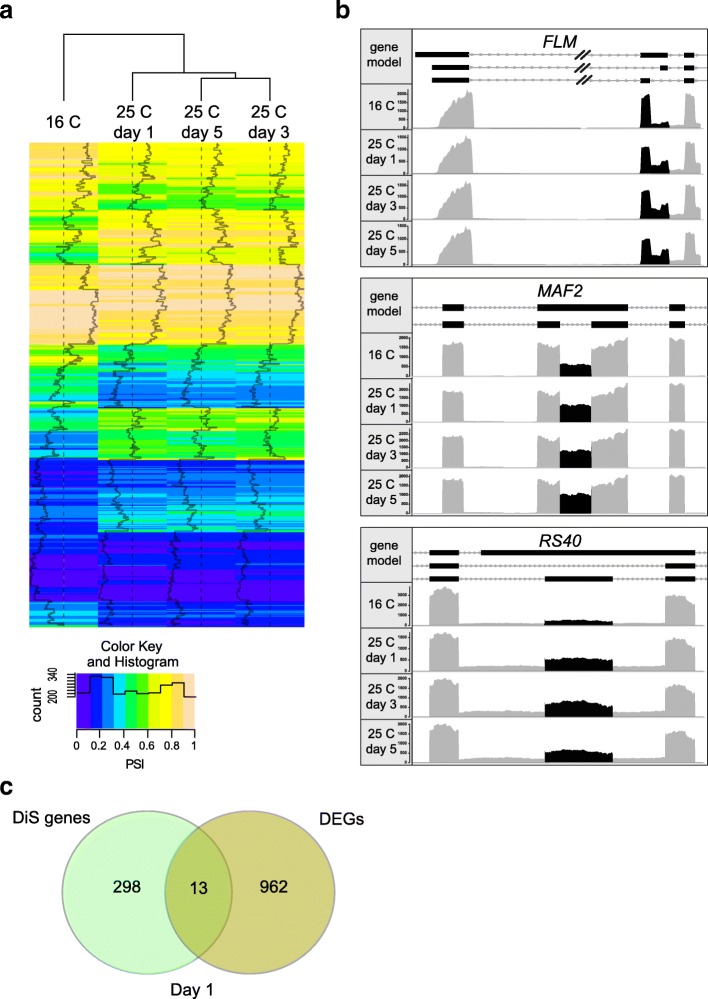
Global warming severely affects flowering time and reproductive success of plants. Alternative splicing of pre-messenger RNA (mRNA) is an important mechanism underlying ambient temperature-controlled responses in plants, yet its regulation is poorly understood. An increase in temperature promotes changes in plant morphology as well as the transition from the vegetative to the reproductive phase in Arabidopsis thaliana via changes in splicing of key regulatory genes. Here we investigate whether a particular histone modification affects ambient temperature-induced alternative splicing and flowering time.
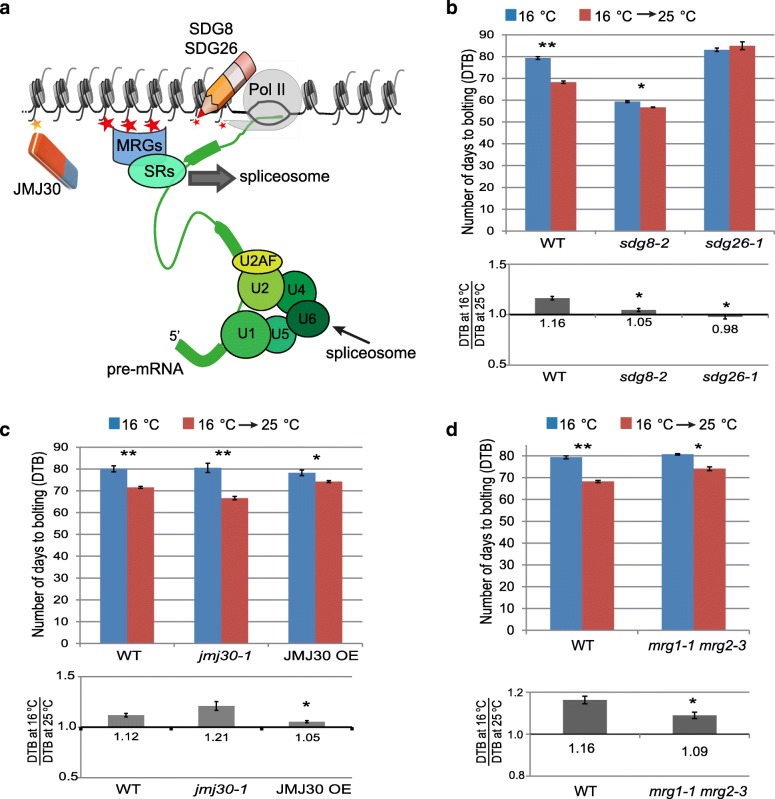
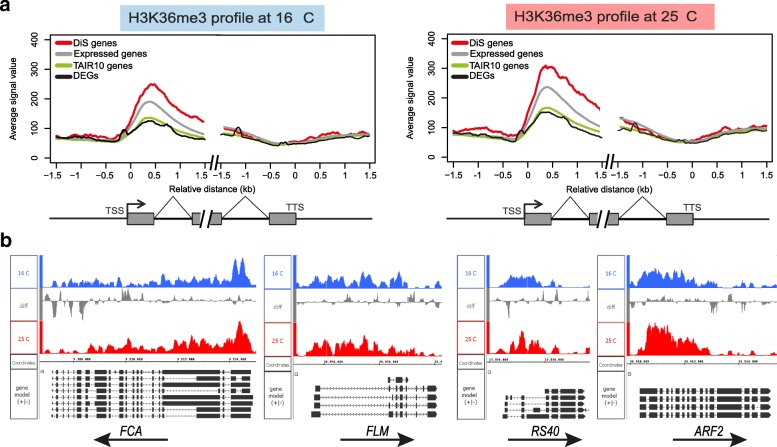
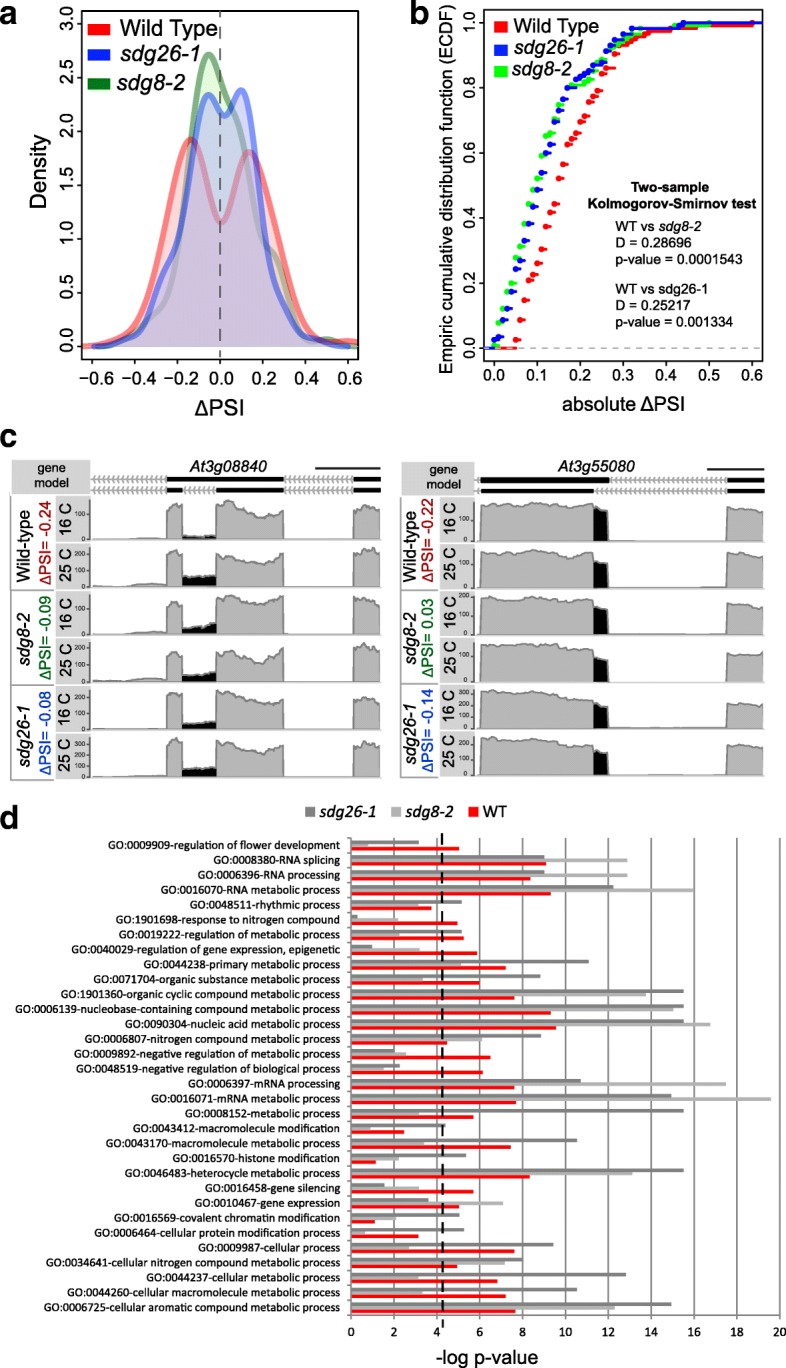
We use a genome-wide approach and perform RNA-sequencing (RNA-seq) analyses and histone H3 lysine 36 tri-methylation (H3K36me3) chromatin immunoprecipitation sequencing (ChIP-seq) in plants exposed to different ambient temperatures. Analysis and comparison of these datasets reveal that temperature-induced differentially spliced genes are enriched in H3K36me3. Moreover, we find that reduction of H3K36me3 deposition causes alteration in temperature-induced alternative splicing. We also show that plants with mutations in H3K36me3 writers, eraser, or readers have altered high ambient temperature-induced flowering.
Our results show a key role for the histone mark H3K36me3 in splicing regulation and plant plasticity to fluctuating ambient temperature. Our findings open new perspectives for the breeding of crops that can better cope with environmental changes due to climate change.
全球变暖严重影响植物的开花时间和繁殖成功率。信使核糖核酸(mRNA)前体的可变剪接是植物中环境温度控制反应的重要机制,但其调控机制尚不清楚。温度升高通过关键调控基因剪接的变化促进拟南芥植物形态的改变以及从营养生长阶段到生殖阶段的转变。在此,我们研究特定的组蛋白修饰是否会影响环境温度诱导的可变剪接和开花时间。
我们采用全基因组方法,对暴露于不同环境温度的植物进行RNA测序(RNA-seq)分析和组蛋白H3赖氨酸36三甲基化(H3K36me3)染色质免疫沉淀测序(ChIP-seq)。对这些数据集的分析和比较表明,温度诱导的差异剪接基因富含H3K36me3。此外,我们发现H3K36me3沉积的减少会导致温度诱导的可变剪接发生改变。我们还表明,H3K36me3的写入器、擦除器或读取器发生突变的植物,其高环境温度诱导的开花会发生改变。
我们的结果表明组蛋白标记H3K36me3在剪接调控和植物对波动环境温度的可塑性中起关键作用。我们的发现为培育能够更好应对气候变化引起的环境变化的作物开辟了新的前景。