SUBATECH, UMR CNRS 6457, IN2P3/IMT Atlantique/Université de Nantes, 4 rue Alfred Kastler, BP 20722, 44307, Nantes Cedex 3, France.
CEISAM, UMR CNRS 6230, Université de Nantes, 2 rue de la Houssinière, BP 92208, 44322, Nantes Cedex 3, France.
Sci Rep. 2017 May 31;7(1):2579. doi: 10.1038/s41598-017-02614-2.
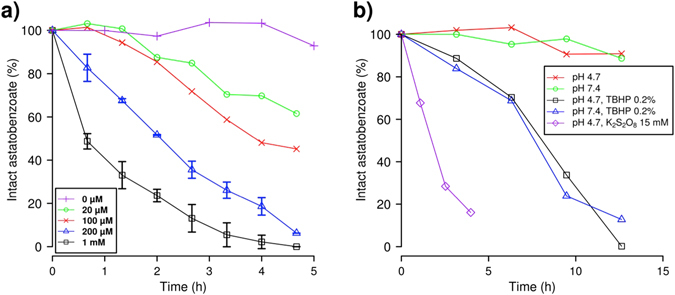
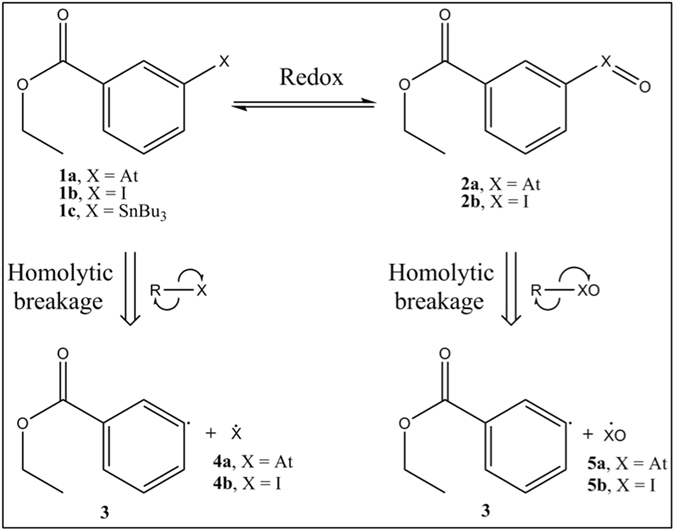
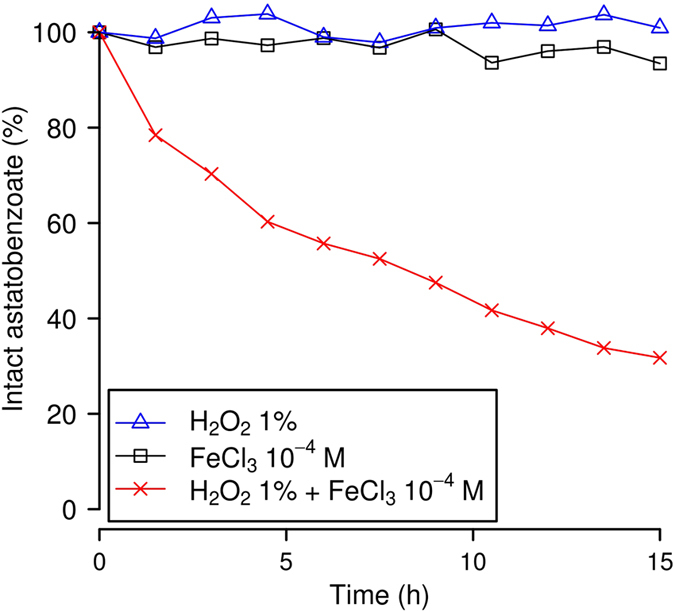
At is a most promising radionuclide for targeted alpha therapy. However, its limited availability and poorly known basic chemistry hamper its use. Based on the analogy with iodine, labelling is performed via astatobenzoate conjugates, but in vivo deastatination occurs, particularly when the conjugates are internalized in cells. Actually, the chemical or biological mechanism responsible for deastatination is unknown. In this work, we show that the C-At "organometalloid" bond can be cleaved by oxidative dehalogenation induced by oxidants such as permanganates, peroxides or hydroxyl radicals. Quantum mechanical calculations demonstrate that astatobenzoates are more sensitive to oxidation than iodobenzoates, and the oxidative deastatination rate is estimated to be about 6 × 10 faster at 37 °C than the oxidative deiodination one. Therefore, we attribute the "internal" deastatination mechanism to oxidative dehalogenation in biological compartments, in particular lysosomes.
它是一种极有前途的用于靶向 α 治疗的放射性核素。然而,其有限的可用性和知之甚少的基础化学性质阻碍了它的使用。基于与碘的类比,通过[公式]标记来实现,但是体内去砹化会发生,特别是当缀合物被内化到细胞中时。实际上,负责去砹化的化学或生物学机制尚不清楚。在这项工作中,我们表明 C-At“有机金属”键可以通过氧化剂如高锰酸盐、过氧化物或羟基自由基诱导的氧化脱卤反应来断裂。量子力学计算表明,[公式]比[公式]更易氧化,并且在 37°C 下,氧化去砹化速率估计比氧化脱碘速率快约 6×10。因此,我们将“内部”去砹化机制归因于生物隔室(特别是溶酶体)中的氧化脱卤反应。