Rahman D Y, Sarian F D, van Wijk A, Martinez-Garcia M, van der Maarel M J E C
Aquatic Biotechnology and Bioproduct Engineering Department, Engineering and Technology Institute Groningen (ENTEG), University of Groningen, Nijenborgh 4, 9747 AG Groningen, The Netherlands.
Research Center for Biotechnology, Indonesian Institute of Sciences (LIPI), Jl. Raya Bogor KM 46, 16911 Cibinong, Bogor, Indonesia.
J Appl Phycol. 2017;29(3):1233-1239. doi: 10.1007/s10811-016-1007-0. Epub 2016 Nov 21.
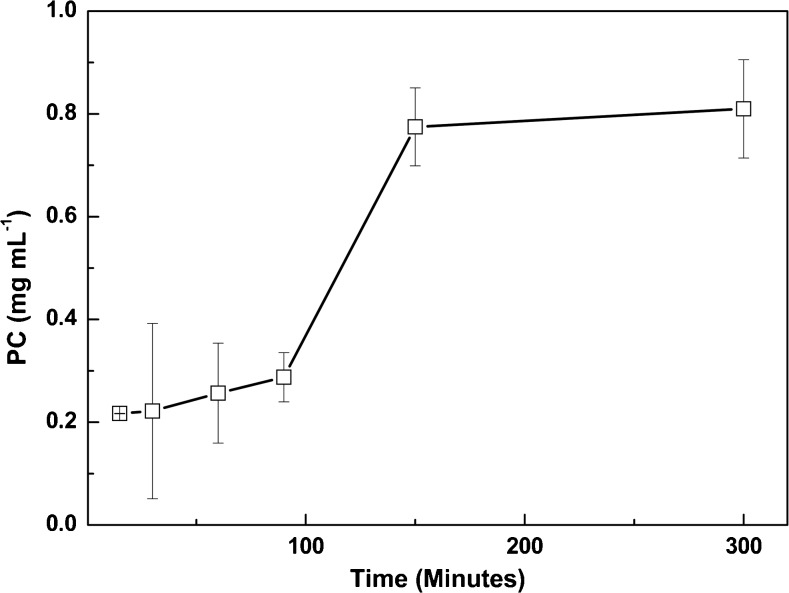
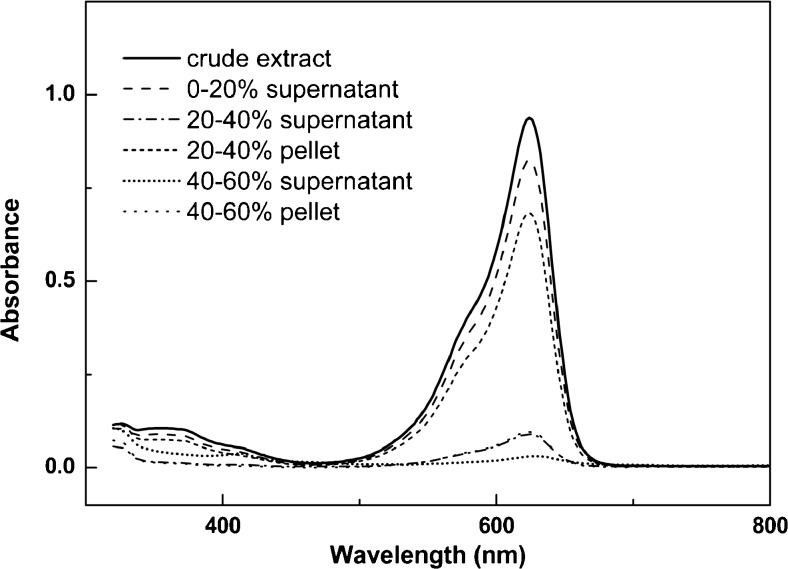
The demand for natural food colorants is growing as consumers question the use of artificial colorants more and more. The phycobiliprotein C-phycocyanin of is used as a natural blue colorant in certain food products. The thermoacidophilic red microalga might provide an alternative source of phycocyanin. belongs to the order Cyanidiophyceae of the phylum Rhodophyta. Its natural habitat are sulfuric hot springs and geysers found near volcanic areas in, e.g., Yellowstone National Park in the USA and in Java, Indonesia. It grows optimally at a pH between 0.5 and 3.0 and at temperatures up to 56 °C. The low pH at which . grows minimizes the risk of microbial contamination and could limit production loss. As . lacks a cell wall, phycocyanin with a high purity number of 9.9 could be extracted by an osmotic shock using a simple ultrapure water extraction followed by centrifugation. The denaturation midpoint at pH 5 was 83 °C, being considerably higher than the . phycocyanin (65 °C). The . phycocyanin was relatively stable at pH 4 and 5 up to 80 °C. The high thermostability at slightly acidic pH makes the . phycocyanin an interesting alternative to . phycocyanin as a natural blue food colorant.
随着消费者越来越质疑人工色素的使用,对天然食用色素的需求正在增长。紫球藻的藻胆蛋白C-藻蓝蛋白在某些食品中用作天然蓝色素。嗜热嗜酸红微藻可能提供藻蓝蛋白的替代来源。嗜热嗜酸红微藻属于红藻门的蓝藻藻目。其天然栖息地是在美国黄石国家公园和印度尼西亚爪哇等地的火山区附近发现的硫酸温泉和间歇泉。它在pH值为0.5至3.0以及温度高达56°C的条件下生长最佳。嗜热嗜酸红微藻生长的低pH值将微生物污染的风险降至最低,并可能限制生产损失。由于嗜热嗜酸红微藻缺乏细胞壁,可以通过使用简单的超纯水提取然后离心的渗透休克法提取纯度高达9.9的藻蓝蛋白。在pH值为5时的变性中点为83°C,远高于紫球藻藻蓝蛋白(65°C)。嗜热嗜酸红微藻藻蓝蛋白在pH值为4和5且温度高达80°C时相对稳定。在微酸性pH值下的高热稳定性使嗜热嗜酸红微藻藻蓝蛋白成为紫球藻藻蓝蛋白作为天然蓝色食用色素的一个有趣替代品。