Alunno Alessia, Bistoni Onelia, Manetti Mirko, Cafaro Giacomo, Valentini Valentina, Bartoloni Elena, Gerli Roberto, Liso Arcangelo
Rheumatology Unit, Department of Medicine, University of Perugia, Perugia, Italy.
Department of Experimental and Clinical Medicine, Section of Anatomy and Histology, University of Florence, Florence, Italy.
Front Immunol. 2017 May 18;8:554. doi: 10.3389/fimmu.2017.00554. eCollection 2017.
Immune cell migration from the bloodstream to target tissues is a hallmark of rheumatoid arthritis (RA) pathogenesis. The role of chemoattractants, mainly chemokines, and their possible targeting for therapeutic purposes have been under intense investigation over the last few years but the results were not as satisfactory as expected. The insulin-like growth factor binding protein 6 (IGFBP6), a direct inhibitor of insulin-like growth factor (IGF)-II, also exerts IGF-independent effects including tumor cell migration . We aimed to assess the expression of this protein in serum, synovial fluid, and synovial tissue (ST) of RA patients and to identify its possible chemotactic role in this disorder.
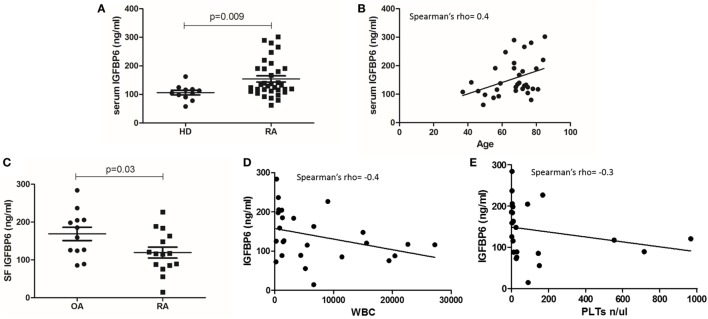
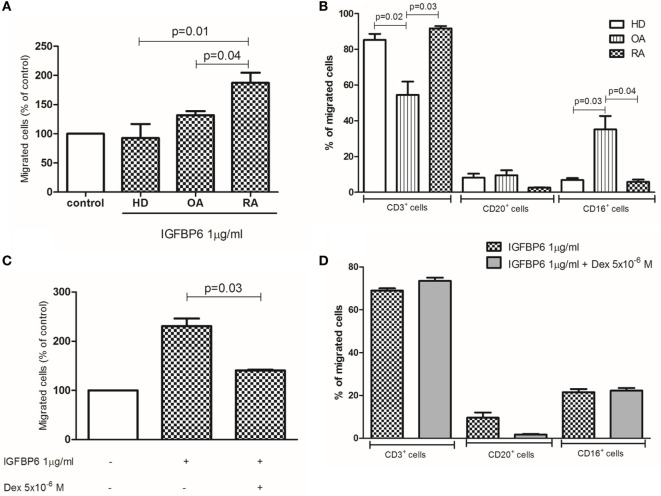
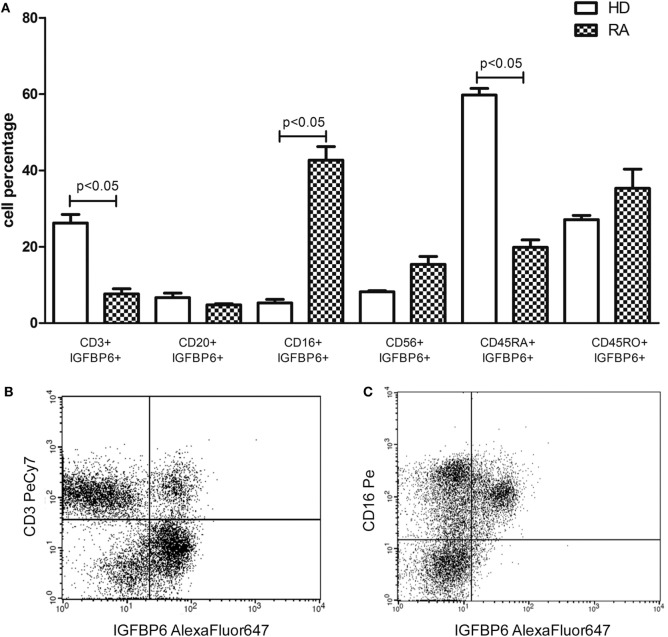
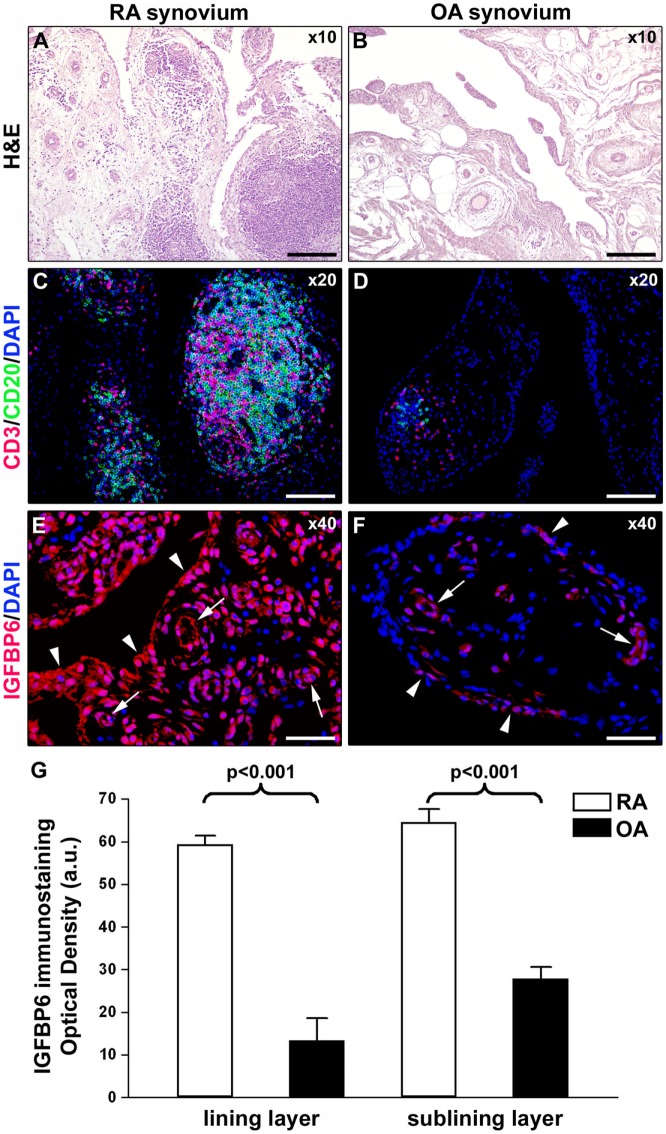
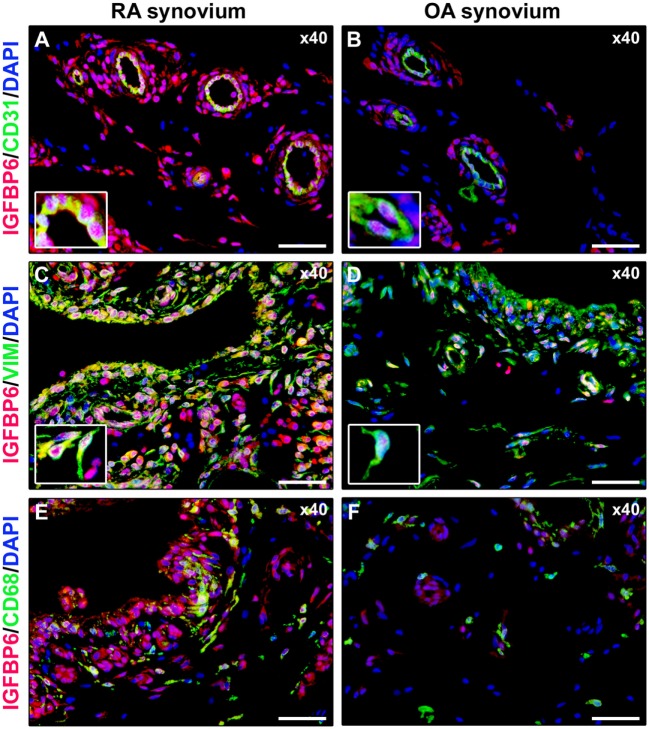
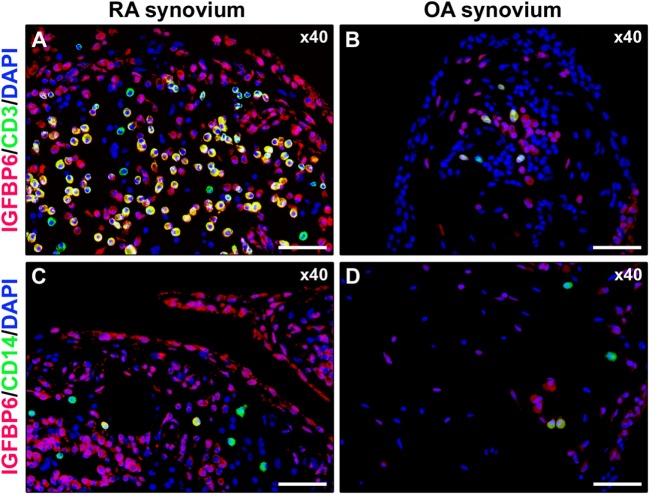
IGFBP6 was measured in RA patients and healthy donors (HD) sera by Luminex xMAP technology and in ST of RA patients and osteoarthritis (OA) controls by immunofluorescence. The identification of circulating IGFBP6 cells was evaluated by flow cytometry and an migration assay was arranged.
We demonstrated that IGFBP6 is able to induce greater migration of RA as compared to HD and OA T lymphocytes and is overexpressed in serum and ST of RA patients. This chemotactic activity can be partially inhibited by dexamethasone.
Our findings suggest a pathogenic role of IGFBP6 in RA and support its possible targeting for therapeutic purposes.
免疫细胞从血液迁移至靶组织是类风湿关节炎(RA)发病机制的一个标志。在过去几年中,趋化因子(主要是趋化因子)的作用及其可能的治疗靶点一直受到深入研究,但结果并不如预期那样令人满意。胰岛素样生长因子结合蛋白6(IGFBP6)是胰岛素样生长因子(IGF)-II的直接抑制剂,也发挥不依赖IGF的作用,包括肿瘤细胞迁移。我们旨在评估该蛋白在RA患者血清、滑液和滑膜组织(ST)中的表达,并确定其在这种疾病中可能的趋化作用。
采用Luminex xMAP技术检测RA患者和健康供体(HD)血清中的IGFBP6,采用免疫荧光法检测RA患者和骨关节炎(OA)对照的ST中的IGFBP6。通过流式细胞术评估循环IGFBP6细胞的鉴定,并安排迁移试验。
我们证明,与HD和OA T淋巴细胞相比,IGFBP6能够诱导RA的更大迁移,并且在RA患者的血清和ST中过表达。这种趋化活性可被地塞米松部分抑制。
我们的研究结果表明IGFBP6在RA中具有致病作用,并支持其可能作为治疗靶点。