Culetto Adrian, Gonzalez Jean-Michel, Vanbiervliet Geoffroy, Garcia Pablo Miranda, Tellechea Juan Ignacio, Garnier Emmanuelle, Berdah Stephane, Barthet Marc
Department of Gastroenterology, Public Assistance Hospitals of Marseille, North Hospital, Marseille, France.
Aix-Marseille University, CERC, Faculty of Medecin, Marseille, France.
Endosc Int Open. 2017 Jun;5(6):E455-E462. doi: 10.1055/s-0043-106577. Epub 2017 May 31.
Esophagogastric anastomosis (EGA) has a high risk of leakage. Based upon our experience in endoscopic gastrojejunal anastomosis using LAS, the aim of this study was to verify the technical feasibility and the safety of performing an EGA using a hybrid approach (endoscopic and surgical).
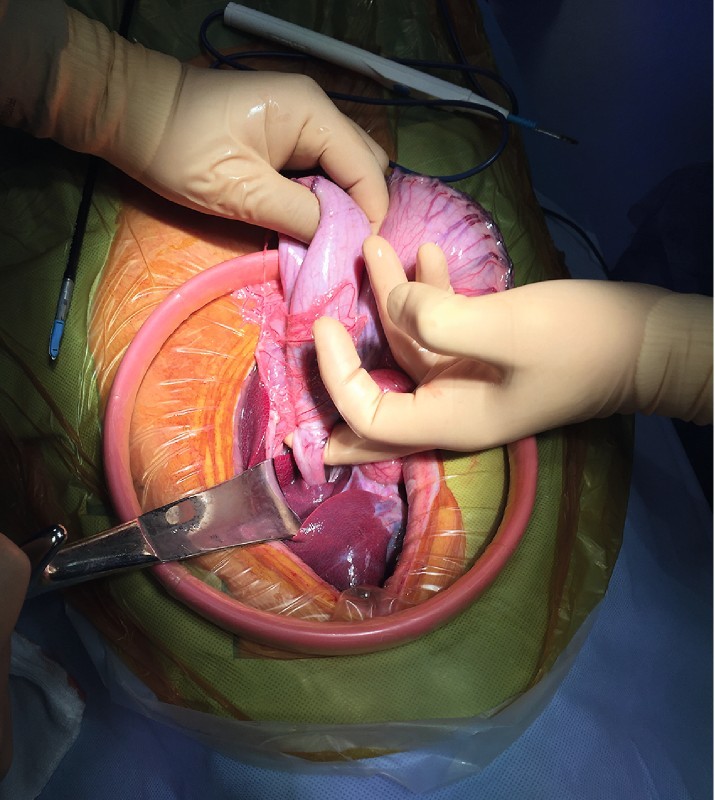
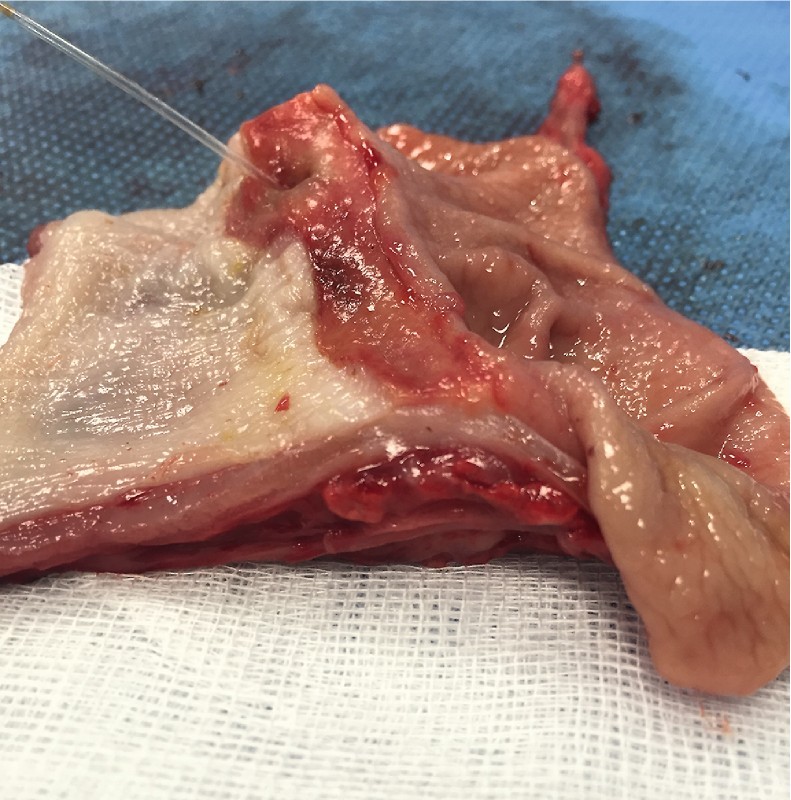
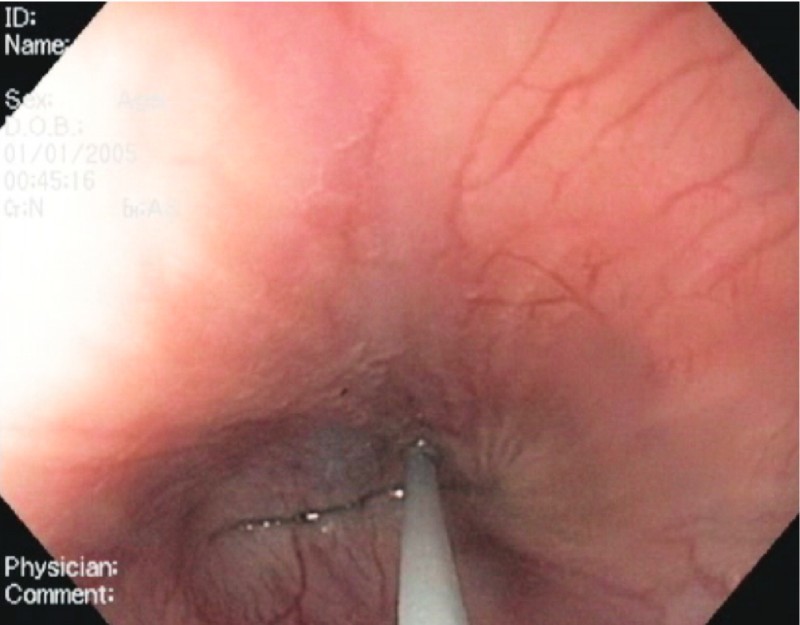
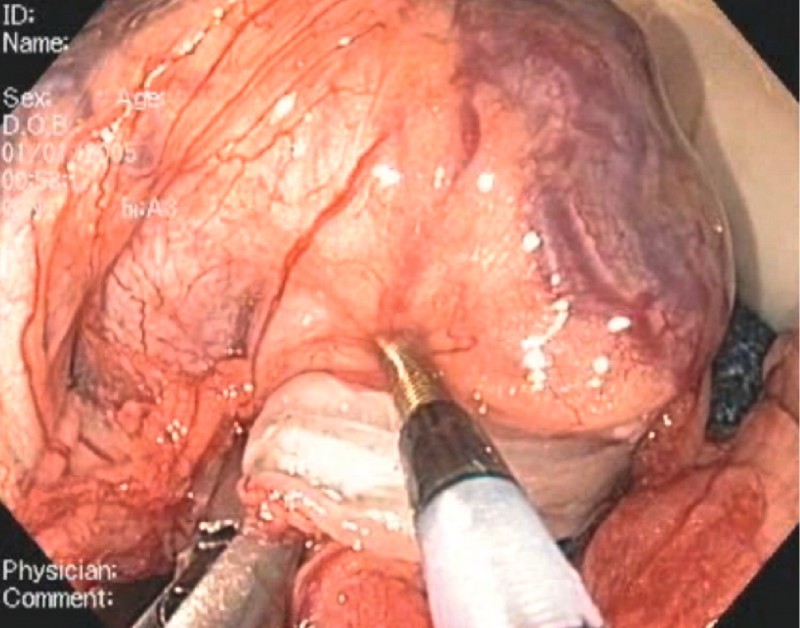
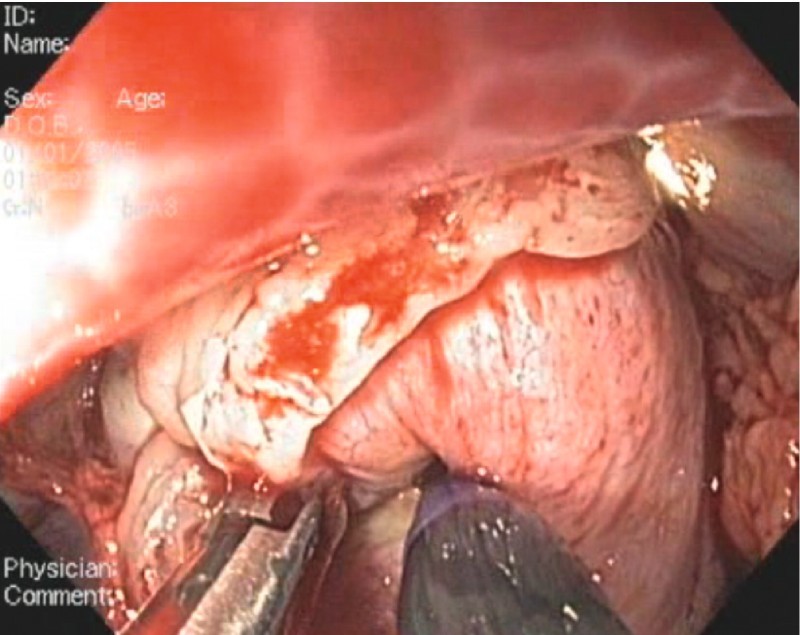
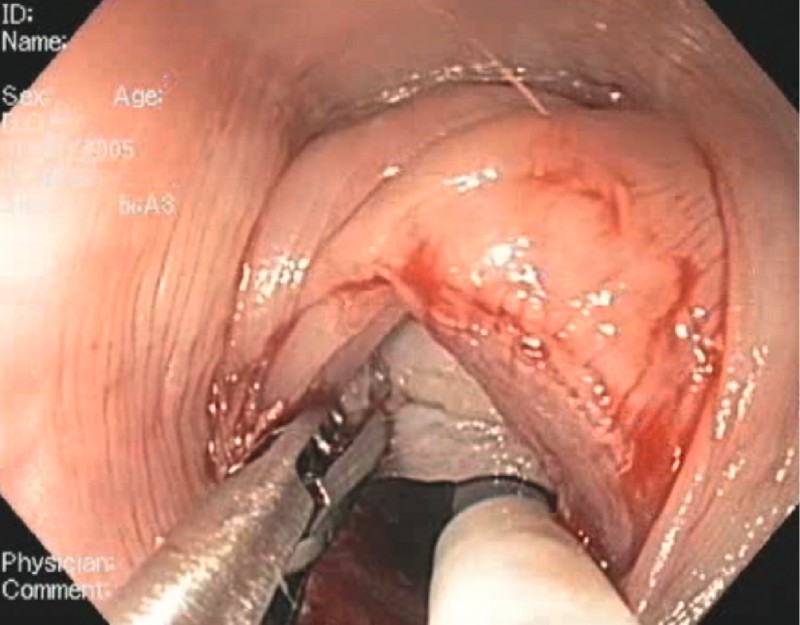
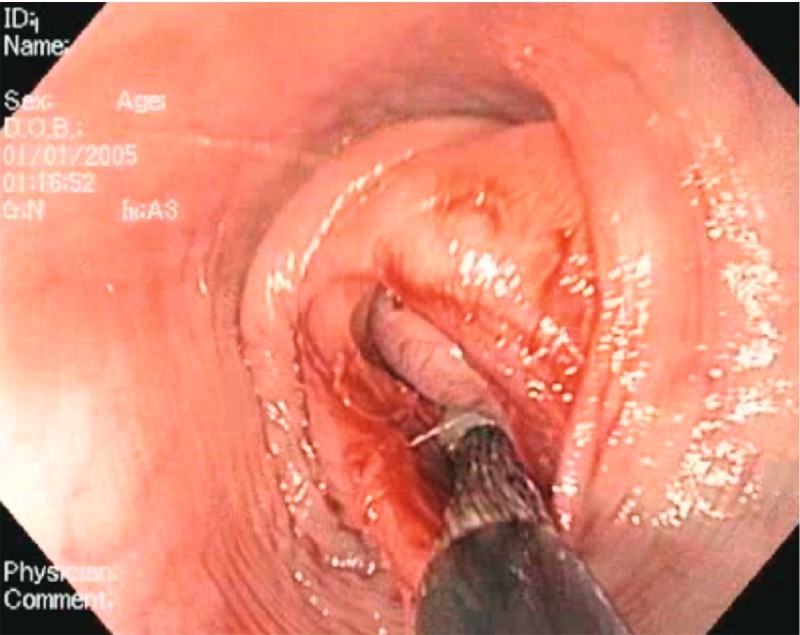
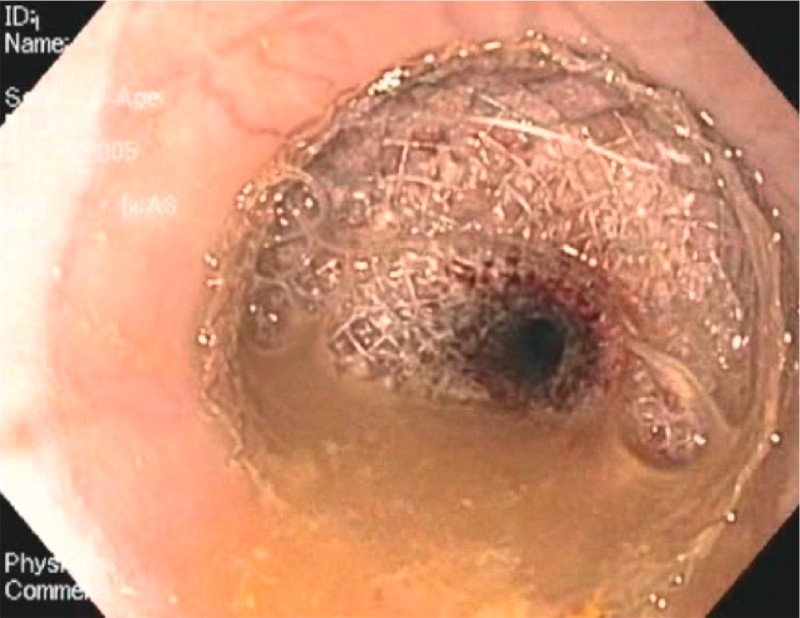
A pilot prospective study was performed on 8 survival pigs. The procedure was carried out in 2 stages: (i) surgical step consisting of an esogastrectomy by laparotomy with separated suture of the esophagus and stomach; (ii) endoscopic esophagogastric anastomosis using the LAS. The first 2 pigs allowed for the setting of the 2 steps procedure, and 6 were included in the study for assessing the efficacy and safety of the procedure with a 3-week survival course. The primary endpoint was morbidity and mortality.
All procedures were successfull. The mean operative time was 98 minutes, with a mean endoscopic time of 46 minutes. Three early deaths occurred within the first weeks, unrelated to the LAS anastomosis. At 3 weeks, endoscopic assessment followed by necropsy demonstrated the right position and the endoscopic removability of the stent with good patency of the esophagogastric anastomosis, without leakage of the endoscopic suture. Pathological examination confirmed the patency of the anastomosis with fusion of mucosal and muscle layers.
Endoscopic esophagogastric anastomosis with LAS is feasible and reproducible, without anastomotic leakage. It could be a new alternative to perform safe anastomoses, as part of a hybrid approach (surgical and endoscopic).
食管胃吻合术(EGA)存在较高的漏出风险。基于我们使用结扎吻合器系统(LAS)进行内镜下胃空肠吻合术的经验,本研究旨在验证采用混合方法(内镜和手术)进行EGA的技术可行性和安全性。
对8只存活猪进行了一项前瞻性试点研究。该手术分两个阶段进行:(i)手术步骤包括通过剖腹术进行食管切除术,并分别缝合食管和胃;(ii)使用LAS进行内镜下食管胃吻合术。前2只猪用于确定两步手术流程,另外6只纳入研究,以评估该手术在3周存活期内的疗效和安全性。主要终点是发病率和死亡率。
所有手术均成功。平均手术时间为98分钟,平均内镜时间为46分钟。在最初几周内发生了3例早期死亡,与LAS吻合术无关。在3周时,内镜评估后进行尸检显示支架位置正确且可通过内镜取出,食管胃吻合口通畅,内镜缝合无漏出。病理检查证实吻合口通畅,黏膜层和肌层融合。
使用LAS进行内镜下食管胃吻合术是可行且可重复的,无吻合口漏出。作为混合方法(手术和内镜)的一部分,它可能是进行安全吻合的一种新选择。