Yadav Pooja, Mirdha Bijay Ranjan, Makharia Govind K, Chaudhry Rama
Department of Microbiology, All India Institute of Medical Sciences, New Delhi, India.
Department of Gastroenterology & Human Nutrition, All India Institute of Medical Sciences, New Delhi, India.
Indian J Med Res. 2017 Jan;145(1):102-111. doi: 10.4103/ijmr.IJMR_1064_14.
BACKGROUND & OBJECTIVES: Human cryptosporidiosis is endemic worldwide, and at least eight species have been reported in humans; the most common being Cryptosporidium hominis and C. parvum. Detailed understanding of the epidemiology of Cryptosporidium is increasingly facilitated using standardized universal technique for species differentiation and subtyping. In this study micro- and minisatellite targets in chromosome 6 were used to assess genetic diversity of C. hominis by sequence length polymorphisms along with single nucleotide polymorphisms (SNPs).
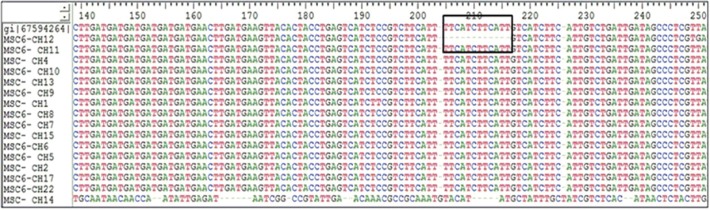
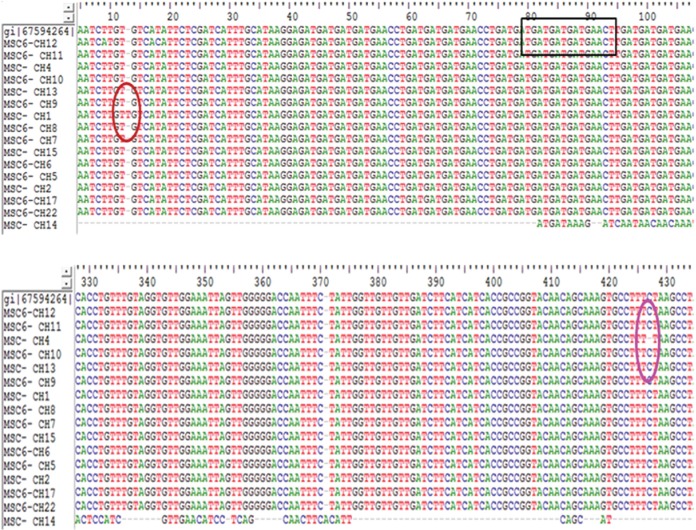
A total of 84 Cryptosporidium positive stool specimens were subjected to speciation and genotyping using small subunit (SSU) ribosomal RNA (rRNA) as the target gene. Genetic heterogeneity amongst C. hominis isolates was assessed by sequencing minisatellites, microsatellites and polymorphic markers including genes encoding the 60 kDa glycoprotein (GP60), a 47 kDa protein (CP47), a mucin-like protein (Mucin-1), a serine repeat antigen (MSC6-7) and a 56 kDa transmembrane protein (CP56).
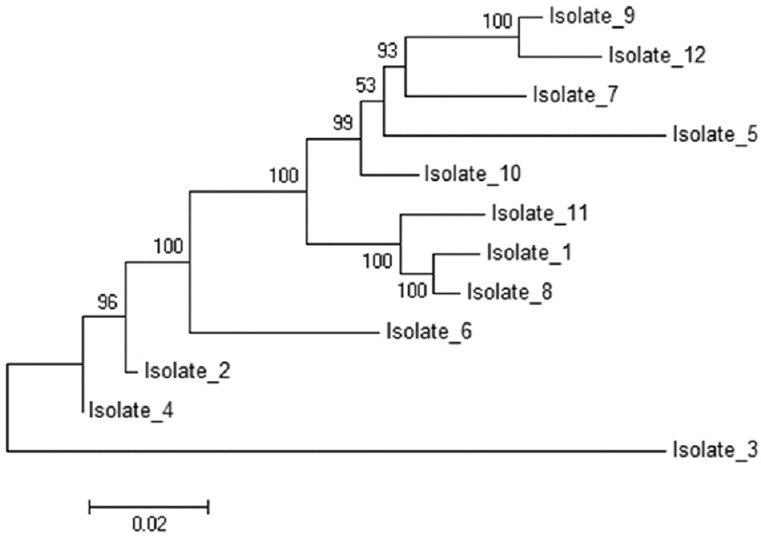
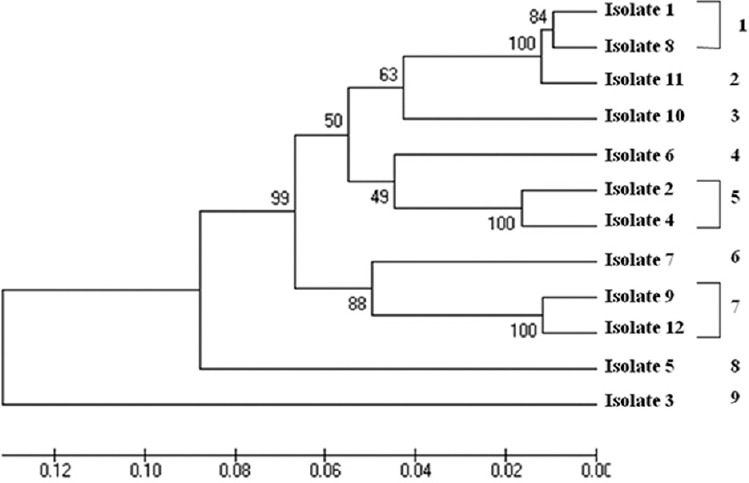
Of the 84 Cryptosporidium positive stool specimens, 77 (92%) were positive by SSU rRNA gene polymerase chain reaction (PCR) assay. Of these 77 isolates, 54 were identified as C. hominis and 23 as C. parvum. Of all the loci studied by multilocus sequence typing (MLST), GP60 gene could reveal the highest genetic diversity. Population substructure analysis of C. hominis performed by combined sequence length and nucleotide polymorphism showed nine multilocus subtypes, all of which were distinct groups in the study population.
INTERPRETATION & CONCLUSIONS: MLST, a powerful discriminatory test, demonstrated both variations and distribution pattern of Cryptosporidium species and its subtypes.
人体隐孢子虫病在全球范围内呈地方性流行,已报道至少有8种隐孢子虫可感染人类,其中最常见的是微小隐孢子虫和人隐孢子虫。采用标准化通用技术进行虫种鉴别和亚型分析,有助于更深入地了解隐孢子虫的流行病学特征。本研究利用6号染色体上的微卫星和小卫星靶点,通过序列长度多态性以及单核苷酸多态性(SNP)来评估人隐孢子虫的遗传多样性。
以小亚基(SSU)核糖体RNA(rRNA)为靶基因,对84份隐孢子虫阳性粪便标本进行虫种鉴定和基因分型。通过对小卫星、微卫星以及多态性标记(包括编码60 kDa糖蛋白(GP60)、47 kDa蛋白(CP47)、黏蛋白样蛋白(Mucin-1)、丝氨酸重复抗原(MSC6-7)和56 kDa跨膜蛋白(CP56)的基因)进行测序,评估人隐孢子虫分离株之间的遗传异质性。
84份隐孢子虫阳性粪便标本中,77份(92%)通过SSU rRNA基因聚合酶链反应(PCR)检测呈阳性。在这77份分离株中,54份鉴定为人隐孢子虫,23份为微小隐孢子虫。在多基因座序列分型(MLST)研究的所有基因座中,GP60基因显示出最高的遗传多样性。通过联合序列长度和核苷酸多态性对人隐孢子虫进行群体亚结构分析,发现有9种多基因座亚型,在研究群体中均为不同的组。
MLST作为一种强大的鉴别检测方法,展示了隐孢子虫虫种及其亚型的变异情况和分布模式。