Stoll Alexandra, Harpke Dörte, Schütte Claudia, Stefanczyk Nadine, Brandt Ronny, Blattner Frank R, Quandt Dietmar
Centro de Estudios Avanzados en Zonas Áridas (CEAZA)-Universidad La Serena, La Serena, Chile.
Nees Institute for Biodiversity of Plants, University of Bonn, Bonn, Germany.
PLoS One. 2017 Jun 2;12(6):e0178402. doi: 10.1371/journal.pone.0178402. eCollection 2017.
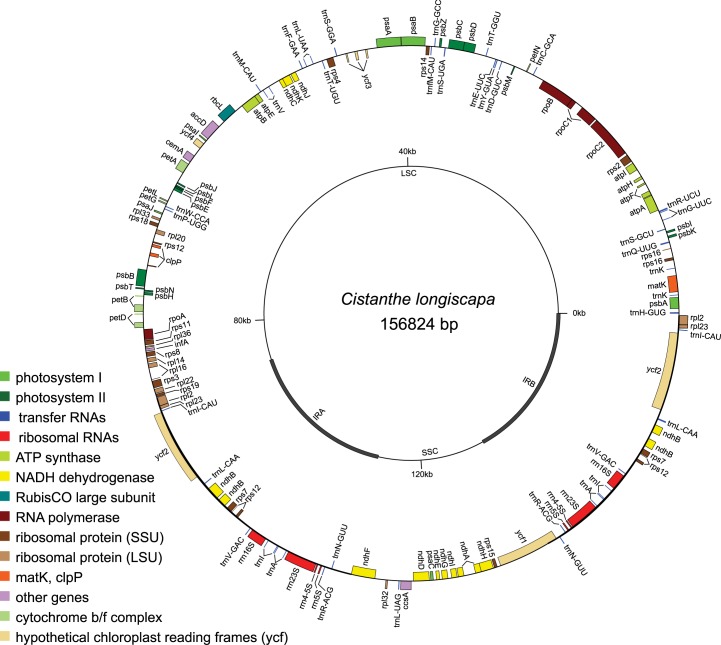
Cistanthe longiscapa is an endemic annual herb and characteristic element of the Chilean Atacama Desert. Principal threats are the destruction of its seed deposits by human activities and reduced germination rates due to the decreasing occurrence of precipitation events. To enable population genetic and phylogeographic analyses in this species we performed paired-end shotgun sequencing (2x100 bp) of genomic DNA on the Illumina HiSeq platform and identified microsatellite (SSR) loci in the resulting sequences. From 29 million quality-filtered read pairs we obtained 549,174 contigs (average length 614 bp; N50 = 904). Searching for SSRs revealed 10,336 loci with microsatellite motifs. Initially, we designed primers for 96 loci, which were tested for PCR amplification on three C. longiscapa individuals. Successfully amplifying loci were further tested on eight individuals to screen for length variation in the resulting amplicons, and the alleles were exemplarily sequenced to infer the basis for the observed length variation. Finally we arrived at 26 validated SSR loci for population studies in C. longiscapa, which resulted in 146 bi-allelic SSR markers in our test sample of eight individuals. The genomic sequences were also used to assemble the plastid genome of C. longiscapa, which provides an additional set of maternally inherited genetic markers.
长梗仙宝花是一种智利阿塔卡马沙漠特有的一年生草本植物和标志性物种。主要威胁包括人类活动对其种子库的破坏,以及降水事件发生频率降低导致发芽率下降。为了对该物种进行群体遗传学和系统地理学分析,我们在Illumina HiSeq平台上对基因组DNA进行了双末端鸟枪法测序(2×100 bp),并在所得序列中鉴定了微卫星(SSR)位点。从2900万个经过质量过滤的读段对中,我们获得了549,174个重叠群(平均长度614 bp;N50 = 904)。对SSR的搜索揭示了10,336个具有微卫星基序的位点。最初,我们为96个位点设计了引物,并在三个长梗仙宝花个体上进行了PCR扩增测试。对成功扩增的位点在另外八个个体上进一步测试,以筛选所得扩增子的长度变异,并对这些等位基因进行了示例性测序,以推断观察到的长度变异的基础。最终,我们得到了26个用于长梗仙宝花群体研究的经过验证的SSR位点,在我们的八个个体测试样本中产生了146个双等位基因SSR标记。这些基因组序列还被用于组装长梗仙宝花的质体基因组,这提供了另一组母系遗传标记。