Centre for Earth Evolution and Dynamics (CEED), University of Oslo, 0315 Oslo, Norway.
Helmholtz Centre Potsdam, GFZ, Telegrafenberg, 14473 Potsdam, Germany.
Nat Commun. 2017 Jun 5;8:15660. doi: 10.1038/ncomms15660.
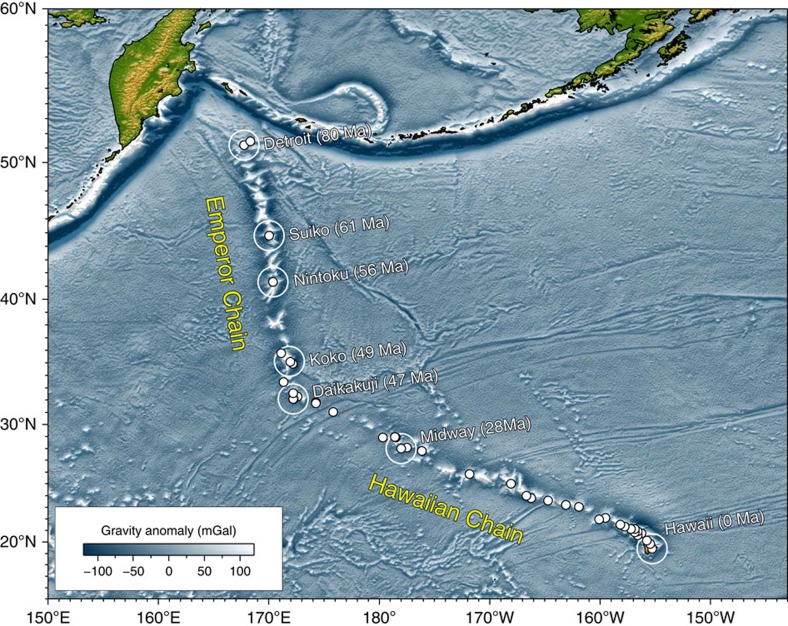
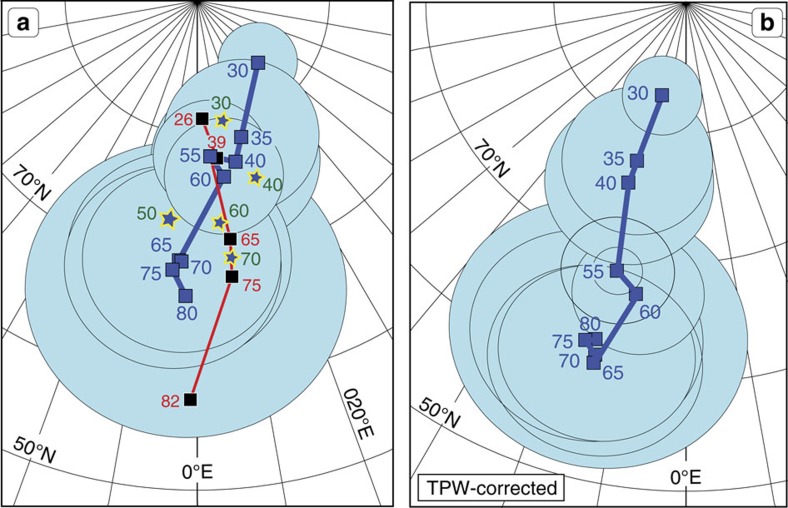
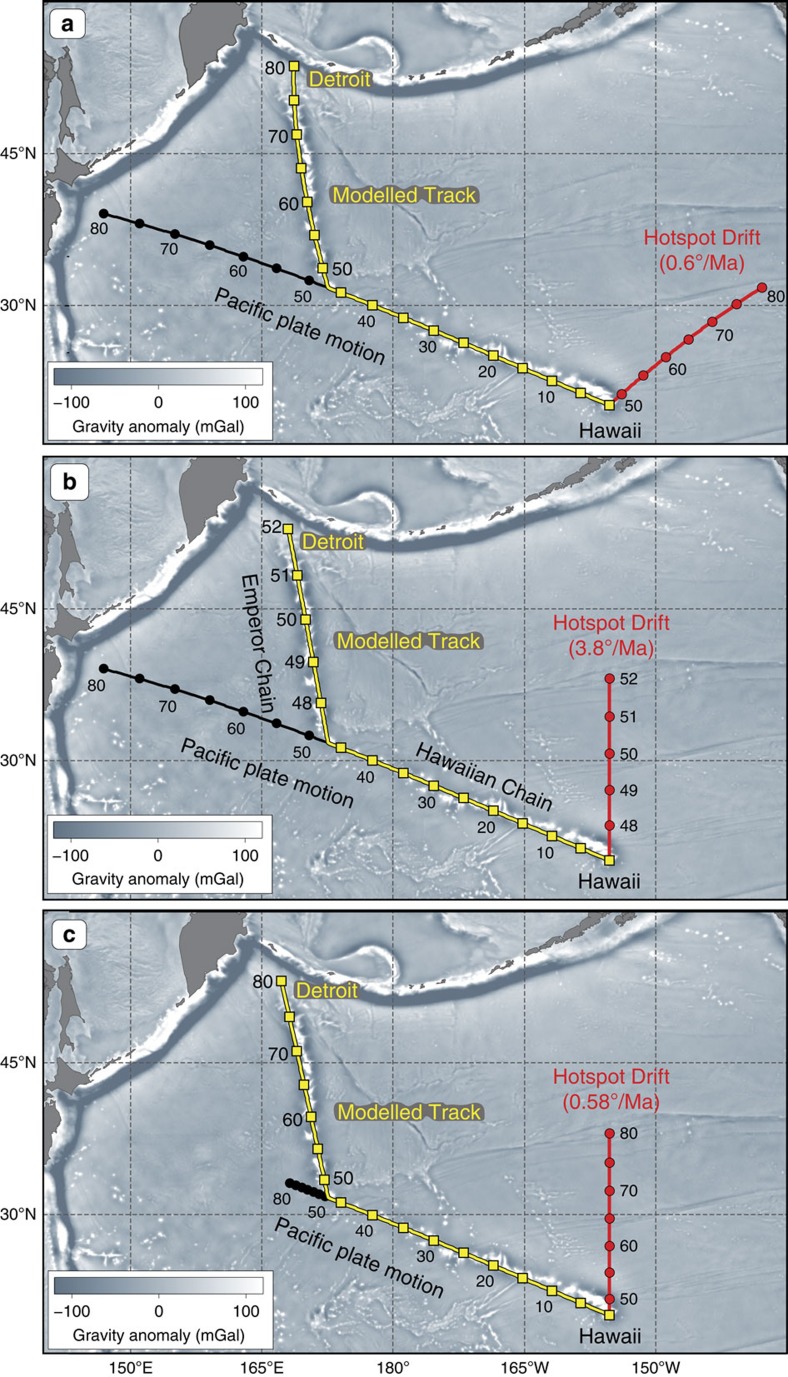
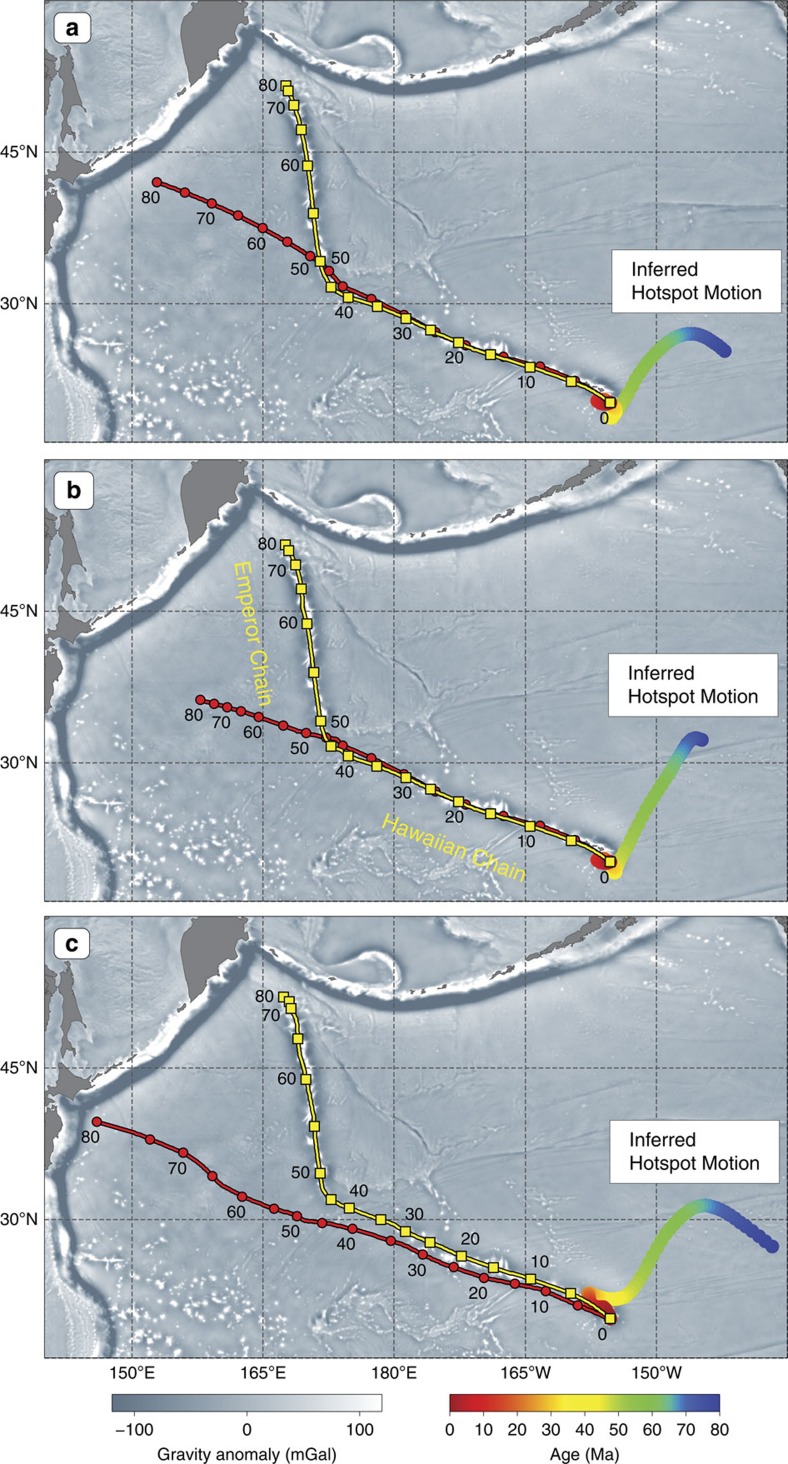
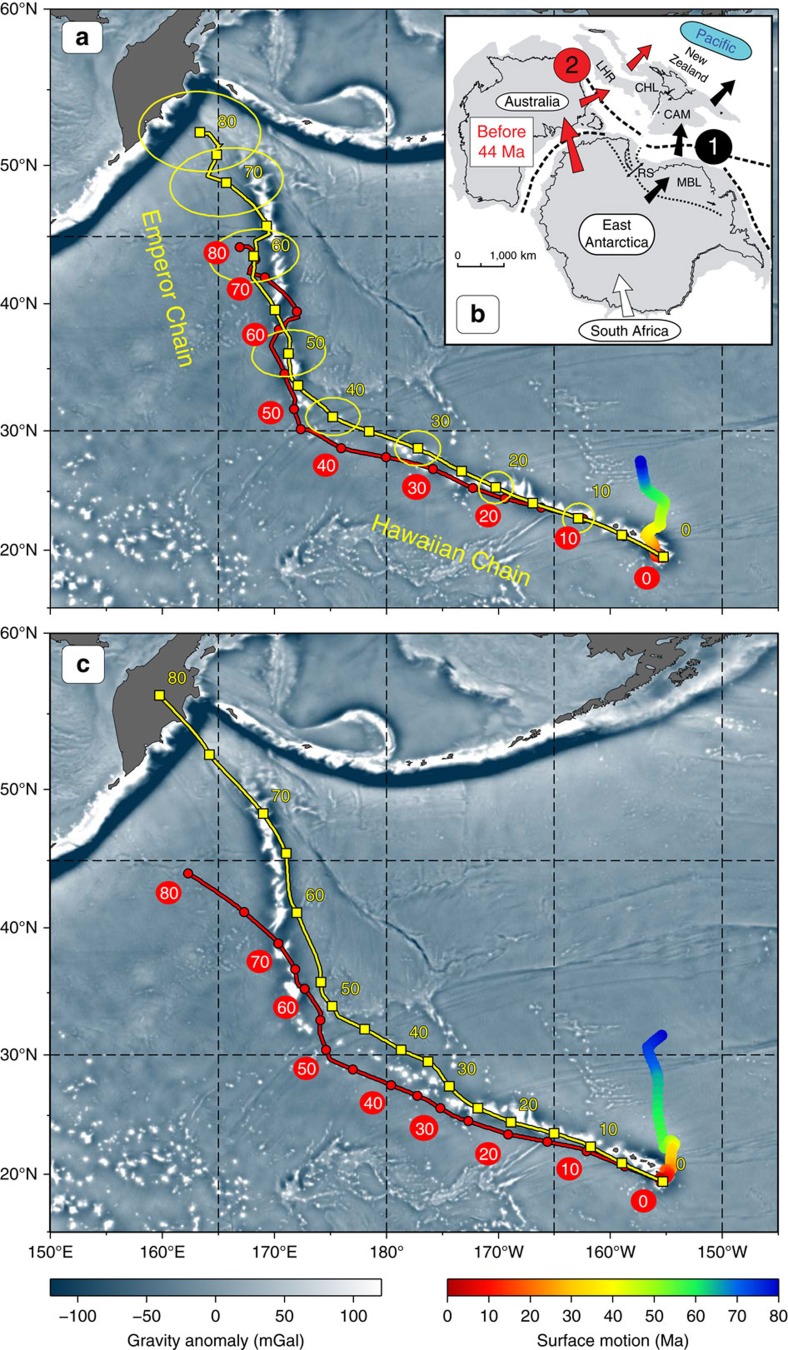
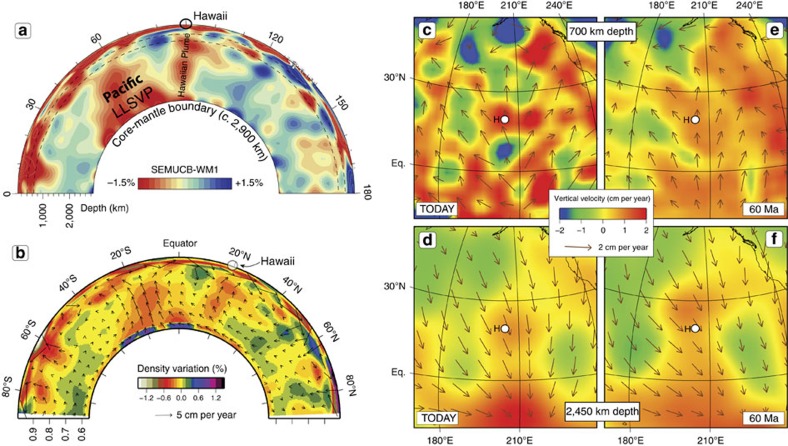
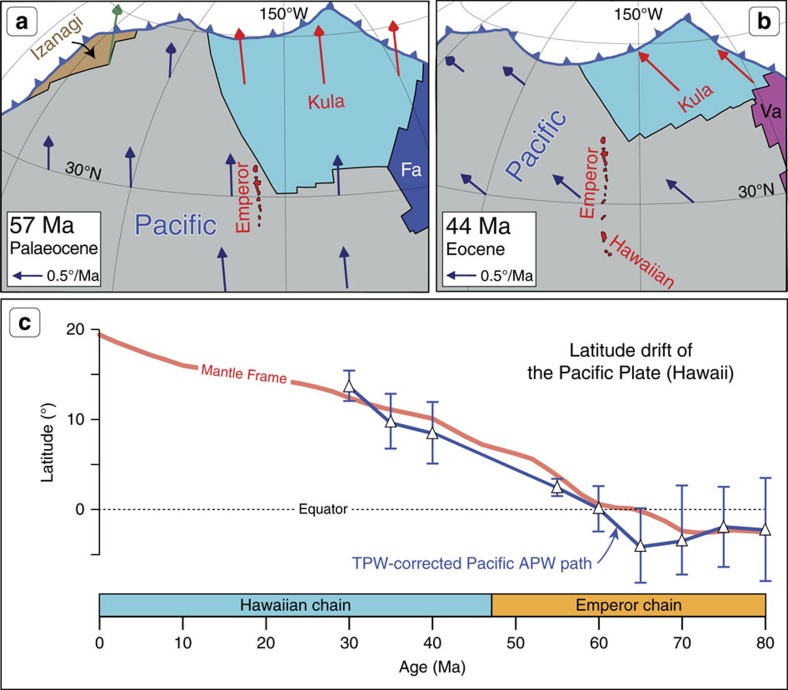
A conspicuous 60° bend of the Hawaiian-Emperor Chain in the north-western Pacific Ocean has variously been interpreted as the result of an abrupt Pacific plate motion change in the Eocene (∼47 Ma), a rapid southward drift of the Hawaiian hotspot before the formation of the bend, or a combination of these two causes. Palaeomagnetic data from the Emperor Seamounts prove ambiguous for constraining the Hawaiian hotspot drift, but mantle flow modelling suggests that the hotspot drifted 4-9° south between 80 and 47 Ma. Here we demonstrate that southward hotspot drift cannot be a sole or dominant mechanism for formation of the Hawaiian-Emperor Bend (HEB). While southward hotspot drift has resulted in more northerly positions of the Emperor Seamounts as they are observed today, formation of the HEB cannot be explained without invoking a prominent change in the direction of Pacific plate motion around 47 Ma.
北太平洋夏威夷-皇帝海山链的一个明显的 60°弯曲,各种解释为始新世(约 47Ma)太平洋板块运动的突然变化,或弯曲形成前夏威夷热点的快速向南漂移,或这两种原因的组合。来自皇帝海山的古地磁数据对约束夏威夷热点漂移模棱两可,但地幔流模拟表明,热点在 80 至 47Ma 期间向南漂移了 4-9°。在这里,我们证明了热点的向南漂移不能是形成夏威夷-皇帝弯曲(HEB)的唯一或主要机制。虽然热点的向南漂移导致了今天观察到的皇帝海山更偏北的位置,但如果不引入 47Ma 左右太平洋板块运动方向的明显变化,就无法解释 HEB 的形成。