Zhang Youying, Meng Tian, Zuo Ling, Bei Yu, Zhang Qihao, Su Zhijian, Huang Yadong, Pang Jiyan, Xiang Qi, Yang Hongtu
Institute of Biomedicine & Guangdong Provincial Key Laboratory of Bioengineering Medicine, Jinan University, Guangzhou 510632, China.
Department of Pharmacy, Jinan University, Guangzhou 510632, China.
Mar Drugs. 2017 Jun 3;15(6):163. doi: 10.3390/md15060163.
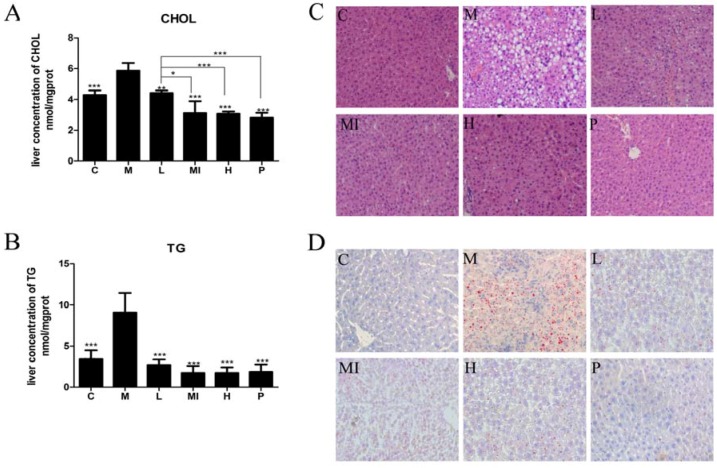
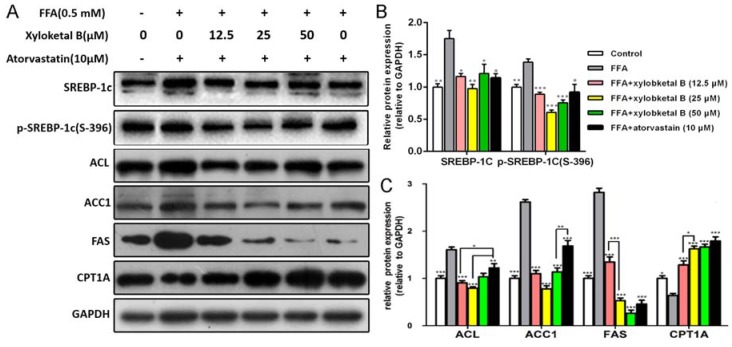
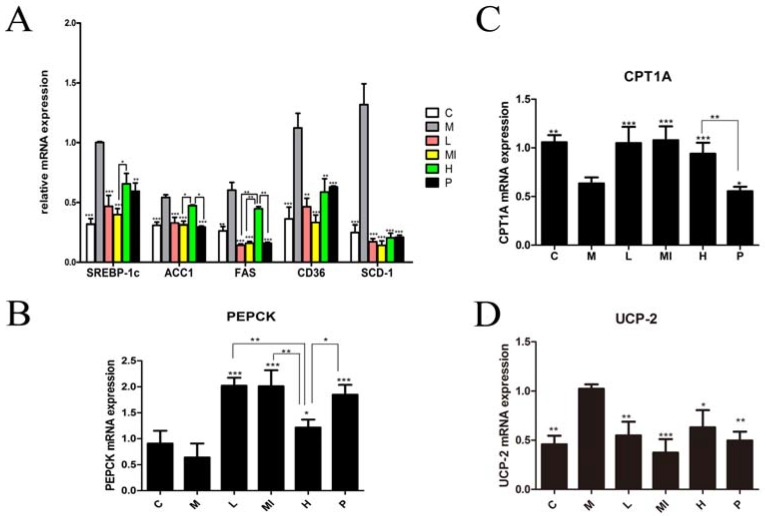
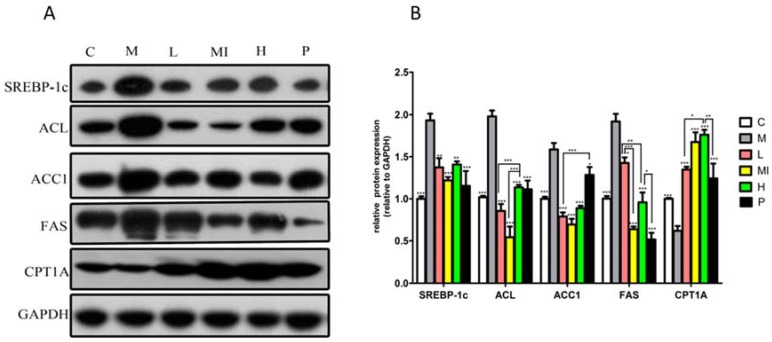
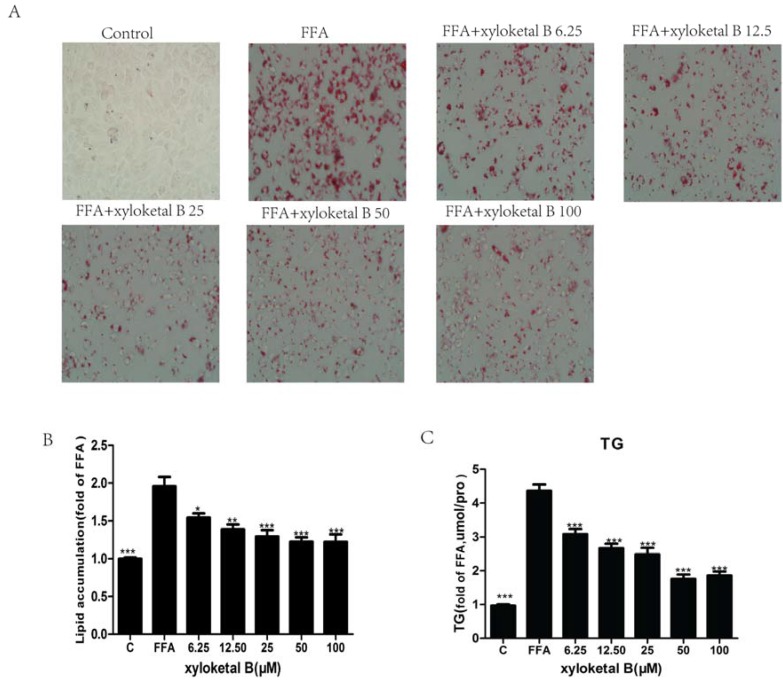
The goal of this study was to examine the effects of xyloketal B on nonalcoholic fatty liver disease (NAFLD) and to explore the molecular mechanisms underlying its effects in both in vivo and in vitro models. We discovered an association between xyloketal B and the sterol regulatory element-binding protein-1c (SREBP-1c) signaling pathway, which is related to lipid metabolism. Mice were dosed with xyloketal B (5, 10 and 20 mg/kg/d) and atorvastatin (15 mg/kg/d) via intraperitoneal injection once daily for 40 days after being fed a high fat diet plus 10% high fructose liquid (HFD+HFL) for 8 weeks. Xyloketal B significantly improved HFD+HFL-induced hepatic histological lesions and attenuated lipid and glucose accumulation in the blood as well as lipid accumulation in the liver. Xyloketal B increased the expression of CPT1A, and decreased the expression of SREBP-1c and its downstream targeting enzymes such as ACC1, ACL, and FAS. Xyloketal B also significantly reduced lipid accumulation in HepG2 cells treated with free fatty acids (FFAs). These data suggested that xyloketal B has lipid-lowering effects via the SREBP-1c pathway that regulate lipid metabolism. Thus, targeting SREBP-1c activation with xyloketal B may be a promising novel approach for NAFLD treatment.
本研究的目的是考察木酮糖酮B对非酒精性脂肪性肝病(NAFLD)的影响,并在体内和体外模型中探索其作用的分子机制。我们发现木酮糖酮B与固醇调节元件结合蛋白-1c(SREBP-1c)信号通路之间存在关联,该信号通路与脂质代谢相关。在给予高脂饮食加10%高果糖液体(HFD+HFL)8周后,通过腹腔注射,每天给小鼠一次木酮糖酮B(5、10和20mg/kg/d)和阿托伐他汀(15mg/kg/d),持续40天。木酮糖酮B显著改善了HFD+HFL诱导的肝脏组织学损伤,并减轻了血液中的脂质和葡萄糖积累以及肝脏中的脂质积累。木酮糖酮B增加了CPT1A的表达,并降低了SREBP-1c及其下游靶向酶如ACC1、ACL和FAS的表达。木酮糖酮B还显著减少了用游离脂肪酸(FFA)处理的HepG2细胞中的脂质积累。这些数据表明,木酮糖酮B通过调节脂质代谢的SREBP-1c途径具有降脂作用。因此,用木酮糖酮B靶向SREBP-1c激活可能是一种有前景的NAFLD治疗新方法。