Rizzo Ambra, Donzelli Sara, Girgenti Vita, Sacconi Andrea, Vasco Chiara, Salmaggi Andrea, Blandino Giovanni, Maschio Marta, Ciusani Emilio
Laboratory of Clinical Pathology and Medical Genetics, Foundation IRCCS Neurological Institute C. Besta, Via Celoria, 11, 20133, Milan, Italy.
Oncogenomic and Epigenetic Unit, Regina Elena National Cancer Institute, Via Elio Chianesi, 5300144, Rome, Italy.
J Exp Clin Cancer Res. 2017 Jun 6;36(1):76. doi: 10.1186/s13046-017-0546-9.
Epilepsy is a frequent symptom in patients with glioma. Although treatment with antiepileptic drugs is generally effective in controlling seizures, drug-resistant patients are not uncommon. Multidrug resistance proteins (MRPs) and P-gp are over-represented in brain tissue of patients with drug-resistant epilepsy, suggesting their involvement in the clearance of antiepileptic medications. In addition to their anticonvulsant action, some drugs have been documented for cytotoxic effects. Aim of this study was to evaluate possible in vitro cytotoxic effects of two new-generation antiepileptic drugs on a human glioma cell line U87MG.
Cytotoxicity of brivaracetam and lacosamide was tested on U87MG, SW1783 and T98G by MTS assay. Expression of chemoresistance molecules was evaluated using flow cytometry in U87MG and human umbilical vein endothelial cells (HUVECs). To investigate the putative anti-proliferative effect, apoptosis assay, microRNA expression profile and study of cell cycle were performed.
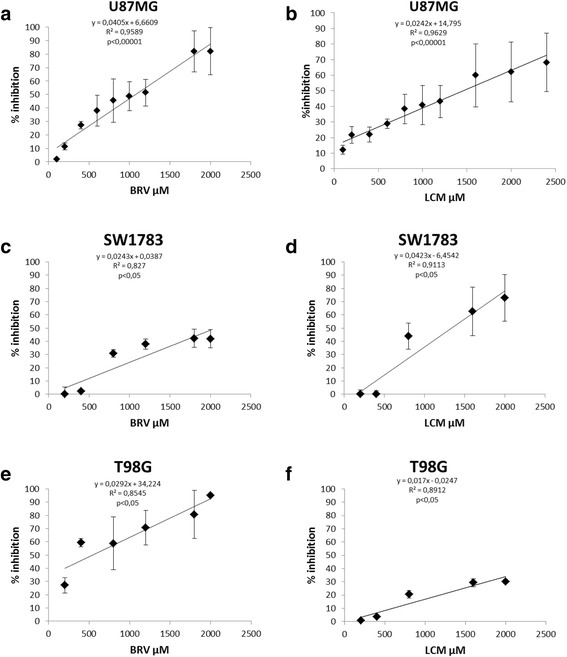
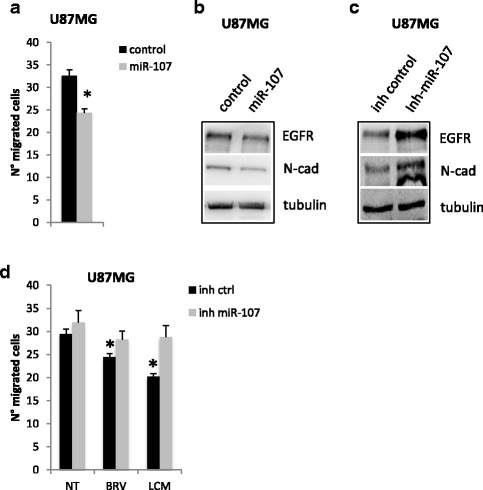
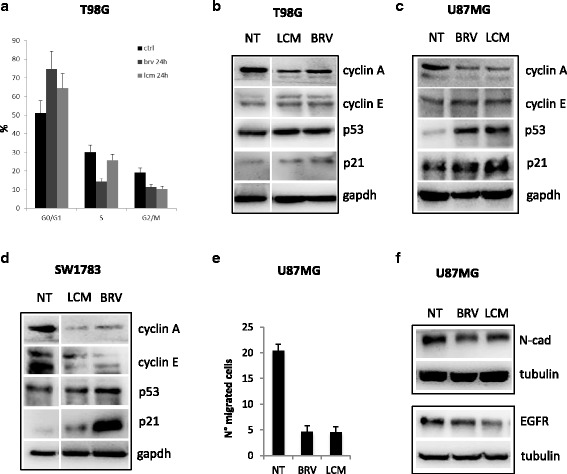
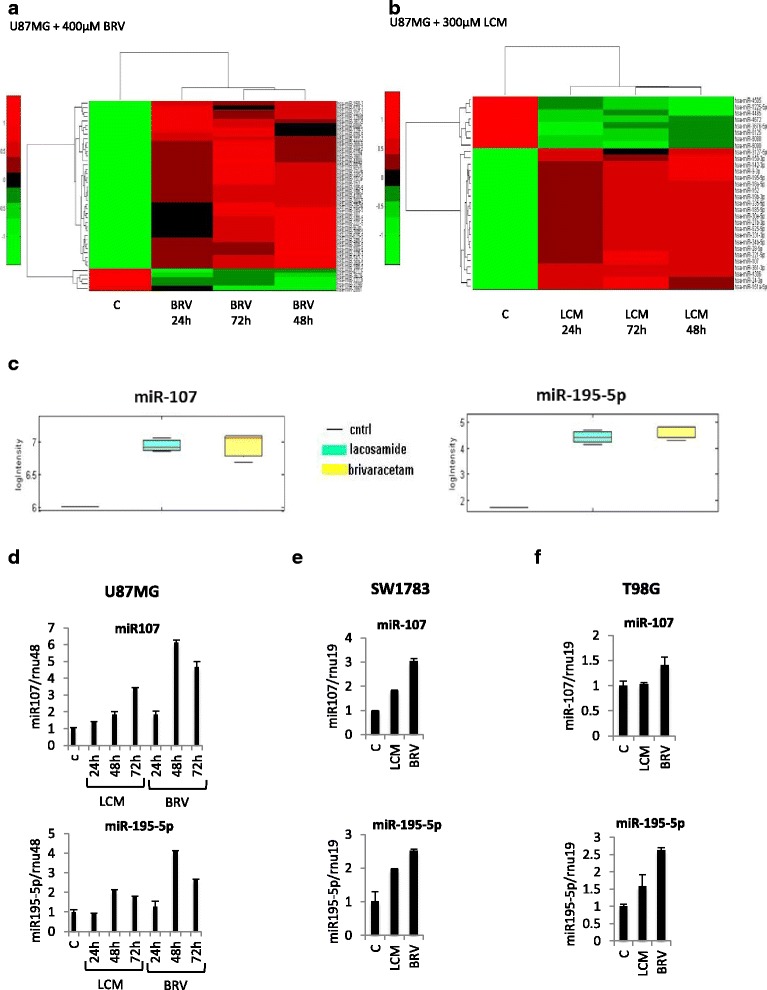
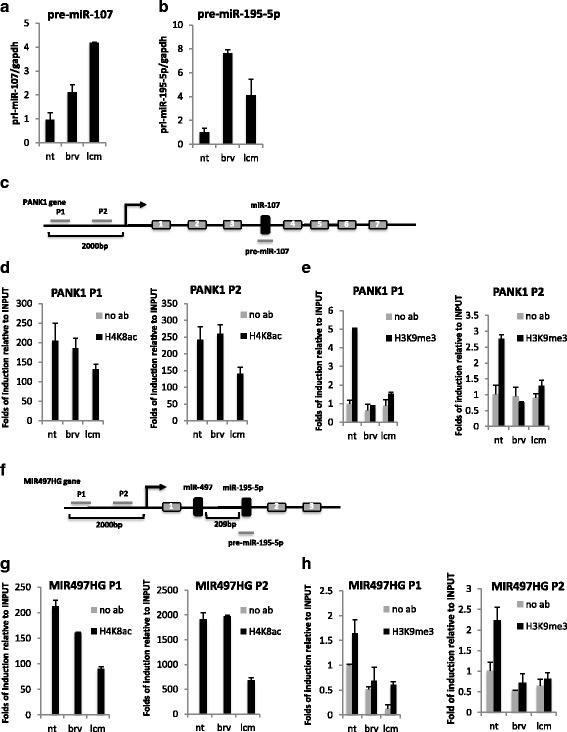
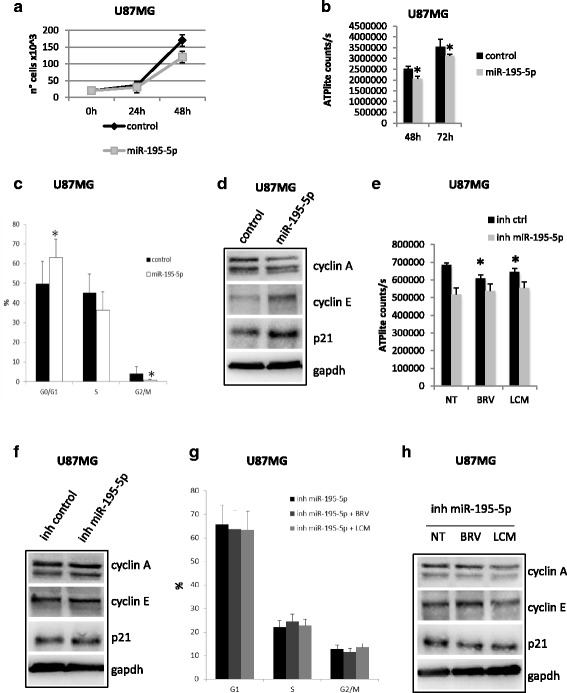
Brivaracetam and lacosamide showed a dose-dependent cytotoxic and anti-migratory effects. Cytotoxicity was not related to apoptosis. The exposure of glioma cells to brivaracetam and lacosamide resulted in the modulation of several microRNAs; particularly, the effect of miR-195-5p modulation seemed to affect cell cycle, while miR-107 seemed to be implicated in the inhibition of cells migration. Moreover, brivaracetam and lacosamide treatment did not modulate the expression of chemoresistance-related molecules MRPs1-3-5, GSTπ, P-gp on U87MG and HUVECs.
Based on antineoplastic effect of brivaracetam and lacosamide on glioma cells, we assume that patients with glioma could benefit by the treatment with these two molecules, in addition to standard therapeutic options.
癫痫是胶质瘤患者的常见症状。尽管使用抗癫痫药物治疗通常能有效控制癫痫发作,但耐药患者并不少见。多药耐药蛋白(MRPs)和P-糖蛋白(P-gp)在耐药性癫痫患者的脑组织中过度表达,提示它们参与了抗癫痫药物的清除。除了抗惊厥作用外,一些药物还具有细胞毒性作用。本研究的目的是评估两种新一代抗癫痫药物对人胶质瘤细胞系U87MG的体外细胞毒性作用。
采用MTS法检测布瓦西坦和拉科酰胺对U87MG、SW1783和T98G的细胞毒性。使用流式细胞术评估U87MG和人脐静脉内皮细胞(HUVECs)中化疗耐药分子的表达。为了研究假定的抗增殖作用,进行了凋亡检测、微小RNA表达谱分析和细胞周期研究。
布瓦西坦和拉科酰胺显示出剂量依赖性的细胞毒性和抗迁移作用。细胞毒性与凋亡无关。胶质瘤细胞暴露于布瓦西坦和拉科酰胺导致几种微小RNA的调节;特别是,miR-195-5p调节的作用似乎影响细胞周期,而miR-107似乎与抑制细胞迁移有关。此外,布瓦西坦和拉科酰胺处理并未调节U87MG和HUVECs上化疗耐药相关分子MRPs1-3-5、谷胱甘肽S-转移酶π(GSTπ)、P-gp的表达。
基于布瓦西坦和拉科酰胺对胶质瘤细胞的抗肿瘤作用,我们推测除了标准治疗方案外,胶质瘤患者使用这两种分子进行治疗可能会受益。