Sparrow Annie, Almilaji Khaled, Tajaldin Bachir, Teodoro Nicholas, Langton Paul
Faculty of Global Health, Icahn School of Medicine at Mount Sinai, New York, New York, USA.
Canadian International Medical Relief Organization, Gaziantep, Turkey.
BMJ Glob Health. 2016 Oct 18;1(3):e000029. doi: 10.1136/bmjgh-2016-000029. eCollection 2016.
Public health breakdown from the Syrian government's targeting of healthcare systems in politically unsympathetic areas has yielded a resurgence of infectious diseases. Suspected cholera recently reappeared but conflict-related constraints impede laboratory confirmation. Given the government's previous under-reporting of infectious outbreaks and the reliance of the WHO on government reporting, we sought to assess the reliability of current surveillance systems.
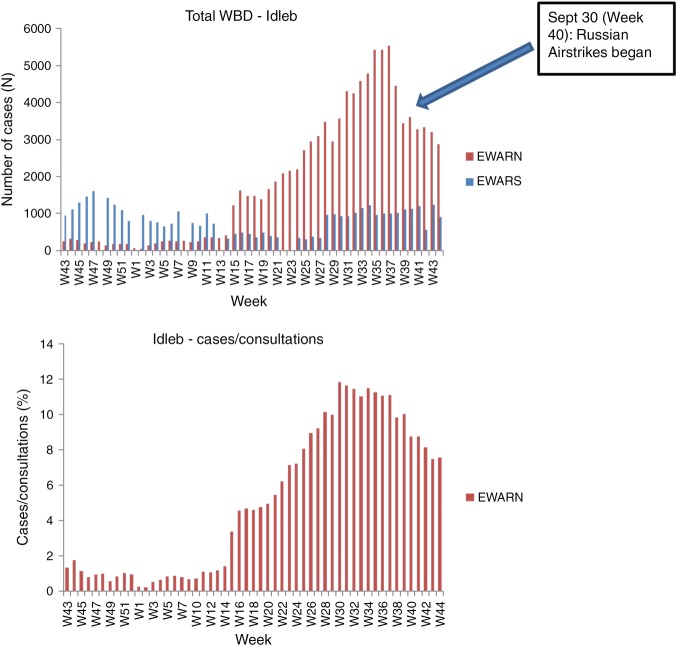
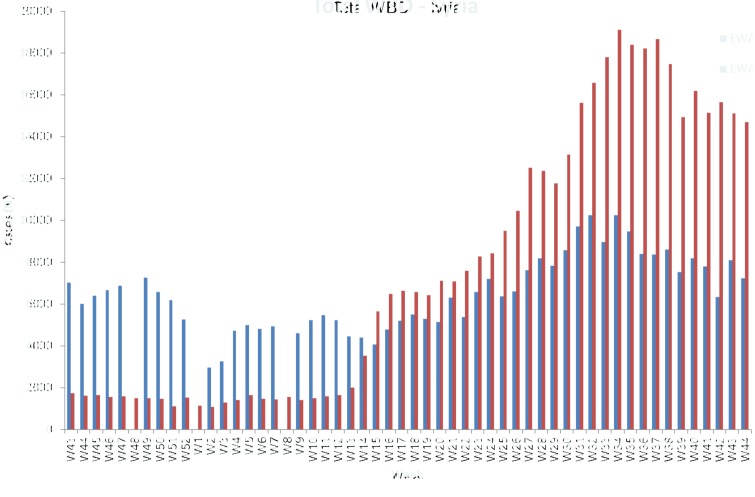
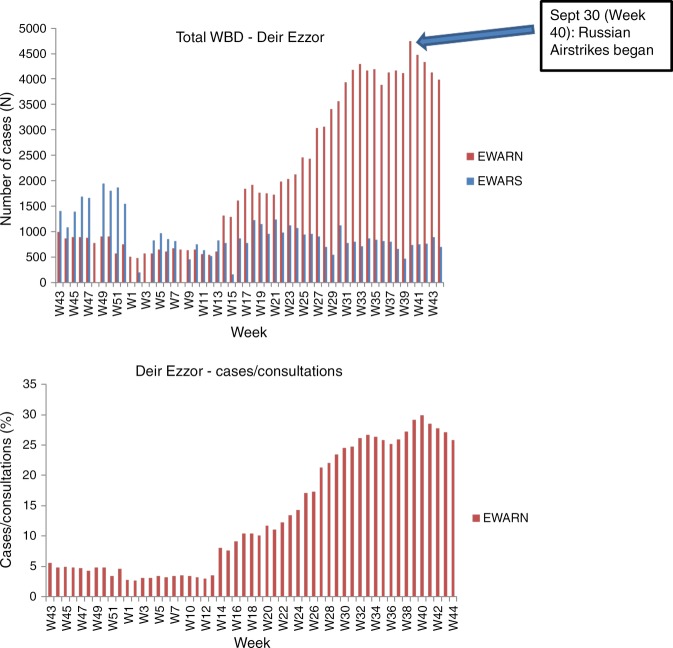
We compared weekly surveillance reports of waterborne diseases from the Syrian government's (WHO-associated) Early Warning and Response System (EWARS), based in Damascus, and the independent, non-governmental Early Warning and Response Network (EWARN) headquartered in Gaziantep, Turkey. We compared raw case rates by EWARS and EWARN and assessed the quality of reporting against the WHO benchmarks.
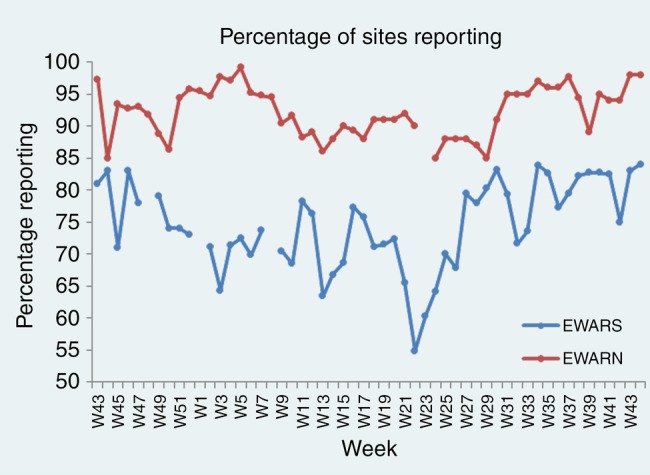
We identified significant under-reporting and delays in the government's surveillance. On average, EWARS reports were published 24 days (range 12-61) after the reference week compared with 11 days (5-21) for EWARN. Average completeness for EWARS was 75% (55-84%), compared with 92% for EWARN (85-99%). Average timeliness for EWARS was 79% (51-100%), compared with 88% for EWARN (70-97%). EWARS made limited use of rapid diagnostic tests, and rates of collection of stool samples for laboratory cholera testing were well below reference levels.
In the context of the current Syrian war, the government's surveillance is inadequate due to lack of access to non-government held territory, an incentive to under-report the consequence of government attacks on health infrastructure, and an impractical insistence on laboratory confirmation. These findings should guide the WHO reform for surveillance in conflict zones.
叙利亚政府对政治上不支持地区的医疗系统进行打击,导致公共卫生体系崩溃,传染病再度流行。近期疑似霍乱疫情重现,但与冲突相关的限制因素妨碍了实验室确诊。鉴于政府此前对传染病暴发的报告不足,且世界卫生组织(WHO)依赖政府报告,我们试图评估当前监测系统的可靠性。
我们比较了叙利亚政府(与WHO相关)位于大马士革的早期预警与应对系统(EWARS)以及总部位于土耳其加济安泰普的独立非政府早期预警与应对网络(EWARN)的每周水源性疾病监测报告。我们比较了EWARS和EWARN的原始病例率,并根据WHO的基准评估报告质量。
我们发现政府的监测存在严重漏报和延迟情况。平均而言,EWARS的报告在参考周后24天(范围为12 - 61天)发布,而EWARN为11天(5 - 21天)。EWARS的平均完整性为75%(55 - 84%),EWARN为92%(85 - 99%)。EWARS的平均及时性为79%(51 - 100%),EWARN为88%(70 - 97%)。EWARS对快速诊断检测的使用有限,用于实验室霍乱检测的粪便样本采集率远低于参考水平。
在当前叙利亚战争背景下,由于无法进入非政府控制地区、有瞒报政府对卫生基础设施攻击后果的动机以及对实验室确诊的不切实际坚持,政府的监测工作存在不足。这些发现应指导WHO对冲突地区监测工作的改革。