Panagopoulos Ioannis, Gorunova Ludmila, Brunetti Marta, Agostini Antonio, Andersen Hege Kilen, Lobmaier Ingvild, Bjerkehagen Bodil, Heim Sverre
Section for Cancer Cytogenetics, Institute for Cancer Genetics and Informatics, The Norwegian Radium Hospital, Oslo University Hospital, Oslo, Norway.
Centre for Cancer Biomedicine, Faculty of Medicine, University of Oslo, Oslo, Norway.
Oncotarget. 2017 Jul 25;8(30):48769-48781. doi: 10.18632/oncotarget.17953.
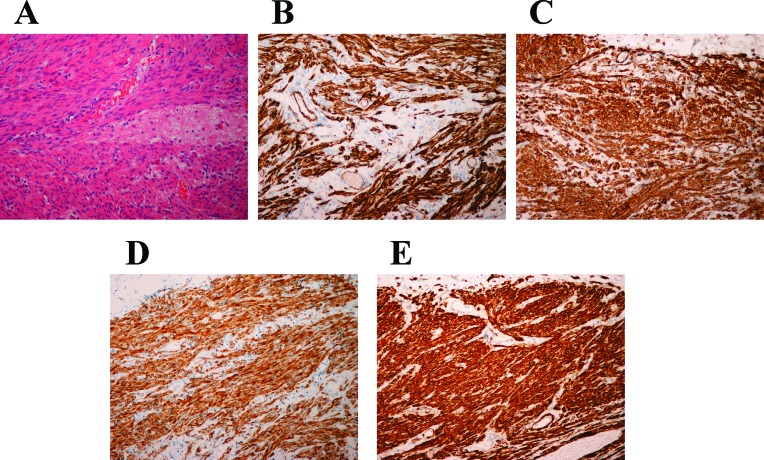
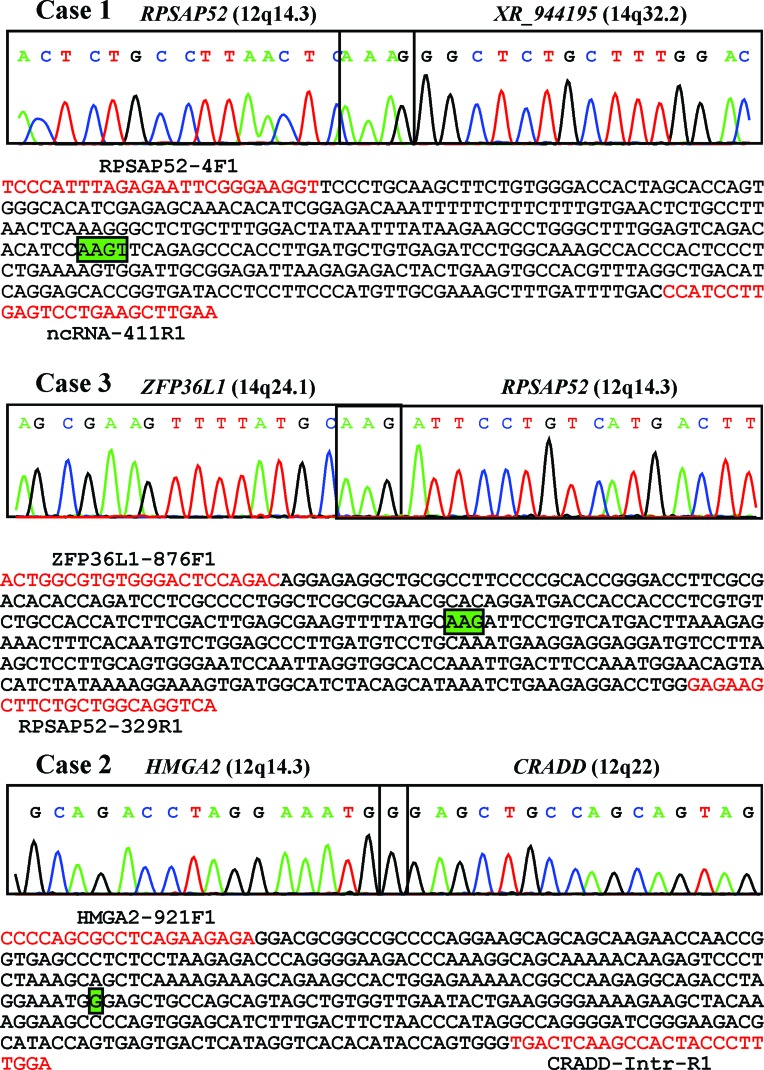
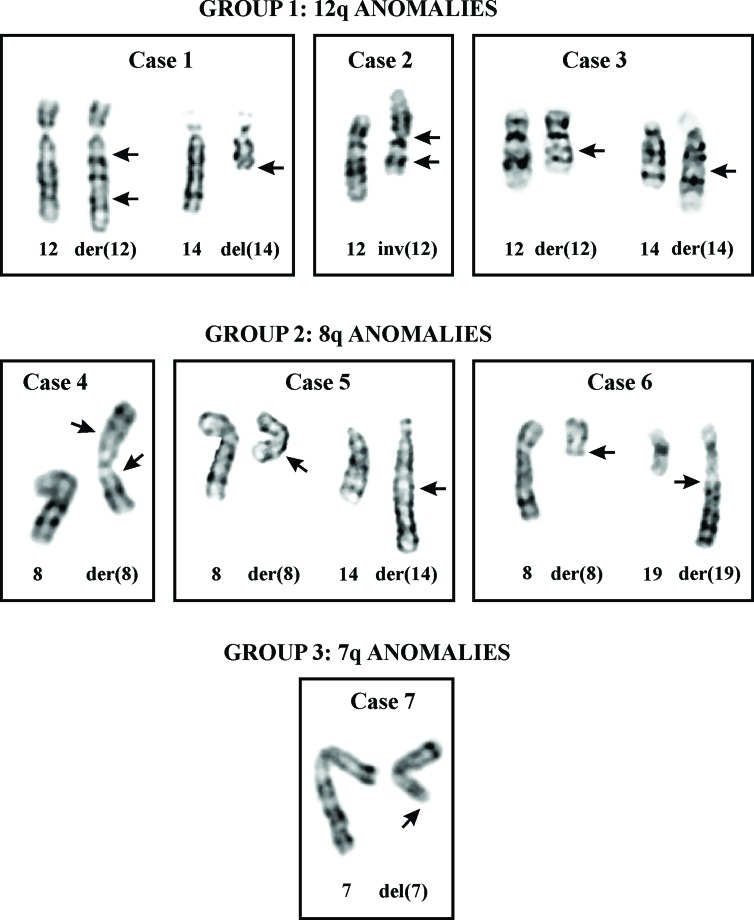
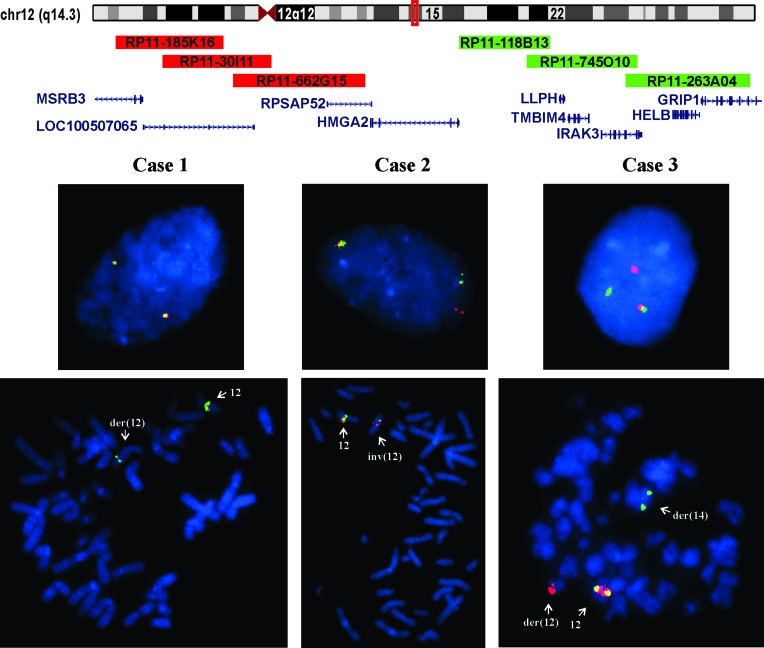
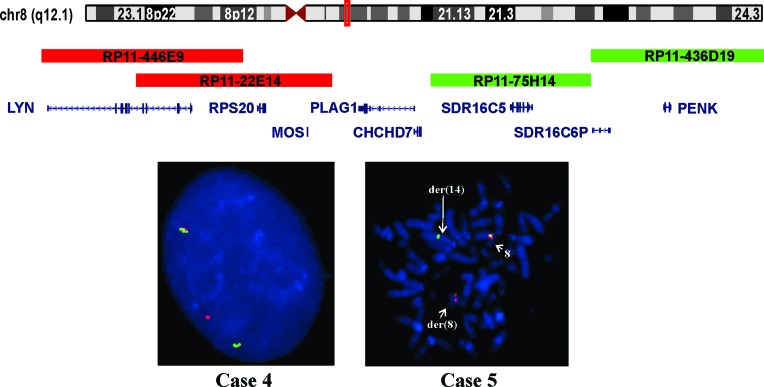
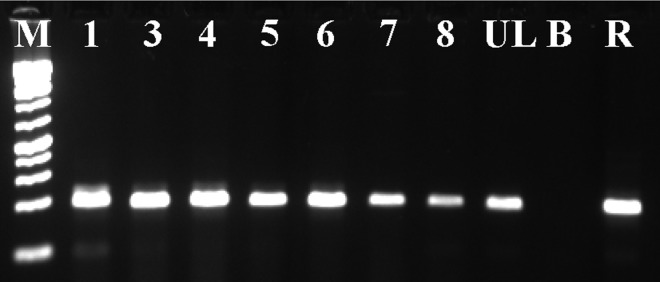
Leiomyoma of deep soft tissue is a rare type of benign smooth muscle tumor that mostly occurs in the retroperitoneum or abdominal cavity of women, and about which very little genetic information exists. In the present study, eight leiomyomas of deep soft tissue were genetically analyzed. G-banding showed that three tumors carried rearrangements of the long arm of chromosome 12, three others had 8q rearrangements, the 7th tumor had deletion of the long arm of chromosome 7, del(7)(q22), and the 8th had aberrations of chromosome bands 3q2123 and 11q2122. The target genes of the 12q and 8q aberrations were HMGA2 and PLAG1, respectively. In the leiomyomas with 12q rearrangements, both HMGA2 and PLAG1 were expressed whereas in the tumors with 8q aberrations, only PLAG1 was expressed. In the cases without 12q or 8q aberrations, the expression of HMGA2 was very low and PLAG1 was expressed only in the case with del(7)(q22). All eight leiomyomas of deep soft tissue expressed MED12 but none of them had mutation in exon 2 of that gene. In two tumors with 12q rearrangements, RPSAP52 on 12q14.3 was fused with non-coding RNA (accession number XR_944195) from 14q32.2 or ZFP36L1 from14q24.1. In a tumor with inv(12), exon 3 of HMGA2 was fused to a sequence in intron 1 of the CRADD gene from 12q22. The present data together with those of our two previous studies in which the fusions KAT6B-KANSL1 and EWSR1-PBX3 were described in two retroperitoneal leiomyomas carrying a t(10;17)(q22;q21) and a t(9;22)(q33;q12) translocation, respectively, show that leiomyomas of deep soft tissue are genetically heterogenous but have marked similarities to uterine leiomyomas.
深部软组织平滑肌瘤是一种罕见的良性平滑肌肿瘤,主要发生在女性的腹膜后或腹腔内,关于其遗传信息知之甚少。在本研究中,对8例深部软组织平滑肌瘤进行了基因分析。G显带显示,3例肿瘤存在12号染色体长臂重排,另外3例有8号染色体长臂重排,第7例肿瘤存在7号染色体长臂缺失,即del(7)(q22),第8例有3q2123和11q2122染色体带异常。12号染色体和8号染色体异常的靶基因分别是HMGA2和PLAG1。在有12号染色体重排的平滑肌瘤中,HMGA2和PLAG1均表达,而在有8号染色体异常的肿瘤中,仅PLAG1表达。在无12号或8号染色体异常的病例中,HMGA2的表达非常低,PLAG1仅在有del(7)(q22)的病例中表达。所有8例深部软组织平滑肌瘤均表达MED12,但该基因外显子2均无突变。在2例有12号染色体重排的肿瘤中,12q14.3上的RPSAP52与14q32.2的非编码RNA(登录号XR_944195)或14q24.1的ZFP36L1融合。在1例有inv(12)的肿瘤中,HMGA2的外显子3与12q22的CRADD基因内含子1中的一个序列融合。本研究数据与我们之前两项研究的数据一起,在两项研究中分别在携带t(10;17)(q22;q21)和t(9;22)(q33;q12)易位的两例腹膜后平滑肌瘤中描述了融合基因KAT6B-KANSL1和EWSR1-PBX3,表明深部软组织平滑肌瘤在遗传上是异质性的,但与子宫平滑肌瘤有显著相似性。