Stokes Kyle, Cooke Abrial, Chang Hanna, Weaver David R, Breault David T, Karpowicz Phillip
Department of Biological Sciences, University of Windsor, Windsor, Ontario, Canada.
Department of Neurobiology, University of Massachusetts Medical School, Worcester, Massachusetts.
Cell Mol Gastroenterol Hepatol. 2017 Apr 5;4(1):95-114. doi: 10.1016/j.jcmgh.2017.03.011. eCollection 2017 Jul.
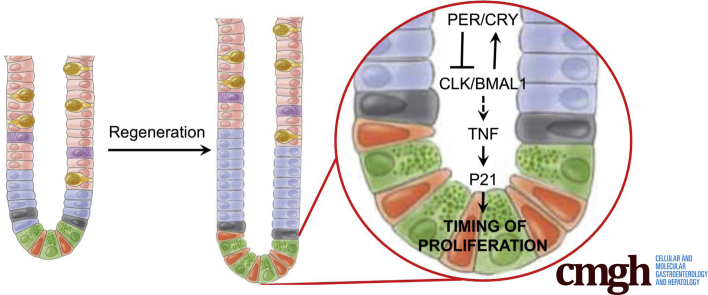
BACKGROUND & AIMS: The gastrointestinal syndrome is an illness of the intestine caused by high levels of radiation. It is characterized by extensive loss of epithelial tissue integrity, which initiates a regenerative response by intestinal stem and precursor cells. The intestine has 24-hour rhythms in many physiological functions that are believed to be outputs of the circadian clock: a molecular system that produces 24-hour rhythms in transcription/translation. Certain gastrointestinal illnesses are worsened when the circadian rhythms are disrupted, but the role of the circadian clock in gastrointestinal regeneration has not been studied.
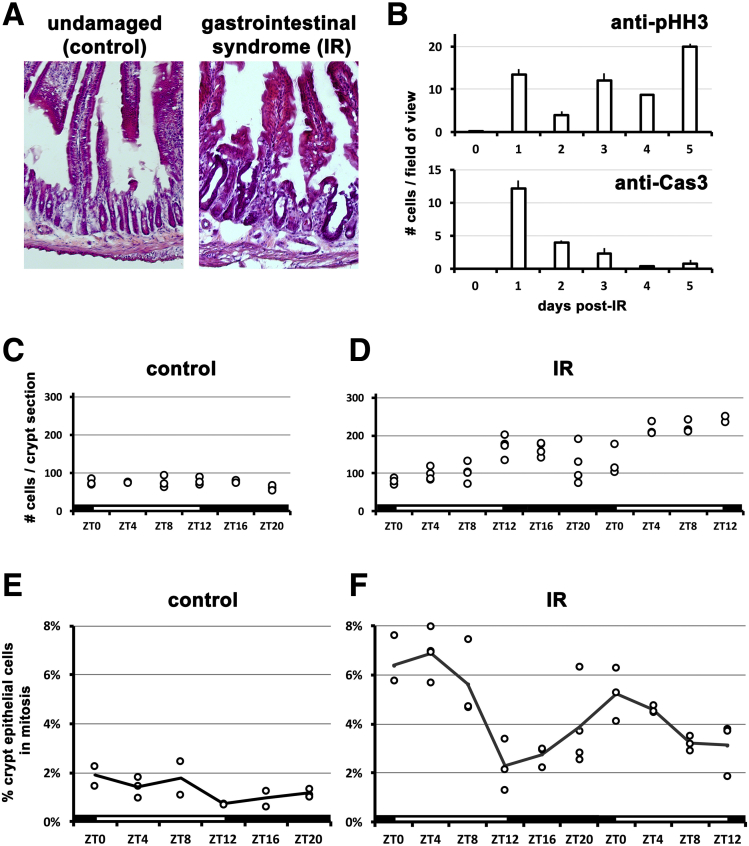
We tested the timing of regeneration in the mouse intestine during the gastrointestinal syndrome. The role of the circadian clock was tested genetically using the loss of function mouse mutant , and using intestinal organoid culture.
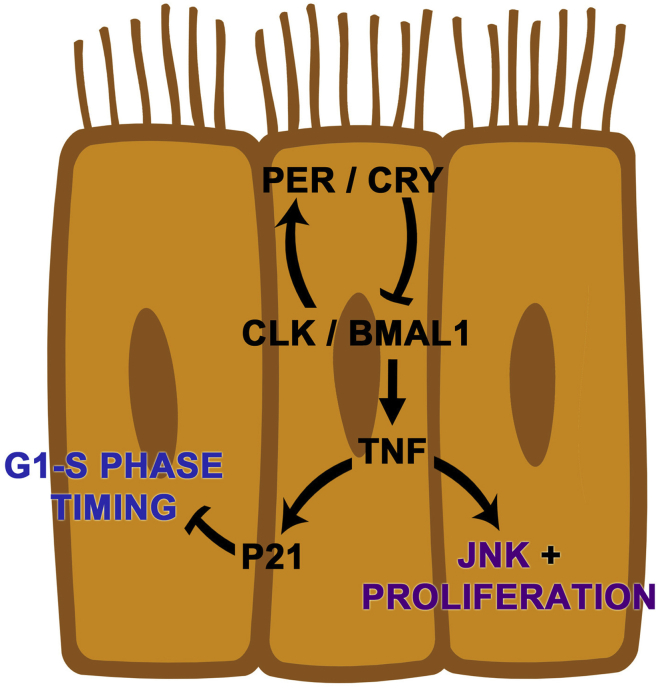
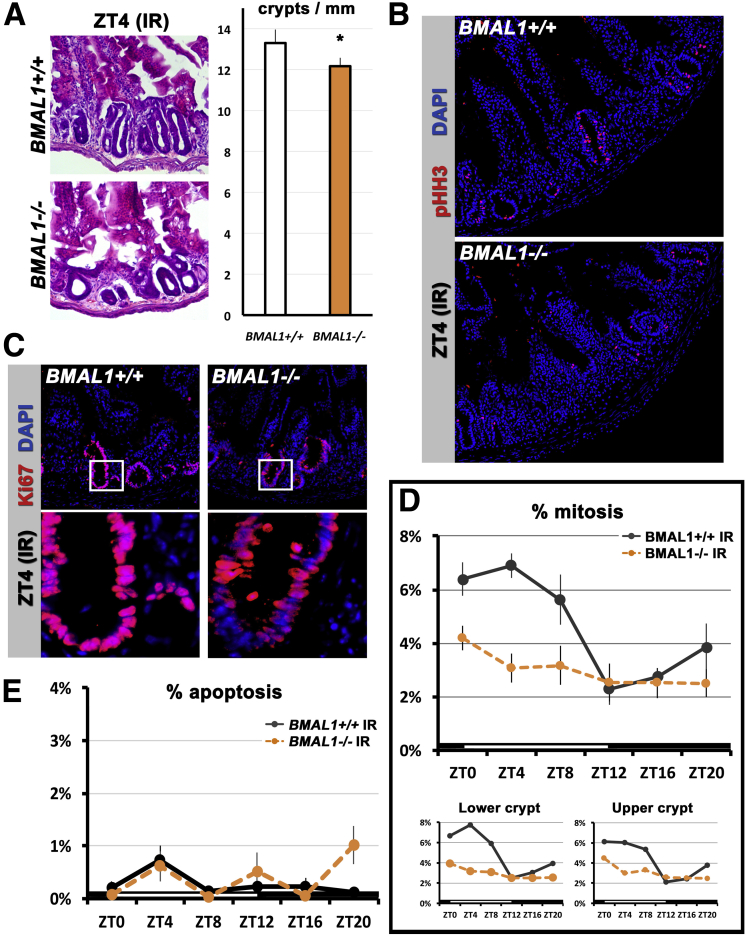
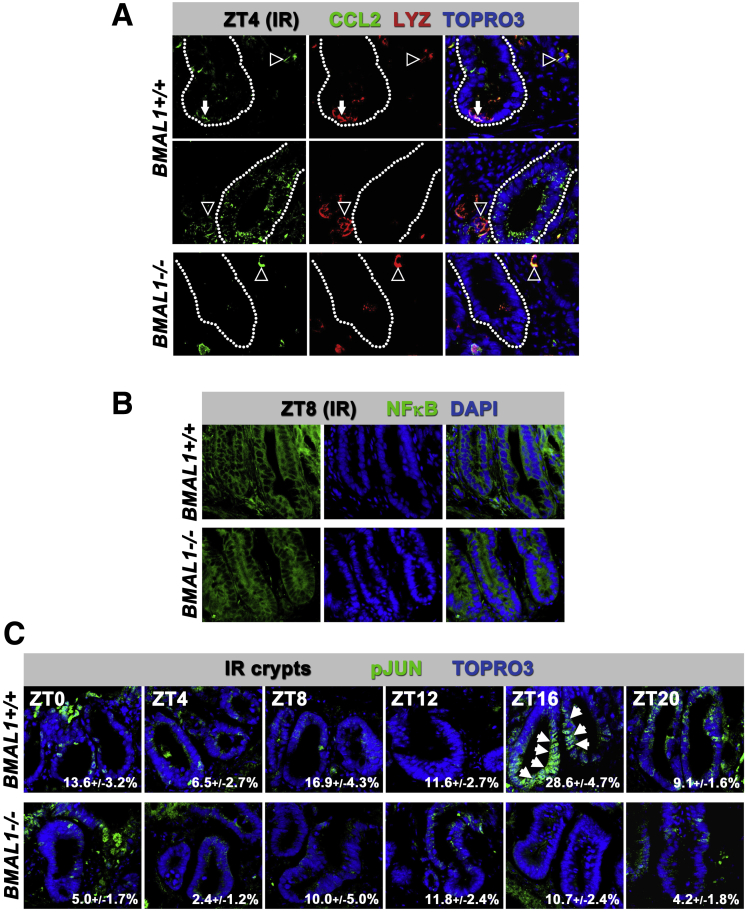
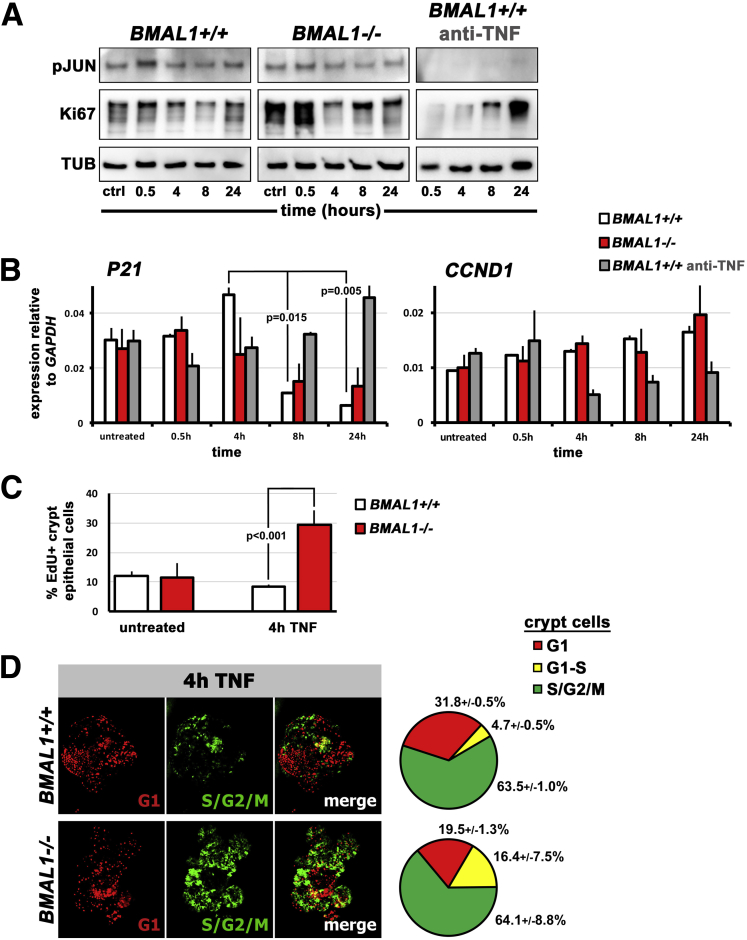
The proliferation of the intestinal epithelium follows a 24-hour rhythm during the gastrointestinal syndrome. The circadian clock runs in the intestinal epithelium during this pathologic state, and the loss of the core clock gene, , disrupts both the circadian clock and rhythmic proliferation. Circadian activity in the intestine involves a rhythmic production of inflammatory cytokines and subsequent rhythmic activation of the JNK stress response pathway.
Our results show that a circadian rhythm in inflammation and regeneration occurs during the gastrointestinal syndrome. The study and treatment of radiation-induced illnesses, and other gastrointestinal illnesses, should consider 24-hour timing in physiology and pathology.
胃肠道综合征是一种由高水平辐射引起的肠道疾病。其特征是上皮组织完整性广泛丧失,从而引发肠道干细胞和前体细胞的再生反应。肠道在许多生理功能方面具有24小时节律,这些节律被认为是生物钟的输出结果:生物钟是一种在转录/翻译过程中产生24小时节律的分子系统。当昼夜节律被打乱时,某些胃肠道疾病会恶化,但生物钟在胃肠道再生中的作用尚未得到研究。
我们测试了胃肠道综合征期间小鼠肠道再生的时间。通过使用功能丧失型小鼠突变体进行基因测试,以及使用肠道类器官培养来测试生物钟的作用。
在胃肠道综合征期间,肠道上皮细胞的增殖遵循24小时节律。在这种病理状态下,生物钟在肠道上皮细胞中运行,核心生物钟基因的缺失会扰乱生物钟和节律性增殖。肠道中的昼夜活动涉及炎症细胞因子的节律性产生以及随后JNK应激反应途径的节律性激活。
我们的结果表明,在胃肠道综合征期间,炎症和再生过程中存在昼夜节律。对辐射诱发疾病和其他胃肠道疾病的研究与治疗应考虑生理和病理过程中的24小时时间规律。