Meng Jun, Yao Zhenyu, He Yaqing, Zhang Renli, Zhang Yanwei, Yao Xiangjie, Yang Hong, Chen Long, Zhang Zhen, Zhang Hailong, Bao Xueqin, Hu Gang, Wu Tangchun, Cheng Jinquan
Department of Microbiology, Shenzhen Center for Disease Control and Prevention, Shenzhen, Guangdong, China.
Department of Occupational and Environmental Health Key Laboratory of Environment and Health, Ministry of Education and State Key Laboratory of Environmental Health (Incubating), School of Public Health, Tongji Medical College, Huazhong University of Science and Technology, Wuhan, Hubei, China.
Cell Death Dis. 2017 Jun 8;8(6):e2866. doi: 10.1038/cddis.2017.257.
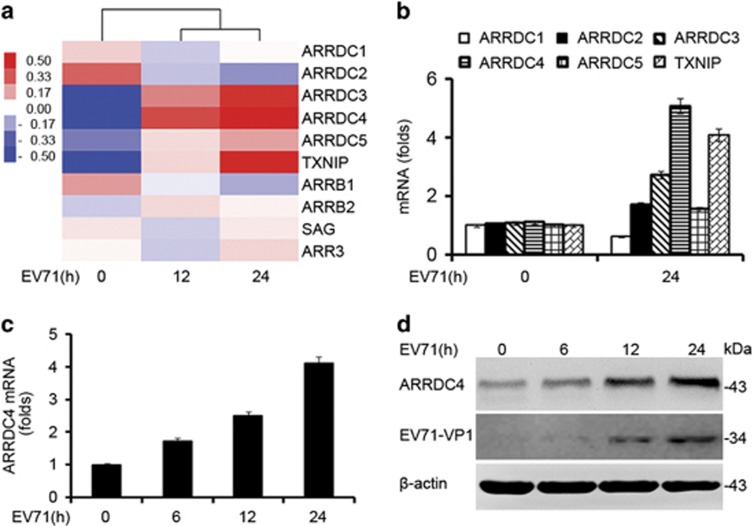
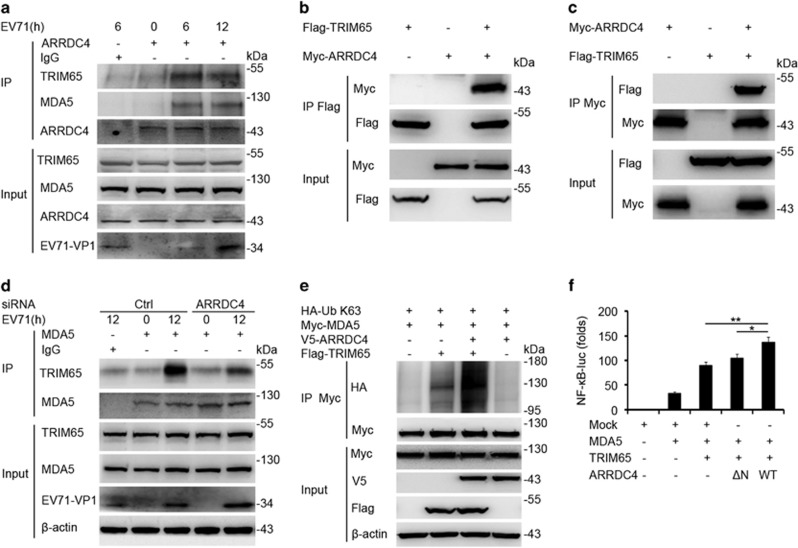
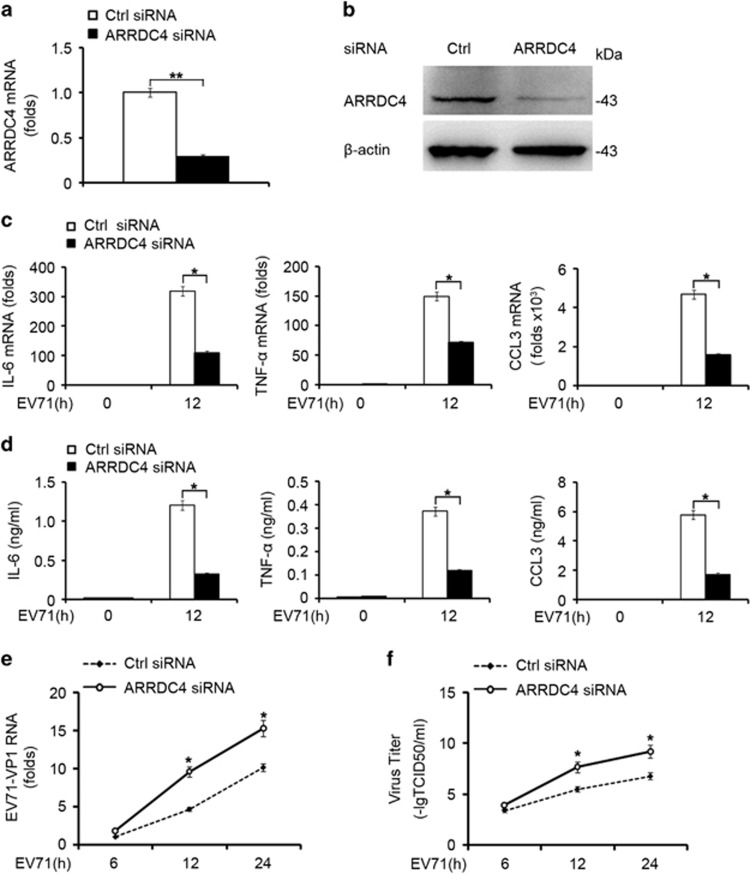
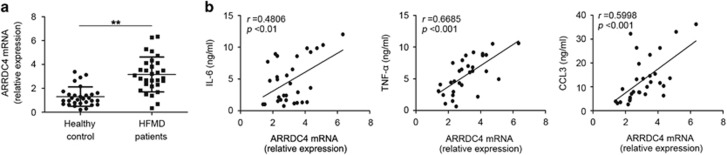
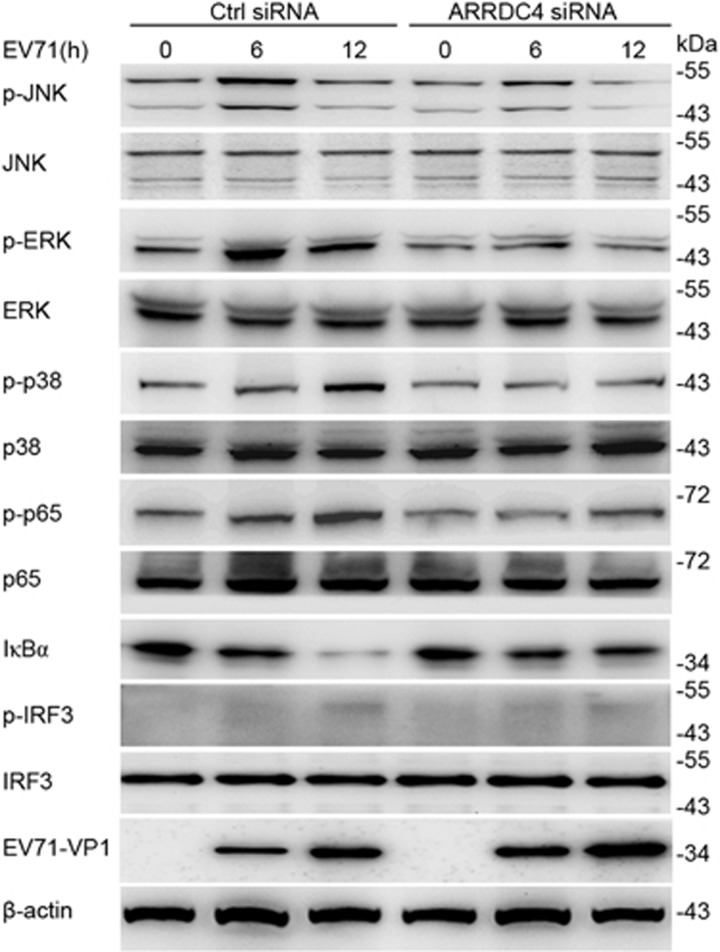
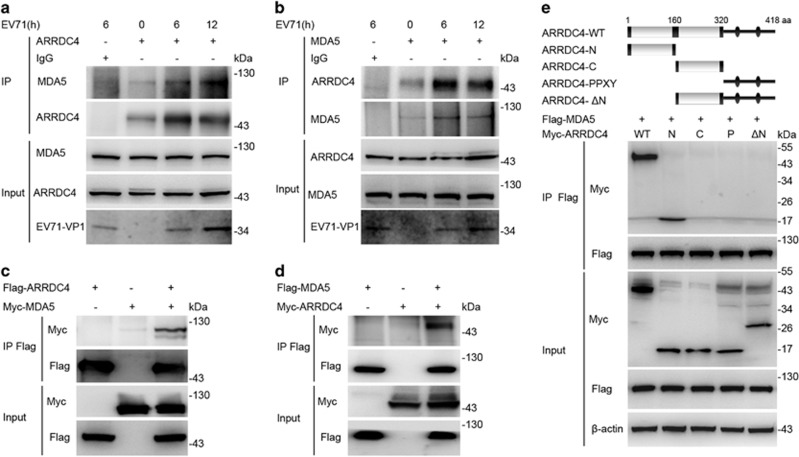
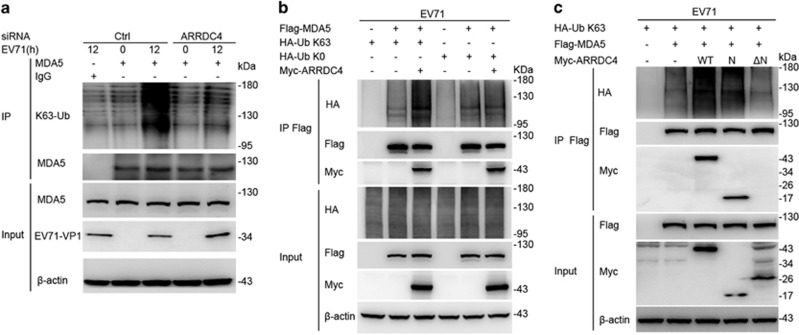
Enterovirus 71 (EV71) is the main causative agent of hand, foot and mouth disease (HFMD), which induces significantly elevated levels of cytokines and chemokines, leading to local or system inflammation and severe complications, whereas the underlying regulatory mechanisms and the inflammatory pathogenesis remain elusive. ARRDC4 is one member of arrestins family, having important roles in glucose metabolism and G-protein-coupled receptors (GPCRs) related physiological and pathological processes, however, the function of ARRDC4 in innate immune system is largely unknown. Here we identified that ARRDC4 expression was increased after EV71 infection in THP-1-derived macrophages and verified in EV71-infected HFMD patients and the healthy candidates. The expression level of ARRDC4 was positively correlated with the serum concentration of IL-6, TNF-α and CCL3 in clinical specimens. ARRDC4 interacted with MDA5 via the arrestin-like N domain, and further recruited TRIM65 to enhance the K63 ubiquitination of MDA5, resulting in activation of the downstream innate signaling pathway and transcription of proinflammatory cytokines during EV71 infection. Our data highlight new function of ARRDC4 in innate immunity, contributing to the better understanding about regulation of MDA5 activation after EV71 infection, and also suggest ARRDC4 may serve as a potential target for intervention of EV71-induced inflammatory response.
肠道病毒71型(EV71)是手足口病(HFMD)的主要病原体,它可诱导细胞因子和趋化因子水平显著升高,导致局部或全身炎症以及严重并发症,然而其潜在的调控机制和炎症发病机制仍不清楚。ARRDC4是抑制蛋白家族的成员之一,在葡萄糖代谢以及与G蛋白偶联受体(GPCRs)相关的生理和病理过程中发挥重要作用,然而,ARRDC4在固有免疫系统中的功能在很大程度上尚不清楚。在此,我们发现在THP-1来源的巨噬细胞中,EV71感染后ARRDC4表达增加,并在EV71感染的手足口病患者和健康对照中得到验证。在临床标本中,ARRDC4的表达水平与IL-6、TNF-α和CCL3的血清浓度呈正相关。ARRDC4通过类抑制蛋白N结构域与MDA5相互作用,并进一步招募TRIM65以增强MDA5的K63泛素化,从而在EV71感染期间激活下游固有信号通路并促进促炎细胞因子的转录。我们的数据揭示了ARRDC4在固有免疫中的新功能,有助于更好地理解EV71感染后MDA5激活的调控机制,也表明ARRDC4可能作为干预EV71诱导的炎症反应的潜在靶点。