BGI Education Center, University of Chinese Academy of Sciences, Shenzhen 518083, China.
China National Genebank, BGI-Shenzhen, Shenzhen 518083, China.
Gigascience. 2017 Jul 1;6(7):1-6. doi: 10.1093/gigascience/gix041.
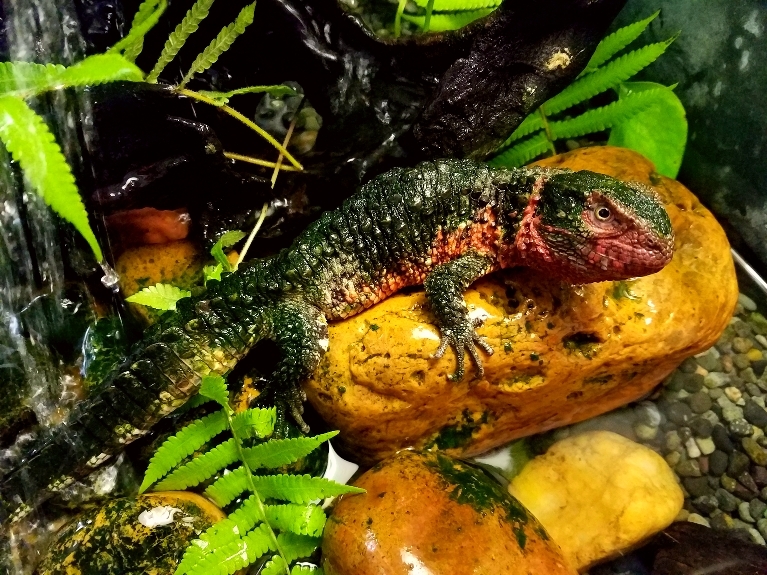
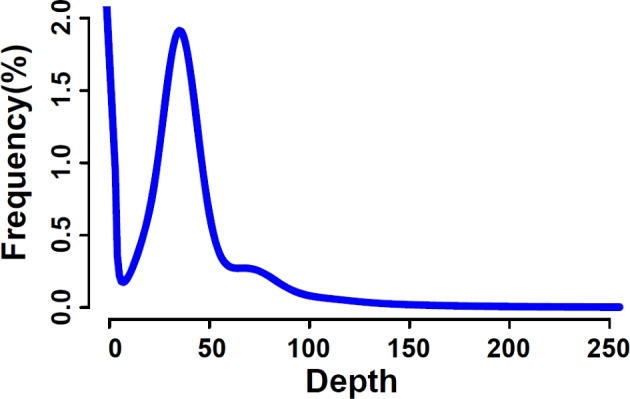
The Chinese crocodile lizard, Shinisaurus crocodilurus, is the only living representative of the monotypic family Shinisauridae under the order Squamata. It is an obligate semi-aquatic, viviparous, diurnal species restricted to specific portions of mountainous locations in southwestern China and northeastern Vietnam. However, in the past several decades, this species has undergone a rapid decrease in population size due to illegal poaching and habitat disruption, making this unique reptile species endangered and listed in the Convention on International Trade in Endangered Species of Wild Fauna and Flora Appendix II since 1990. A proposal to uplist it to Appendix I was passed at the Convention on International Trade in Endangered Species of Wild Fauna and Flora Seventeenth meeting of the Conference of the Parties in 2016. To promote the conservation of this species, we sequenced the genome of a male Chinese crocodile lizard using a whole-genome shotgun strategy on the Illumina HiSeq 2000 platform. In total, we generated ∼291 Gb of raw sequencing data (×149 depth) from 13 libraries with insert sizes ranging from 250 bp to 40 kb. After filtering for polymerase chain reaction-duplicated and low-quality reads, ∼137 Gb of clean data (×70 depth) were obtained for genome assembly. We yielded a draft genome assembly with a total length of 2.24 Gb and an N50 scaffold size of 1.47 Mb. The assembled genome was predicted to contain 20 150 protein-coding genes and up to 1114 Mb (49.6%) of repetitive elements. The genomic resource of the Chinese crocodile lizard will contribute to deciphering the biology of this organism and provides an essential tool for conservation efforts. It also provides a valuable resource for future study of squamate evolution.
中国扬子鳄,又称鼍(tuó),是有鳞目鳄目鼍科唯一现存的物种,是一种专性半水生、胎生、昼行的物种,仅分布在中国西南部和越南北部的山区。然而,在过去几十年中,由于非法偷猎和栖息地破坏,该物种的种群数量迅速减少,使其成为濒危物种,并于 1990 年被列入《濒危野生动植物种国际贸易公约》附录二。2016 年,《濒危野生动植物种国际贸易公约》第十七次缔约方大会通过了将其提升到附录一的提案。为了促进该物种的保护,我们使用 Illumina HiSeq 2000 平台对一只雄性中国扬子鳄进行了全基因组鸟枪法测序。总共从 13 个插入大小为 250 bp 到 40 kb 的文库中生成了约 291 Gb 的原始测序数据(×149 深度)。在对聚合酶链反应重复和低质量读数进行过滤后,获得了约 137 Gb 的清洁数据(×70 深度)用于基因组组装。我们得到了一个总长度为 2.24 Gb 的草图基因组组装,N50 支架大小为 1.47 Mb。组装的基因组预计包含 20150 个蛋白质编码基因和高达 1114 Mb(49.6%)的重复元件。中国扬子鳄的基因组资源将有助于破译该生物的生物学特性,并为保护工作提供重要工具。它还为未来研究有鳞目动物的进化提供了宝贵的资源。