Hundsberger Harald, Önder Kamil, Schuller-Götzburg Peter, Virok Dezso P, Herzog Julia, Rid Raphaela
Department of Medical and Pharmaceutical Biotechnology, University of Applied Sciences, 3500, Krems, Austria.
Research Program for Rational Drug Design in Dermatology and Rheumatology, Department of Dermatology, Paracelsus Medical University of Salzburg, 5020, Salzburg, Austria.
BMC Genomics. 2017 Jun 8;18(1):450. doi: 10.1186/s12864-017-3814-3.
Recombinant peptide chips could constitute a versatile complementation to state-of-the-art in situ (chemical on-chip) synthesis, particle-based printing, or pre-manufactured peptide spotting. Bottlenecks still impeding a routine implementation - from restricted peptide lengths, low diversity and low array densities to high costs - could so be overcome.
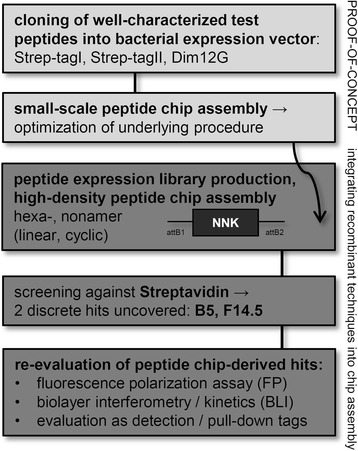
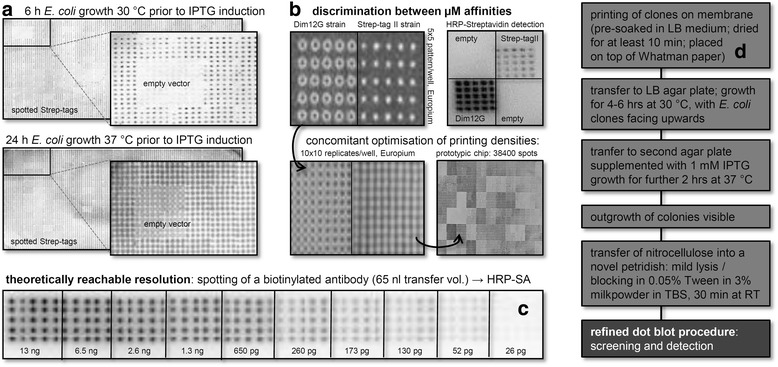
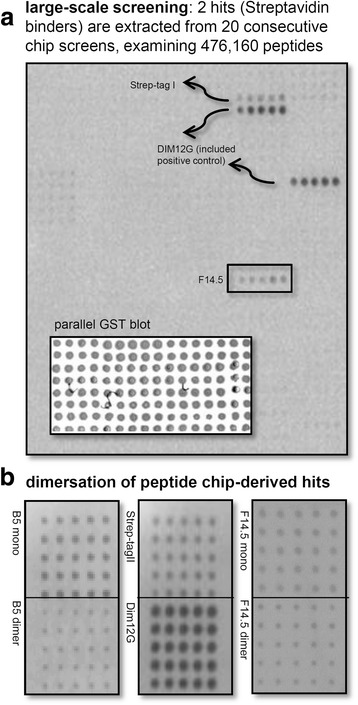
To assess overall performance, we assembled recombinant chips composed of 38,400 individual peptide spots on the area of a standard 96-well microtiter plate from comprehensive, highly diverse (>107 single clones) short random peptide libraries.
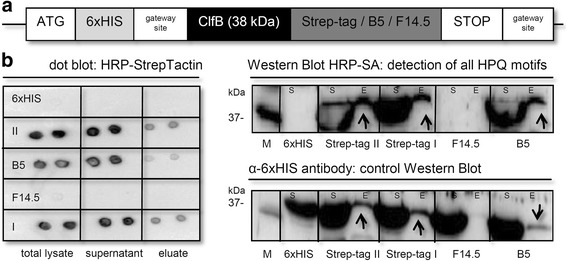
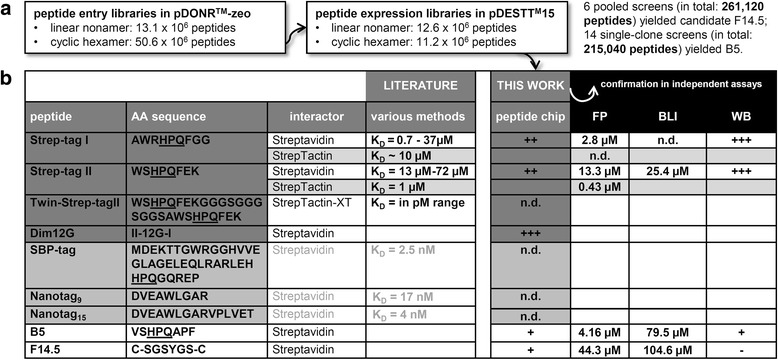
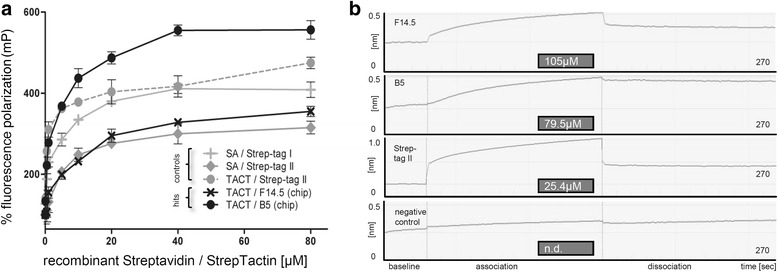
Screening of altogether 476,160 clones against Streptavidin uncovered 2 discrete new binders: a characteristic HPQ-motif containing VSHPQAPF and a cyclic CSGSYGSC peptide. Interactions were technically confirmed by fluorescence polarization as well as biolayer-interferometry, and their potential suitability as novel detection tags evaluated by detection of a peptide-fused exemplary test protein.
From our data we conclude that the presented technical pipeline can reliably identify novel hits, useful as first-generation binders or templates for subsequent ligand design plus engineering.
重组肽芯片可以构成对最先进的原位(芯片上化学)合成、基于颗粒的打印或预制肽点样的通用补充。仍然阻碍常规应用的瓶颈——从受限的肽长度、低多样性和低阵列密度到高成本——因此可以被克服。
为了评估整体性能,我们从全面、高度多样(>107个单克隆)的短随机肽文库中,在标准96孔微量滴定板的面积上组装了由38,400个单个肽点组成的重组芯片。
针对链霉亲和素总共筛选了476,160个克隆,发现了2种不同的新结合物:一种含有VSHPQAPF的特征性HPQ基序和一种环状CSGSYGSC肽。通过荧光偏振以及生物层干涉术在技术上证实了相互作用,并通过检测肽融合的示例性测试蛋白评估了它们作为新型检测标签的潜在适用性。
根据我们的数据,我们得出结论,所展示的技术流程可以可靠地识别新的命中物,可用作第一代结合物或用于后续配体设计和工程的模板。