Department of Medical Physics, University of Wisconsin, 1111 Highland Ave., Madison, 53705, WI, USA.
Carbone Cancer Center, University of Wisconsin, 1111 Highland Ave., Madison, 53705, WI, USA.
Sci Rep. 2017 Jun 8;7(1):3033. doi: 10.1038/s41598-017-03202-0.
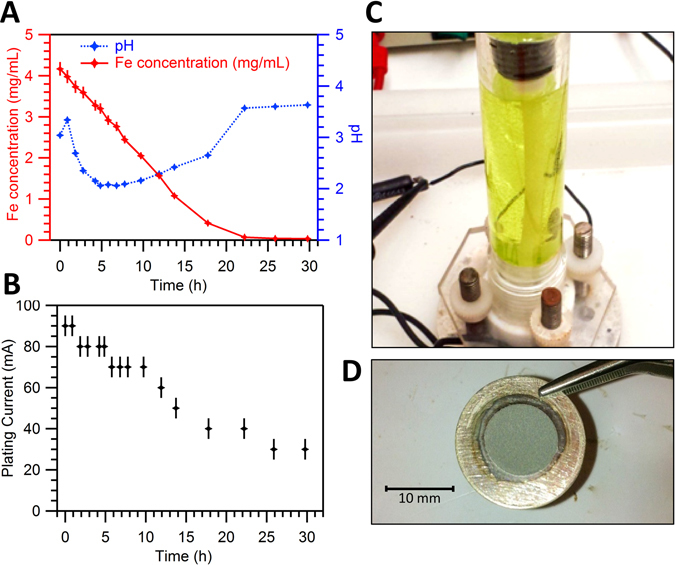
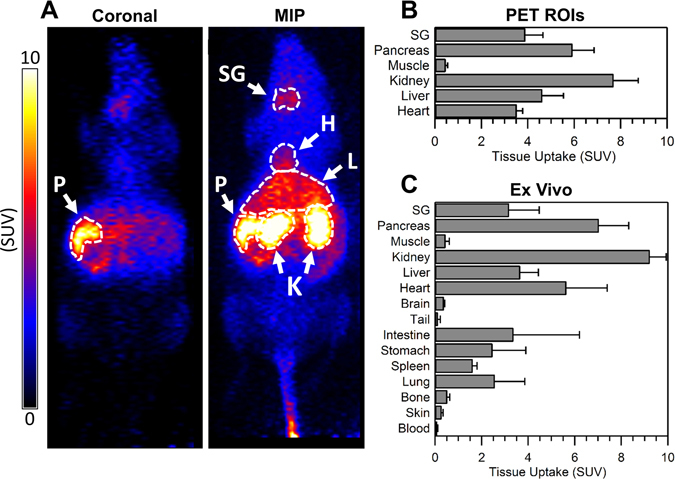
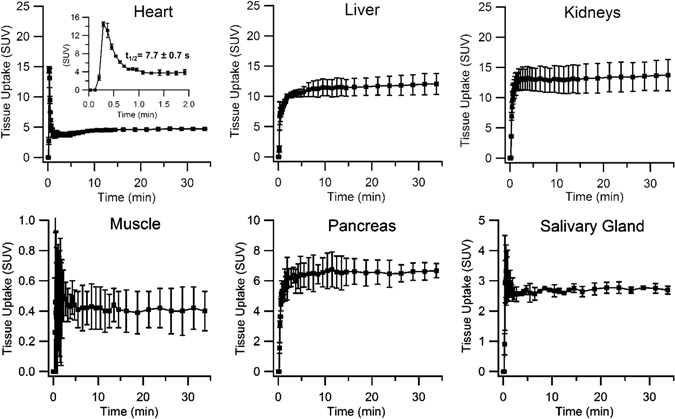
Manganese has long been employed as a T-shortening agent in magnetic resonance imaging (MRI) applications, but these techniques are limited by the biotoxicity of bulk-manganese. Positron emission tomography (PET) offers superior contrast sensitivity compared with MRI, and recent preclinical PET studies employing Mn (t: 5.6 d, β: 29%) show promise for a variety of applications including cell tracking, neural tract tracing, immunoPET, and functional β-cell mass quantification. The half-life and confounding gamma emissions of Mn are prohibitive to clinical translation, but the short-lived Mn (t: 46 min, β: 97%) represents a viable alternative. This work develops methods to produce Mn on low-energy medical cyclotrons, characterizes the in vivo behavior of MnCl in mice, and performs preliminary human dosimetry predictions. Mn was produced by proton irradiation of electrodeposited isotopically-enriched Fe targets. Radiochemically isolated MnCl was intravenously administered to ICR mice which were scanned by dynamic and static PET, followed by ex vivo gamma counting. Rapid blood clearance was observed with stable uptake in the pancreas, kidneys, liver, heart, and salivary gland. Dosimetry calculations predict that 370 MBq of Mn in an adult human male would yield an effective dose equivalent of approximately 13.5 mSv, roughly equivalent to a clinical [F]-FDG procedure.
锰在磁共振成像(MRI)应用中一直被用作 T 缩短剂,但这些技术受到块状锰的生物毒性限制。正电子发射断层扫描(PET)与 MRI 相比具有更高的对比敏感度,最近的临床前 PET 研究采用 Mn(t:5.6d,β:29%)有望应用于多种应用,包括细胞追踪、神经束追踪、免疫 PET 和功能性β细胞质量定量。锰的半衰期和干扰γ射线发射使其难以在临床上转化,但半衰期较短的 Mn(t:46min,β:97%)则是一种可行的替代方法。本工作开发了在低能医用回旋加速器上生产 Mn 的方法,对 MnCl 在小鼠体内的行为进行了表征,并进行了初步的人体剂量预测。Mn 是通过质子辐照电沉积的同位素富集 Fe 靶产生的。放射性化学分离的 MnCl 通过静脉内给予 ICR 小鼠,通过动态和静态 PET 扫描,然后进行离体γ计数。观察到血液清除迅速,胰腺、肾脏、肝脏、心脏和唾液腺有稳定的摄取。剂量计算预测,一个成年男性体内的 370MBq Mn 将产生约 13.5mSv 的有效剂量当量,大致相当于临床[F]-FDG 程序。