Ana Cristina Simões e Silva, Department of Pediatrics, Faculty of Medicine, Federal University of Minas Gerais, Belo Horizonte, MG 31270-901, Brazil.
World J Gastroenterol. 2017 May 21;23(19):3396-3406. doi: 10.3748/wjg.v23.i19.3396.
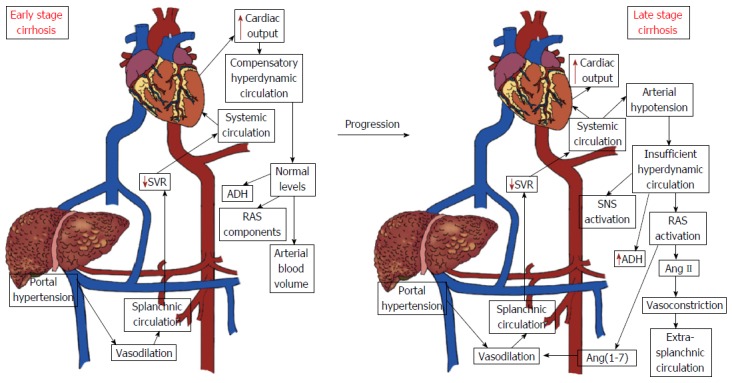
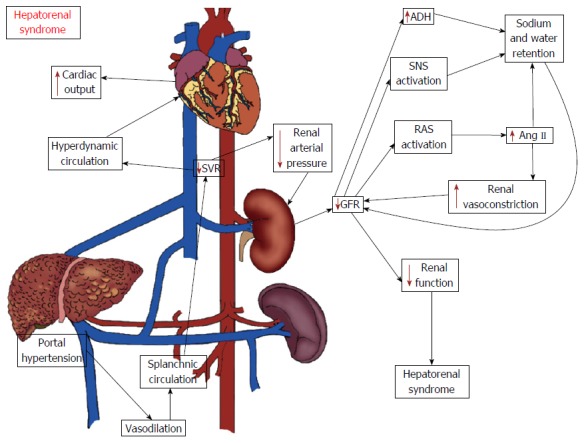
In the last three decades, the understanding of the renin angiotensin system (RAS) has been changed by the discoveries of functional local systems, novel biologically active peptides, additional specific receptors, alternative pathways of angiotensin (Ang) II generation, and new roles for enzymes and precursor components other than those in Ang II synthesis. In this regard, the discovery that Ang-(1-7) opposes the pressor, proliferative, pro-fibrotic, and pro-inflammatory effects mediated by Ang II has contributed to the realization that the RAS is composed of two axes. The first axis consists of the angiotensin-converting enzyme (ACE), with Ang II as the end product, and the angiotensin type 1 (AT) receptor as the main effector mediating the biological actions of Ang II. The second axis results from ACE2-mediated hydrolysis of Ang II, leading to the production of Ang-(1-7), with the Mas receptor as the main effector conveying the vasodilatory, anti-proliferative, anti-fibrotic, and anti-inflammatory effects of Ang-(1-7). Experimental and clinical studies have shown that both axes of the RAS may take part in the pathogenesis of liver diseases. In this manuscript, we summarize the current evidence regarding the role of RAS in hepatic cirrhosis and its complications, including hemodynamic changes and hepatorenal syndrome. The therapeutic potential of the modulation of RAS molecules in liver diseases is also discussed.
在过去的三十年中,肾素-血管紧张素系统(RAS)的理解已经发生了变化,这是由于功能性局部系统、新型生物活性肽、额外的特定受体、血管紧张素(Ang)II 生成的替代途径以及除 Ang II 合成之外的其他酶和前体成分的新作用的发现。在这方面,Ang-(1-7) 对抗 Ang II 介导的升压、增殖、纤维化和炎症作用的发现促使人们认识到 RAS 由两个轴组成。第一个轴由血管紧张素转换酶 (ACE) 组成,Ang II 是终产物,血管紧张素 1 型 (AT) 受体是介导 Ang II 生物学作用的主要效应器。第二个轴是由 ACE2 介导的 Ang II 水解产生 Ang-(1-7),Mas 受体是传递 Ang-(1-7) 的血管扩张、抗增殖、抗纤维化和抗炎作用的主要效应器。实验和临床研究表明,RAS 的两个轴都可能参与肝脏疾病的发病机制。在本文中,我们总结了 RAS 在肝硬化及其并发症(包括血流动力学变化和肝肾综合征)中的作用的现有证据。还讨论了调节 RAS 分子在肝脏疾病中的治疗潜力。