Kim Chul Jang, Tambe Yukihiro, Mukaisho Ken-Ichi, Sugihara Hiroyuki, Kageyama Susumu, Kawauchi Akihiro, Inoue Hirokazu
Department of Urology, Kohka Public Hospital, Kohka, Shiga 528-6024, Japan.
Division of Microbiology and Infectious Diseases, Shiga University of Medical Science, Otsu, Shiga 520-2192, Japan.
Oncol Lett. 2017 Jun;13(6):4276-4284. doi: 10.3892/ol.2017.6004. Epub 2017 Apr 7.
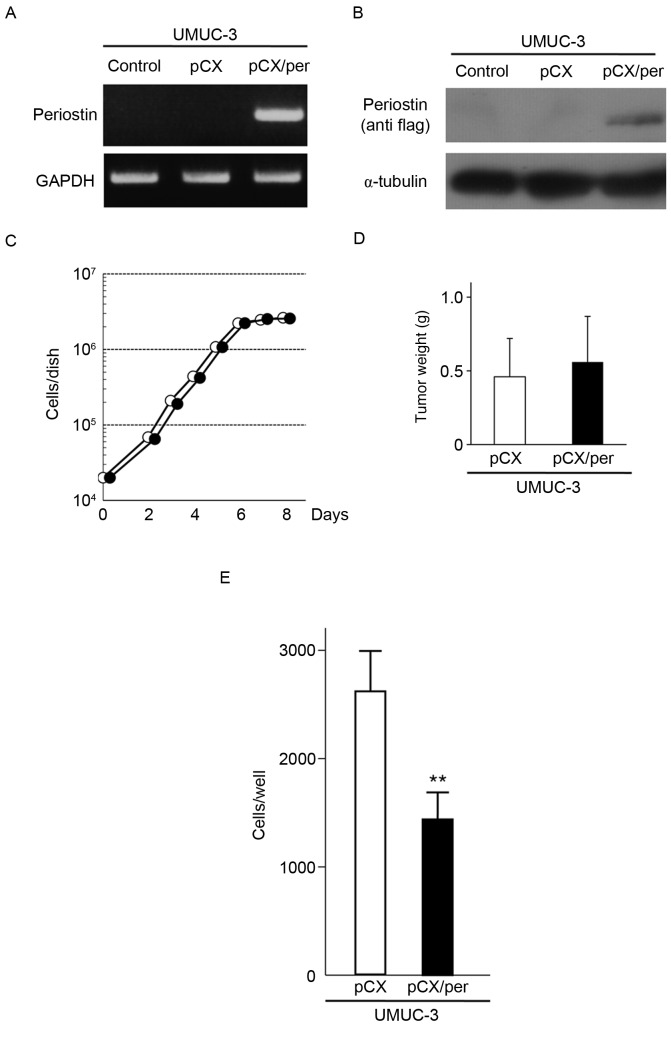
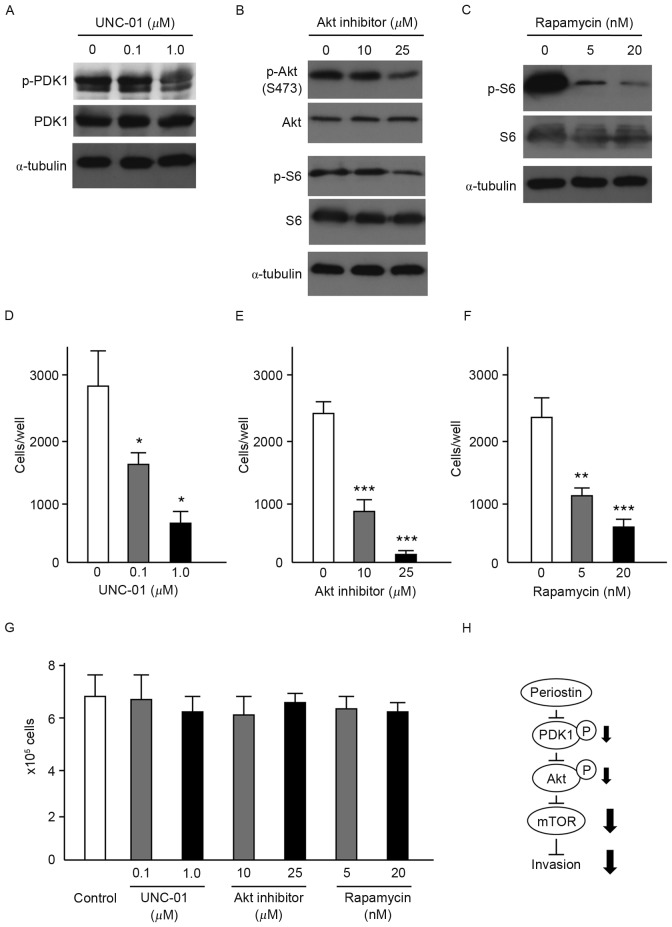
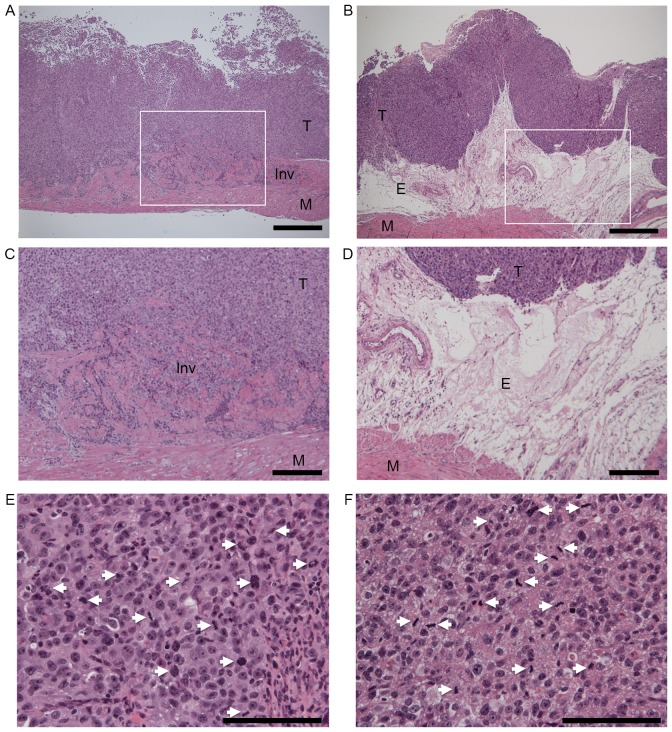
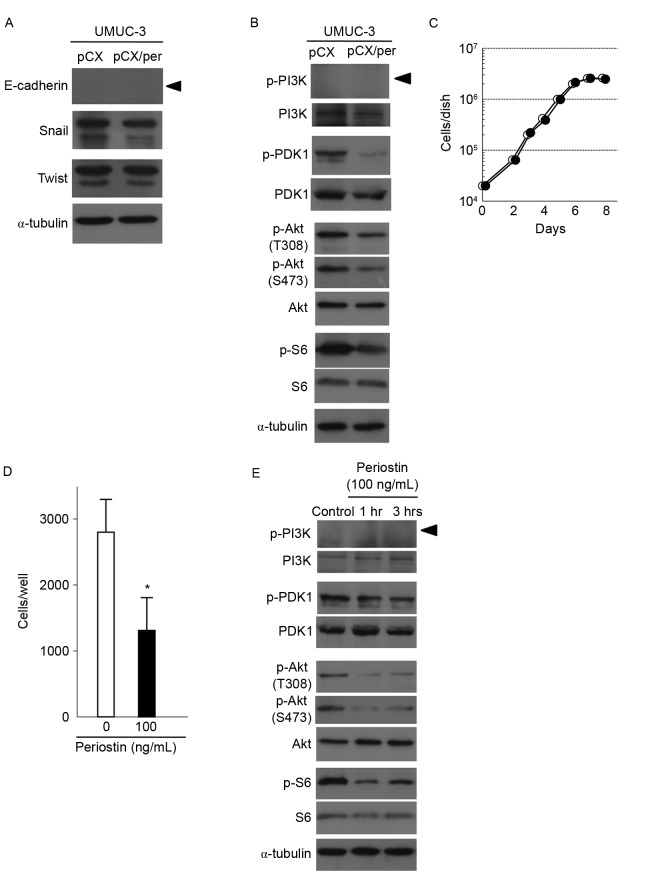
Periostin is an extracellular matrix protein involved in the regulation of intercellular adhesion. The present study investigated the tumor suppressor function of periostin in a mouse orthotopic model of bladder cancer. Retroviral vectors were used to transfect human bladder cancer UMUC-3 cell line with periostin. Bladders of nude mice that were transurethrally instilled with periostin-expressing UMUC-3 cells were revealed to weigh less compared with bladders instilled with vector control cells. In total, five (83.3%) of six vector control UMUC-3 bladder tumors exhibited histological evidence of muscle invasion. However, none of the five periostin-expressing UMUC-3 bladder tumors revealed muscle invasion. Thick edematous lesions were present in the submucosa of periostin-expressing UMUC-3 bladder tumors. The expression of periostin also suppressed cell invasiveness of UMUC-3 cells without affecting cellular proliferation. The level of phosphorylation of phosphoinositide-dependent kinase-1 (PDK1), protein kinase B (Akt) and S6 ribosomal protein, a downstream protein of mammalian target of rapamycin (mTOR) was decreased in periostin-expressing UMUC-3 cells compared with vector control cells. Treatment with 100 ng/ml recombinant human periostin protein also suppressed cell invasiveness and phosphorylation of PDK1, Akt and S6 in UMUC-3 cells, consistent with results using periostin-expressing UMUC-3 cells. Treatment with PDK1, Akt and mTOR inhibitors significantly suppressed UMUC-3 cell invasiveness. These results demonstrate that periostin suppresses and invasiveness of bladder cancer via the PDK1/Akt/mTOR signaling pathway. Periostin may be useful as a potent chemotherapeutic agent by suppressing bladder cancer invasiveness.
骨膜蛋白是一种参与细胞间黏附调节的细胞外基质蛋白。本研究在小鼠膀胱癌原位模型中研究了骨膜蛋白的抑癌功能。使用逆转录病毒载体将骨膜蛋白转染到人膀胱癌UMUC-3细胞系中。经尿道向裸鼠膀胱内灌注表达骨膜蛋白的UMUC-3细胞,结果显示与灌注载体对照细胞的膀胱相比,灌注表达骨膜蛋白细胞的膀胱重量更轻。总共6个载体对照UMUC-3膀胱肿瘤中有5个(83.3%)表现出肌肉浸润的组织学证据。然而,5个表达骨膜蛋白的UMUC-3膀胱肿瘤均未显示肌肉浸润。表达骨膜蛋白的UMUC-3膀胱肿瘤的黏膜下层存在厚的水肿性病变。骨膜蛋白的表达还抑制了UMUC-3细胞的侵袭性,而不影响细胞增殖。与载体对照细胞相比,表达骨膜蛋白的UMUC-3细胞中磷酸肌醇依赖性激酶-1(PDK1)、蛋白激酶B(Akt)和核糖体蛋白S6(雷帕霉素哺乳动物靶标(mTOR)的下游蛋白)的磷酸化水平降低。用100 ng/ml重组人骨膜蛋白处理也抑制了UMUC-3细胞的侵袭性以及PDK1、Akt和S6的磷酸化,这与使用表达骨膜蛋白的UMUC-3细胞的结果一致。用PDK1、Akt和mTOR抑制剂处理显著抑制了UMUC-3细胞的侵袭性。这些结果表明,骨膜蛋白通过PDK1/Akt/mTOR信号通路抑制膀胱癌的生长和侵袭性。骨膜蛋白可能通过抑制膀胱癌侵袭性而成为一种有效的化疗药物。