Zhang Zheng, Li Xiaoqing, Ren Shaokun, Zhang Wei
Tianjin Institute of Urology, Second Hospital of Tianjin Medical University, Tianjin, China.
Phase I Clinical Trial Department, Tianjin Medical University Cancer Institute and Hospital, Tianjin, China.
Front Oncol. 2022 Jul 12;12:859707. doi: 10.3389/fonc.2022.859707. eCollection 2022.
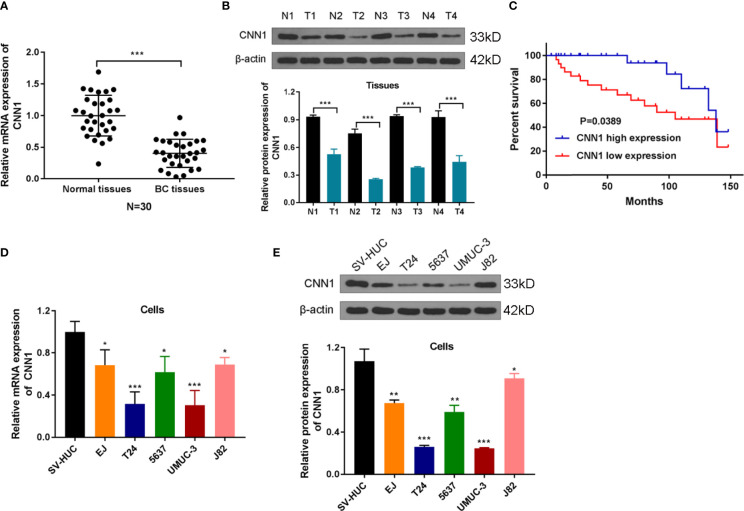
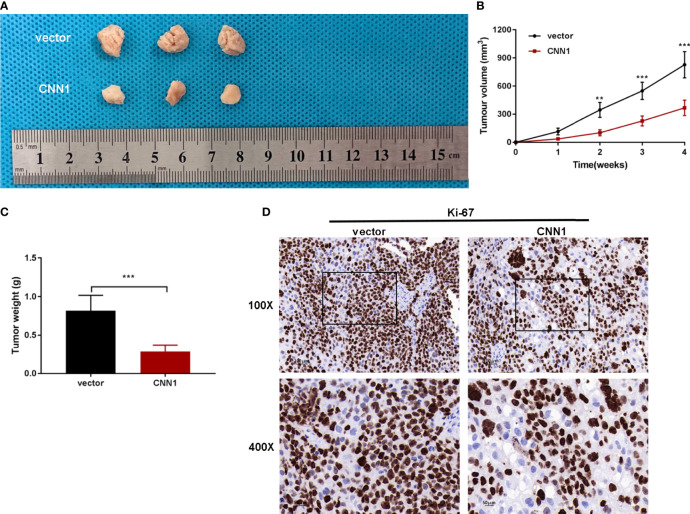
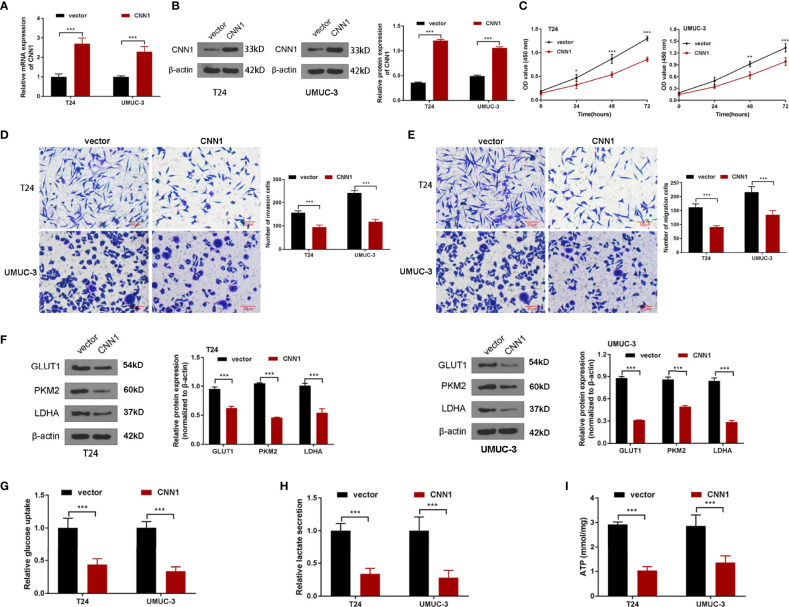
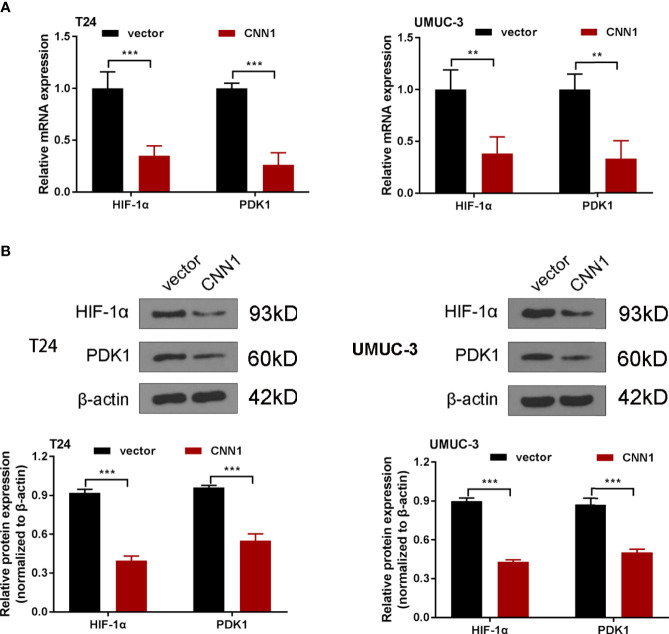
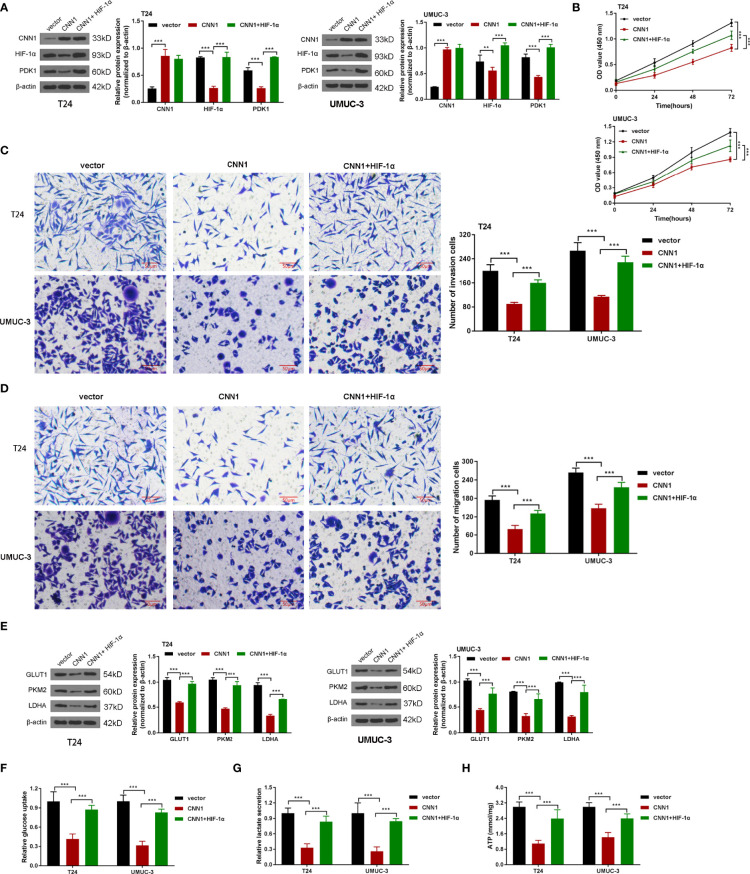
Bladder cancer (BC) is the second most common urinary system malignant tumor around the whole world. It has been reported that CNN1 was lowly expressed in BC tissues. However, the mechanisms of CNN1 on BC cells were unclear. Herein, we aimed to probe the specific influences of CNN1 on BC pathogenesis. First, the expression level and prognostic ability of CNN1 in BC patients were surveyed. Then, CNN1 overexpression was executed to exhibit the influences of CNN1 on BC cells. The real-time PCR and Western blotting were employed to detect by the mRNA and protein expression levels. CCK8 assay was utilized to examine cell proliferation, and transwell assay was executed to test cell invasion and migration. The corresponding kits were utilized to detect glucose absorption, lactate secretion, and ATP level. BC cells overexpressing CNN1 were utilized to establish a nude mouse xenograft tumor model, and the tumor volume and tumor weight were detected. Nude mouse tumor tissues were used for immunohistochemical experiments to test the expression levels of Ki-67 and CNN1. The outcomes indicated that CNN1 was significantly lowly expressed in BC tissues and cells. Besides, low expression of CNN1 might be concerned with poor prognosis. Moreover, overexpression of CNN1 repressed the proliferation, invasion, and migration of BC cells. Furthermore, CNN1 overexpression decreased the protein levels of glycolysis-related protein GLUT1 (glucose transporter 1), pyruvate kinase M2 (PKM2), and LDHA (lactate dehydrogenase A). Then, the decreased mRNA and protein levels of HIF-1α and PDK1 were identified after CNN1 overexpression. The assays verified the effects of aberrant expression of CNN1 in mice with BC. In conclusion, these findings suggested that CNN1 might modulate BC progression through activating HIF-1α pathway and CNN1 might be a promising marker for BC diagnosis.
膀胱癌(BC)是全球第二常见的泌尿系统恶性肿瘤。据报道,CNN1在BC组织中低表达。然而,CNN1对BC细胞的作用机制尚不清楚。在此,我们旨在探究CNN1对BC发病机制的具体影响。首先,调查了CNN1在BC患者中的表达水平和预后能力。然后,进行CNN1过表达以展示其对BC细胞的影响。采用实时PCR和蛋白质印迹法检测mRNA和蛋白质表达水平。使用CCK8法检测细胞增殖,采用Transwell法检测细胞侵袭和迁移。使用相应试剂盒检测葡萄糖摄取、乳酸分泌和ATP水平。利用过表达CNN1的BC细胞建立裸鼠异种移植瘤模型,并检测肿瘤体积和肿瘤重量。用裸鼠肿瘤组织进行免疫组化实验,检测Ki-67和CNN1的表达水平。结果表明,CNN1在BC组织和细胞中显著低表达。此外,CNN1低表达可能与预后不良有关。此外,CNN1过表达抑制了BC细胞的增殖、侵袭和迁移。此外,CNN1过表达降低了糖酵解相关蛋白葡萄糖转运蛋白1(GLUT1)、丙酮酸激酶M2(PKM2)和乳酸脱氢酶A(LDHA)的蛋白水平。然后,在CNN1过表达后,检测到HIF-1α和PDK1的mRNA和蛋白水平降低。这些实验验证了CNN1异常表达对BC小鼠的影响。总之,这些发现表明,CNN1可能通过激活HIF-1α途径调节BC进展,并且CNN1可能是BC诊断的一个有前景的标志物。