Department of Life Science, College of Life Science and Biotechnology, KOREA University, 02841, Seoul, Korea.
Sci Rep. 2017 Jun 9;7(1):3193. doi: 10.1038/s41598-017-03506-1.
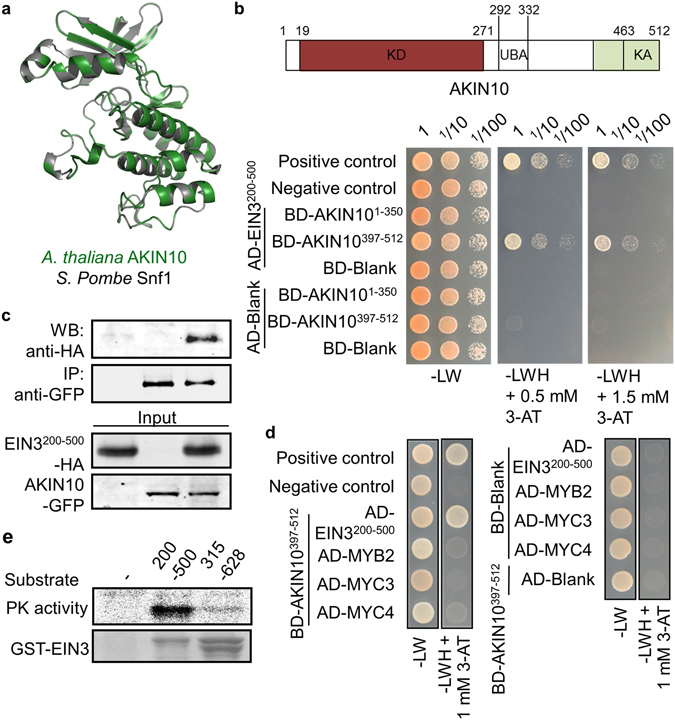
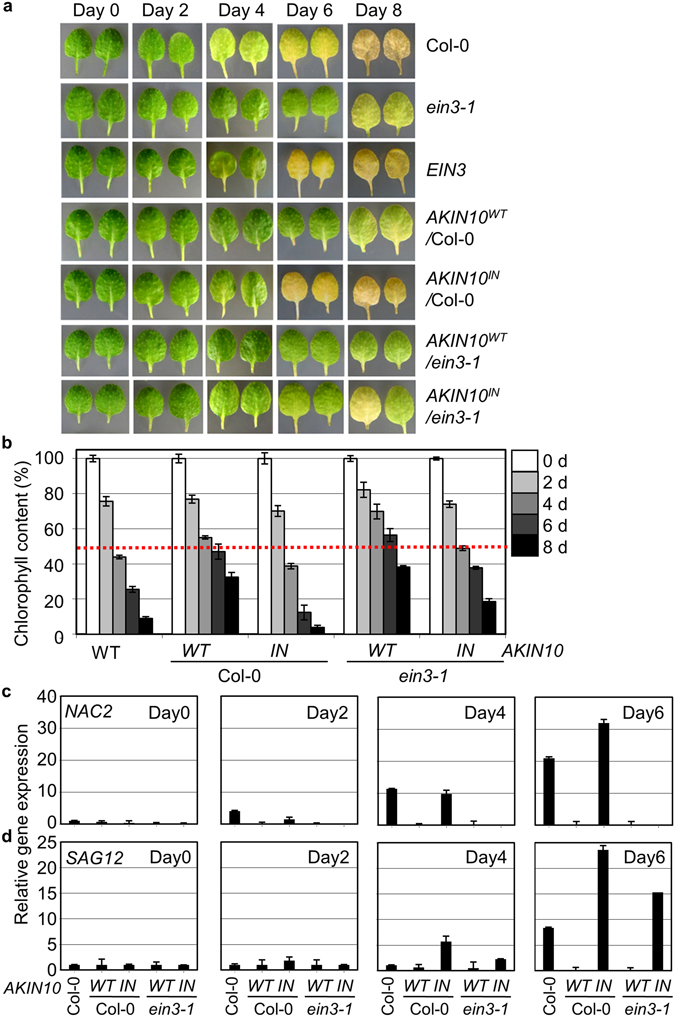
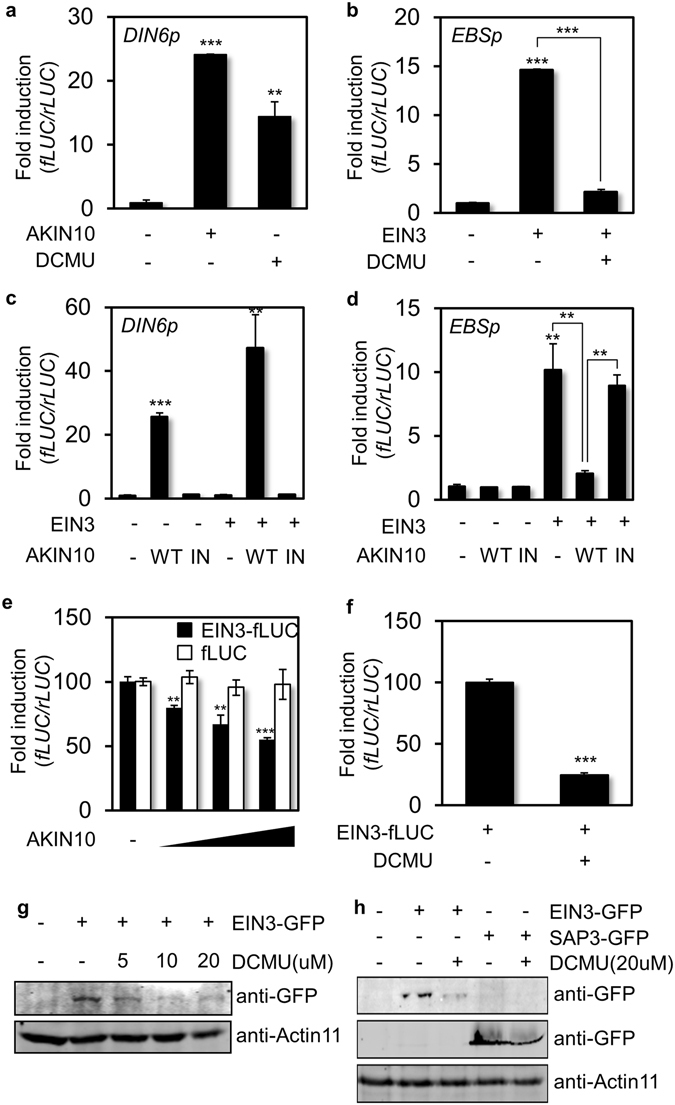
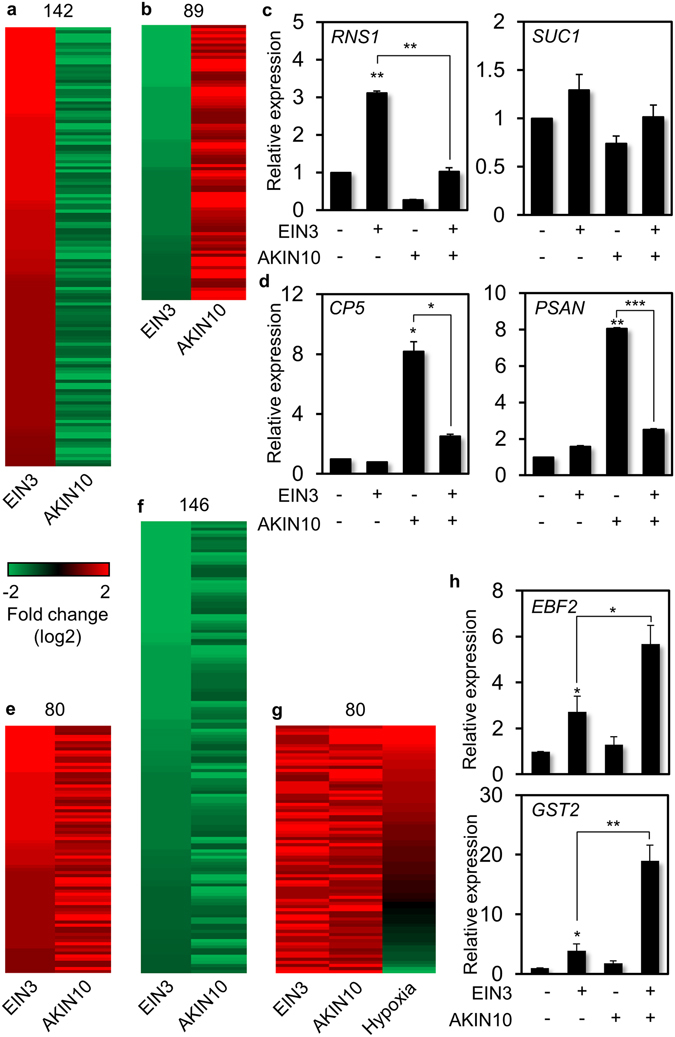
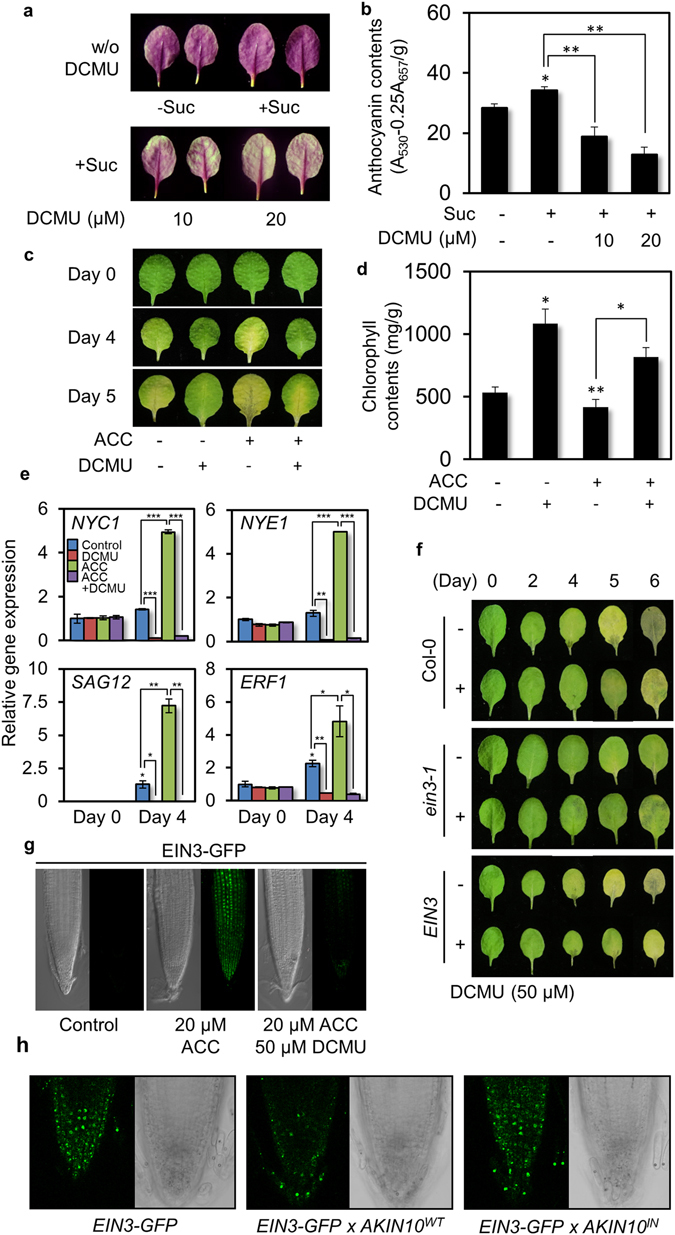
Aging of living organisms is governed by intrinsic developmental programs, of which progression is often under the regulation of their cellular energy status. For example, calorie restriction is known to slow down aging of heterotrophic organisms from yeasts to mammals. In autotrophic plants cellular energy deprivation by perturbation of photosynthesis or sugar metabolism is also shown to induce senescence delay. However, the underlying molecular and biochemical mechanisms remain elusive. Our plant cell-based functional and biochemical assays have demonstrated that SNF1-RELATED KINASE1 (SnRK1) directly interacts, phosphorylates, and destabilizes the key transcription factor ETHYLENE INSENSITIVE3 (EIN3) in senescence-promoting hormone ethylene signaling. Combining chemical manipulation and genetic validation using extended loss-of-function mutants and gain-of-function transgenic lines, we further revealed that a SnRK1 elicitor, 3-(3,4-dichlorophenyl)-1,1-dimethylurea enables to slow down senescence-associated leaf degreening through the regulation of EIN3 in Arabidopsis. Our findings enlighten that an evolutionary conserved cellular energy sensor SnRK1 plays a role in fine-tuning of organ senescence progression to avoid sudden death during the last step of leaf growth and development.
生物体的衰老受内在发育程序的控制,其进展通常受细胞能量状态的调节。例如,已知卡路里限制可减缓从酵母到哺乳动物等异养生物的衰老。在自养植物中,通过干扰光合作用或糖代谢来剥夺细胞能量也被证明会延迟衰老。然而,潜在的分子和生化机制仍不清楚。我们基于植物细胞的功能和生化测定表明,SNF1-RELATED KINASE1(SnRK1)在促进衰老的激素乙烯信号传导中直接相互作用、磷酸化并使关键转录因子 ETHYLENE INSENSITIVE3(EIN3)失稳。通过使用扩展的功能丧失突变体和功能获得转基因系进行化学操作和遗传验证,我们进一步揭示了 SnRK1 激动剂 3-(3,4-二氯苯基)-1,1-二甲基脲通过调节拟南芥中的 EIN3 来减缓与衰老相关的叶片褪绿。我们的发现表明,进化保守的细胞能量传感器 SnRK1 在微调器官衰老进展方面发挥作用,以避免在叶片生长和发育的最后阶段突然死亡。