Dayan Michael, Hurtado Rúa Sandra M, Monohan Elizabeth, Fujimoto Kyoko, Pandya Sneha, LoCastro Eve M, Vartanian Tim, Nguyen Thanh D, Raj Ashish, Gauthier Susan A
Department of Radiology, Weill Cornell Graduate School of Medical SciencesNew York, NY, United States.
Pattern Analysis and Computer Vision, Istituto Italiano di TecnologiaGenova, Italy.
Front Neurosci. 2017 May 26;11:284. doi: 10.3389/fnins.2017.00284. eCollection 2017.
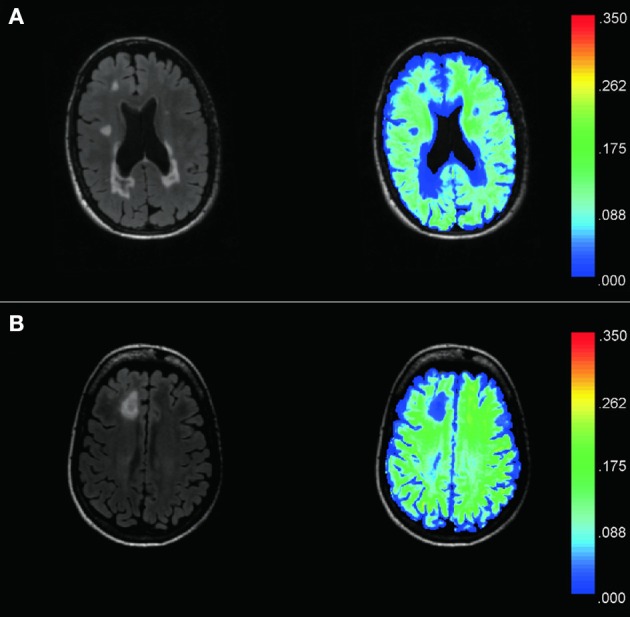
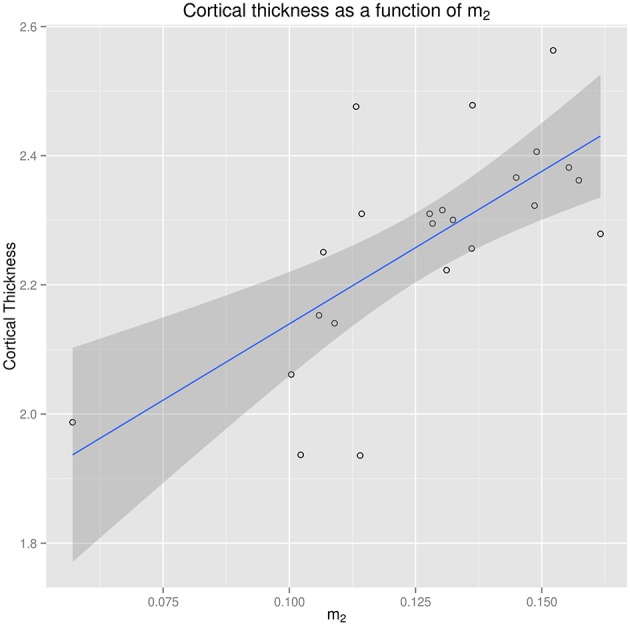
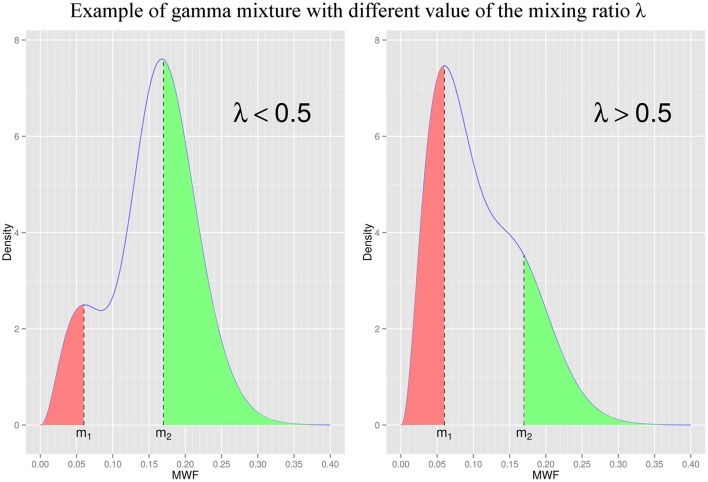
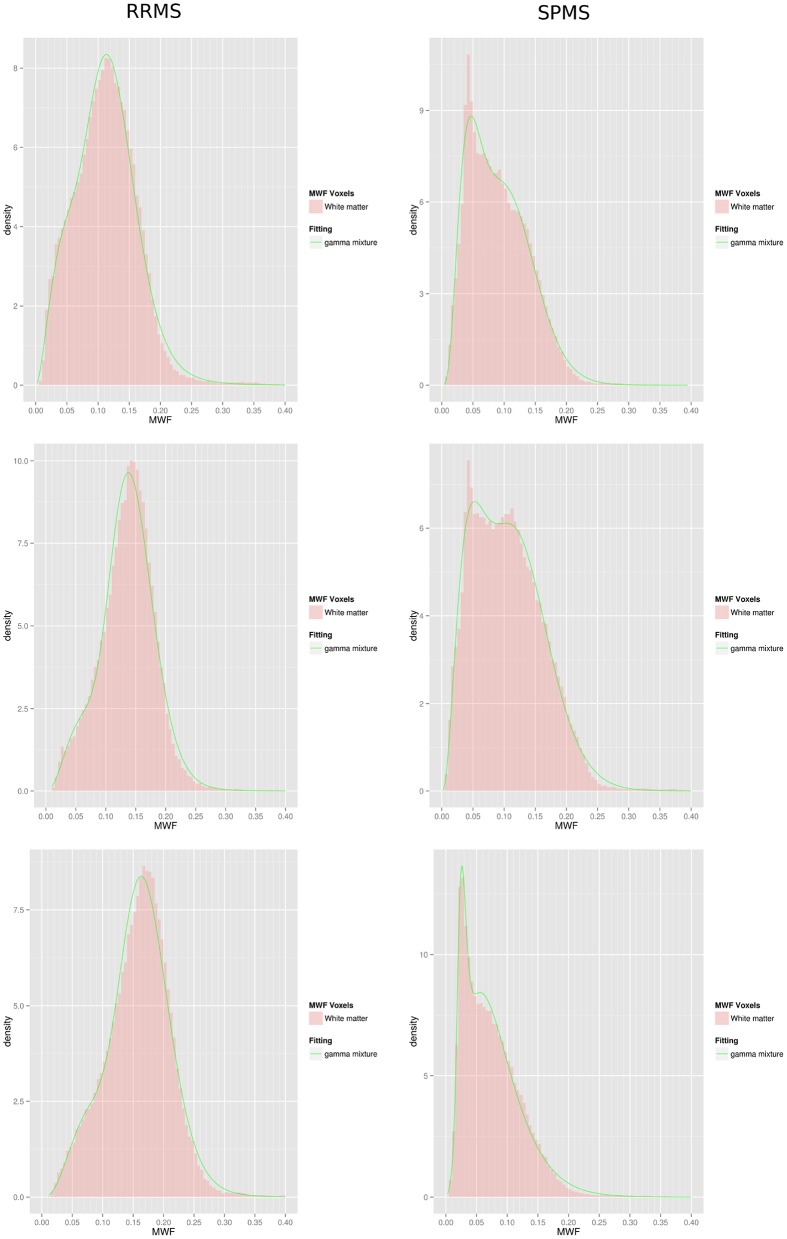
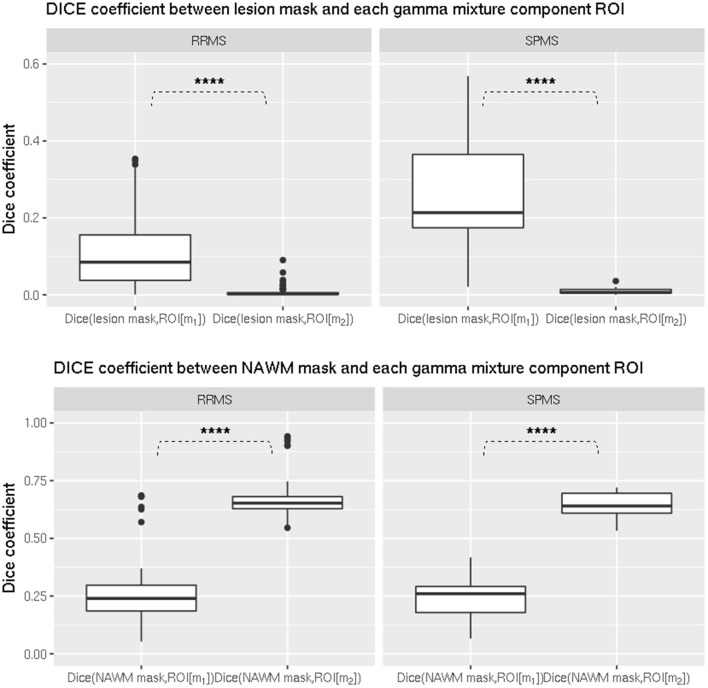
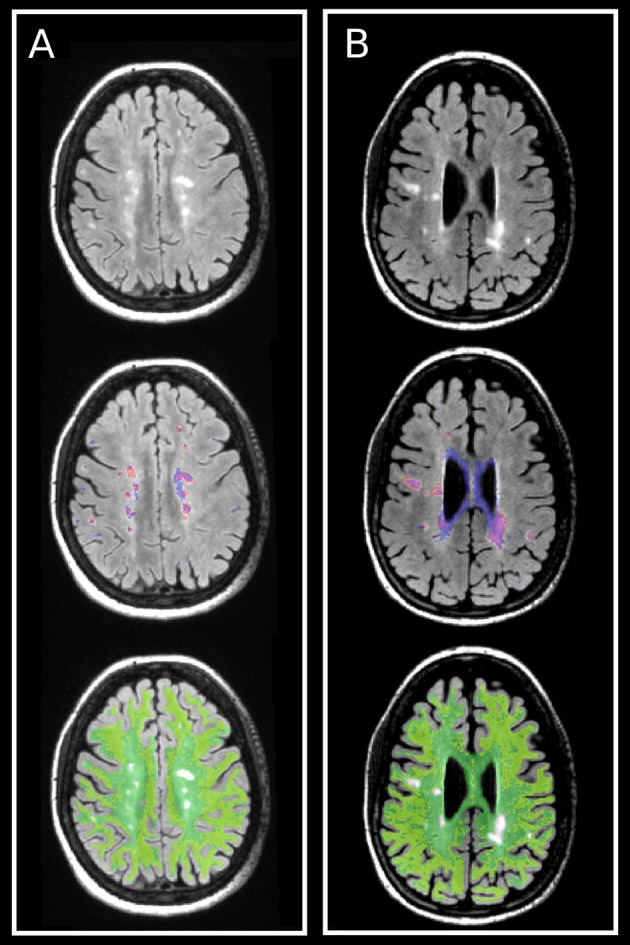
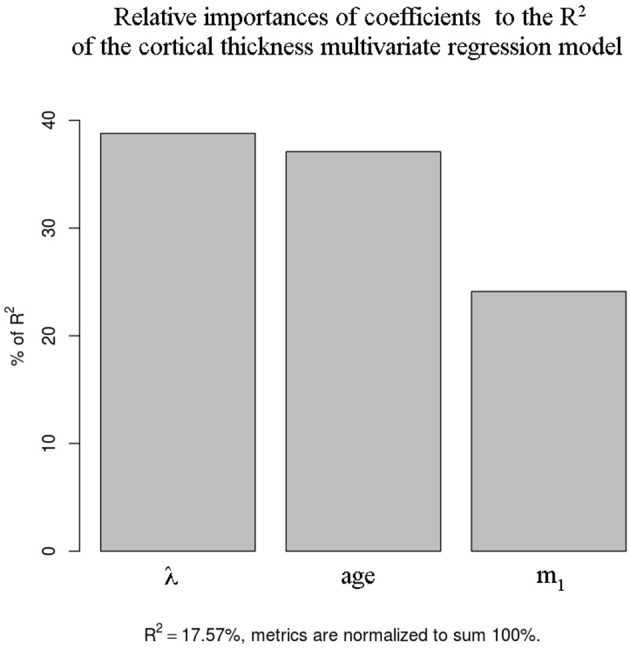
A novel lesion-mask free method based on a gamma mixture model was applied to myelin water fraction (MWF) maps to estimate the association between cortical thickness and myelin content, and how it differs between relapsing-remitting (RRMS) and secondary-progressive multiple sclerosis (SPMS) groups (135 and 23 patients, respectively). It was compared to an approach based on lesion masks. The gamma mixture distribution of whole brain, white matter (WM) MWF was characterized with three variables: the mode (most frequent value) of the gamma component shown to relate to lesion, the mode of the component shown to be associated with normal appearing (NA) WM, and the mixing ratio (λ) between the two distributions. The lesion-mask approach relied on the mean MWF within lesion and within NAWM. A multivariate regression analysis was carried out to find the best predictors of cortical thickness for each group and for each approach. The gamma-mixture method was shown to outperform the lesion-mask approach in terms of adjusted , both for the RRMS and SPMS groups. The predictors of the final gamma-mixture models were found to be (β = 1.56, < 0.005), λ (β = -0.30, < 0.0005) and age (β = -0.0031, < 0.005) for the RRMS group (adjusted = 0.16), and (β = 4.72, < 0.0005) for the SPMS group (adjusted = 0.45). Further, a DICE coefficient analysis demonstrated that the lesion mask had more overlap to an ROI associated with , than to an ROI associated with ( < 0.00001), and vice versa for the NAWM mask ( < 0.00001). These results suggest that during the relapsing phase, focal WM damage is associated with cortical thinning, yet in SPMS patients, global WM deterioration has a much stronger influence on secondary degeneration. Through these findings, we demonstrate the potential contribution of myelin loss on neuronal degeneration at different disease stages and the usefulness of our statistical reduction technique which is not affected by the typical bias associated with approaches based on lesion masks.
一种基于伽马混合模型的新型无病变掩码方法被应用于髓磷脂水分数(MWF)图,以估计皮质厚度与髓磷脂含量之间的关联,以及复发缓解型(RRMS)和继发进展型多发性硬化症(SPMS)组(分别为135例和23例患者)之间的差异。该方法与基于病变掩码的方法进行了比较。全脑、白质(WM)MWF的伽马混合分布由三个变量表征:显示与病变相关的伽马成分的众数(最频繁值)、显示与正常外观(NA)WM相关的成分的众数,以及两种分布之间的混合比(λ)。病变掩码方法依赖于病变内和NAWM内的平均MWF。进行了多变量回归分析,以找到每组和每种方法中皮质厚度的最佳预测因子。结果表明,在调整方面,伽马混合方法在RRMS组和SPMS组中均优于病变掩码方法。RRMS组最终伽马混合模型的预测因子为(β = 1.56,< 0.005)、λ(β = -0.30,< 0.0005)和年龄(β = -0.0031,< 0.005)(调整 = 0.16),SPMS组为(β = 4.72,< 0.0005)(调整 = 0.45)。此外,DICE系数分析表明,病变掩码与与相关的感兴趣区域(ROI)的重叠比与相关的ROI更多(< 0.00001),NAWM掩码则相反(< 0.00001)。这些结果表明,在复发阶段,局灶性WM损伤与皮质变薄有关,但在SPMS患者中,整体WM恶化对继发性变性的影响要强得多。通过这些发现,我们证明了髓磷脂损失在不同疾病阶段对神经元变性的潜在贡献,以及我们的统计还原技术的有用性,该技术不受基于病变掩码方法的典型偏差影响。