Linnakoski Riikka, Forbes Kristian M, Wingfield Michael J, Pulkkinen Pertti, Asiegbu Fred O
Department of Forest Sciences, University of HelsinkiHelsinki, Finland.
Department of Microbiology and Plant Pathology, Forestry and Agricultural Biotechnology Institute, University of PretoriaPretoria, South Africa.
Front Plant Sci. 2017 May 26;8:883. doi: 10.3389/fpls.2017.00883. eCollection 2017.
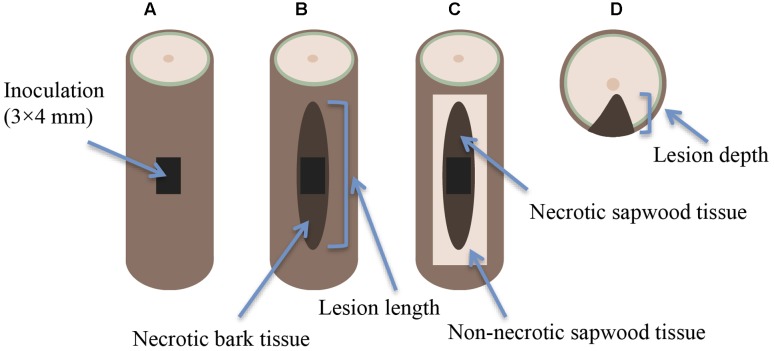
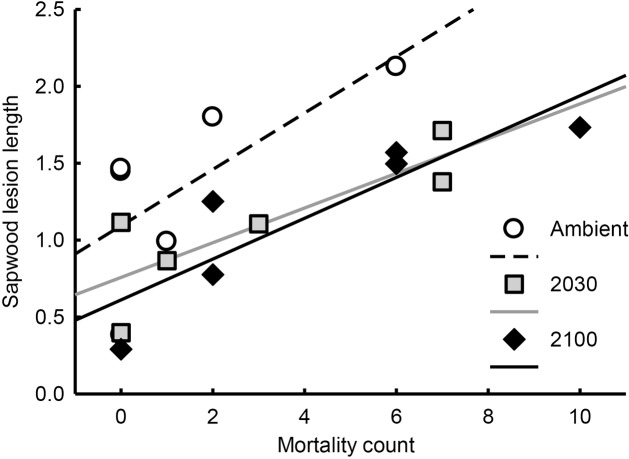
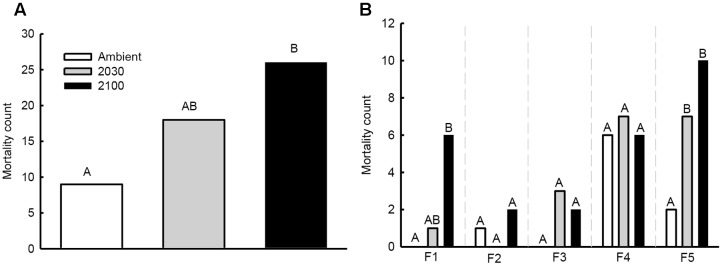
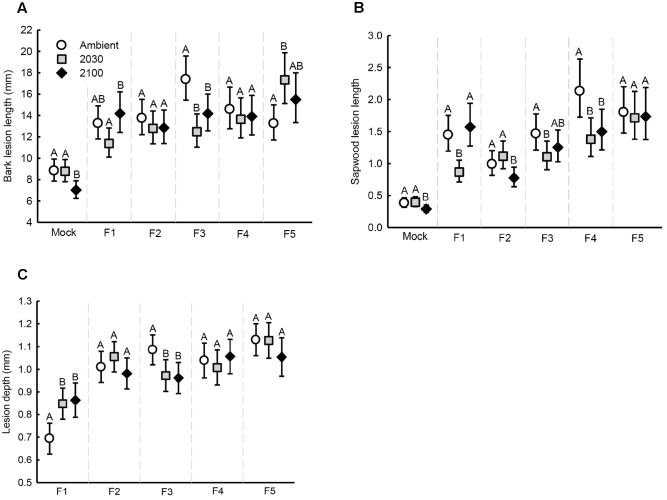
Climate changes, exemplified by increased temperatures and CO concentration, pose a global threat to forest health. Of particular concern are pests and pathogens, with a warming climate altering their distributions and evolutionary capacity, while impairing the ability of some plants to respond to infections. Progress in understanding and mitigating such effects is currently hindered by a lack of empirical research. Norway spruce () is one of the most economically important tree species in northern Europe, and is considered highly vulnerable to changes in climate. It is commonly infected by the fungus , and we hypothesized that damage caused to trees will increase under future climate change predictions. To test this hypothesis an greenhouse experiment was conducted to evaluate the effects of a changed growing environment on infected Norway spruce seedlings, comparing ambient conditions to predicted temperatures and CO levels in Finland for the years 2030 and 2100. In total, 450 seedlings were randomized amongst the three treatments, with 25 seedlings from each allocated to inoculation with one of five different fungal strains or mock-inoculation. Seedlings were monitored throughout the thermal growing season for mortality, and lesion length and depth indices were measured at the experiment conclusion. Disease severity (mortality and lesions) was consistently greater in fungal-inoculated than mock-inoculated seedlings. However, substantial differences were observed among fungal strains in response to climate scenarios. For example, although overall seedling mortality was highest under the most distant (and severe) climate change expectations, of the two fungal strains with the highest mortality counts (referred to as F4 and F5), one produced greater mortality under the 2030 and 2100 scenarios than ambient conditions, whereas climate scenario had no effect on the other. This study contributes to a limited body of empirical research on the effects of projected climate changes on forestry pathosystems, and is the first to investigate interactions between Norway spruce and . The results indicate the potential for future climate changes to alter the impact of forest pathogens with implications for productivity, while highlighting the need for a strain-specific level of understanding of the disease agents.
以气温升高和二氧化碳浓度增加为典型的气候变化对森林健康构成了全球性威胁。尤其令人担忧的是害虫和病原体,气候变暖改变了它们的分布和进化能力,同时削弱了一些植物应对感染的能力。目前,由于缺乏实证研究,在理解和减轻此类影响方面的进展受到阻碍。挪威云杉(Picea abies)是北欧经济上最重要的树种之一,被认为极易受到气候变化的影响。它通常受到真菌(Heterobasidion annosum)的感染,我们推测在未来气候变化预测的情况下,树木受到的损害将会增加。为了验证这一假设,我们进行了一项温室实验,以评估生长环境变化对感染了(Heterobasidion annosum)的挪威云杉幼苗的影响,将环境条件与芬兰2030年和2100年预测的温度和二氧化碳水平进行比较。总共450株幼苗被随机分配到三种处理中,每种处理中有25株幼苗被分配接种五种不同真菌菌株中的一种或进行模拟接种。在整个热生长季节对幼苗的死亡率进行监测,并在实验结束时测量病斑长度和深度指数。接种真菌的幼苗的病害严重程度(死亡率和病斑)始终高于模拟接种的幼苗。然而,在应对气候情景时,不同真菌菌株之间观察到了显著差异。例如,尽管在最遥远(也是最严峻)的气候变化预期下,总体幼苗死亡率最高,但在死亡率最高的两种真菌菌株(称为F4和F5)中,一种在2030年和2100年的情景下产生的死亡率高于环境条件下的死亡率,而气候情景对另一种则没有影响。这项研究为关于预计气候变化对林业病理系统影响的有限实证研究做出了贡献,并且是首次调查挪威云杉与(Heterobasidion annosum)之间的相互作用。结果表明未来气候变化有可能改变森林病原体的影响,从而对生产力产生影响,同时强调了对病原体进行菌株特异性理解的必要性。