Puentes Adriana, Zhao Tao, Lundborg Lina, Björklund Niklas, Borg-Karlson Anna-Karin
Department of Ecology, Swedish University of Agricultural Sciences, Uppsala, Sweden.
Man-Technology-Environment Research Centre, Örebro University, Örebro, Sweden.
Front Plant Sci. 2021 May 24;12:678959. doi: 10.3389/fpls.2021.678959. eCollection 2021.
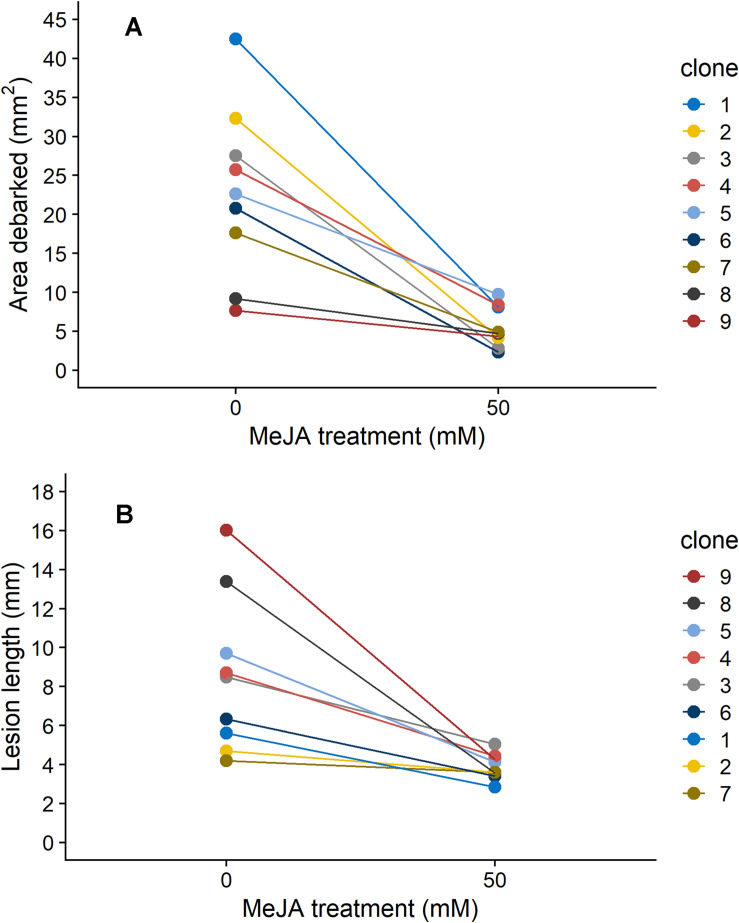
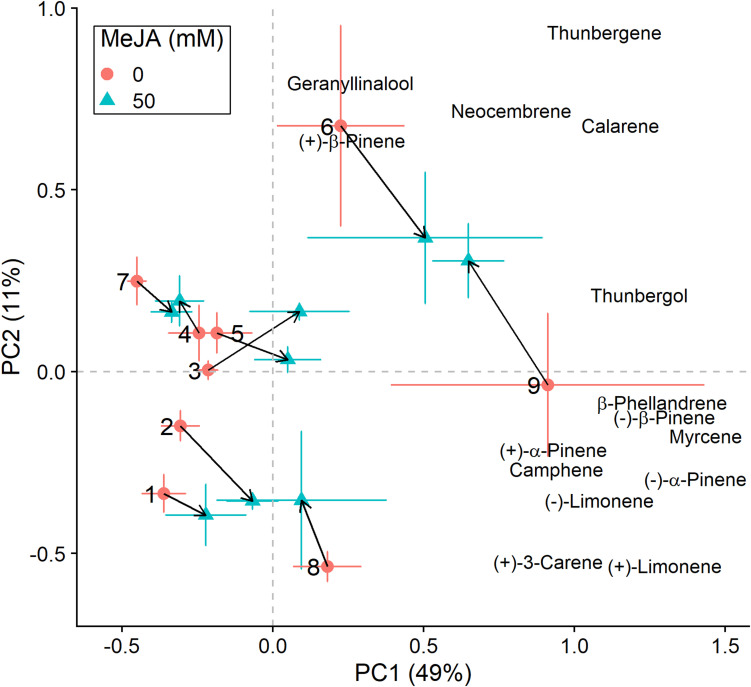
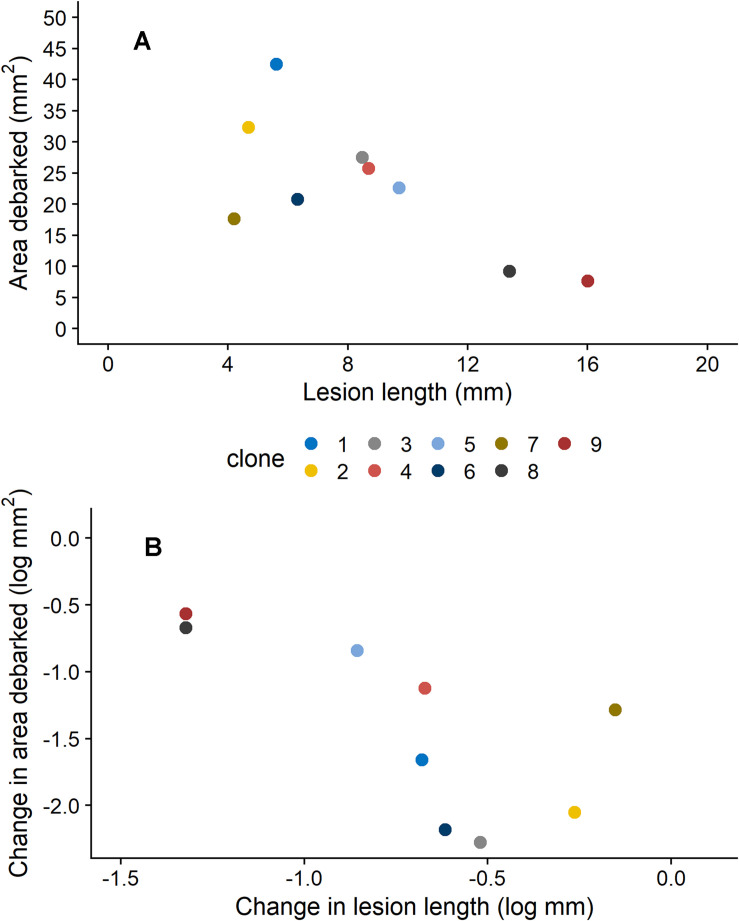
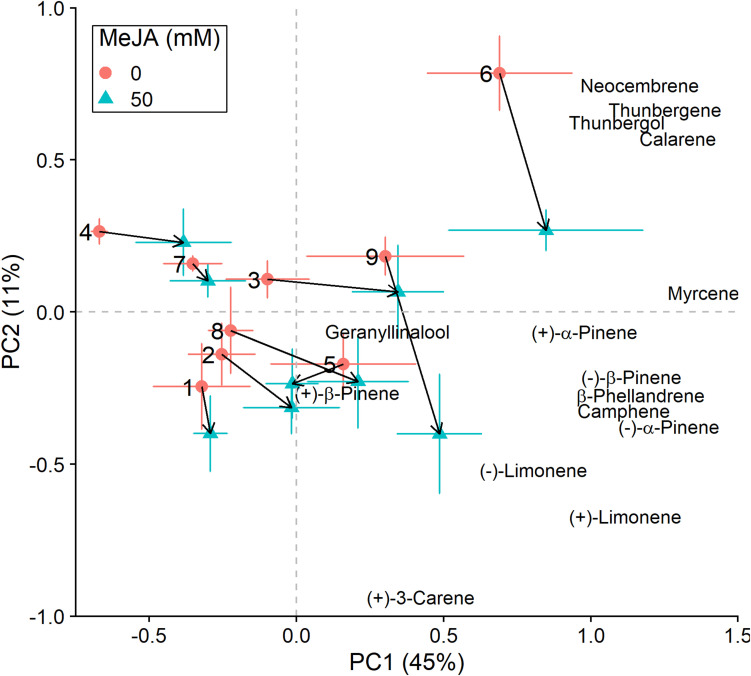
An essential component of plant defense is the change that occurs from a constitutive to an induced state following damage or infection. Exogenous application of the plant hormone methyl jasmonate (MeJA) has shown great potential to be used as a defense inducer prior to pest exposure, and could be used as a plant protection measure. Here, we examined (1) the importance of MeJA-mediated induction for Norway spruce () resistance against damage by the pine weevil , which poses a threat to seedling survival, and infection by the spruce bark beetle-associated blue-stain fungus , (2) genotypic variation in MeJA-induced defense (terpene chemistry), and (3) correlations among resistance to each pest. In a semi-field experiment, we exposed rooted-cuttings from nine different Norway spruce clones to insect damage and fungal infection separately. Plants were treated with 0, 25, or 50 mM MeJA, and planted in blocks where only pine weevils were released, or in a separate block in which plants were fungus-inoculated or not (control group). As measures of resistance, stem area debarked and fungal lesion lengths were assessed, and as a measure of defensive capacity, terpene chemistry was examined. We found that MeJA treatment increased resistance to and , but effects varied with clone. Norway spruce clones that exhibited high constitutive resistance did not show large changes in area debarked or lesion length when MeJA-treated, and vice versa. Moreover, insect damage negatively correlated with fungal infection. Clones receiving little pine weevil damage experienced larger lesion lengths, and vice versa, both in the constitutive and induced states. Changes in absolute terpene concentrations occurred with MeJA treatment (but not on proportional terpene concentrations), however, variation in chemistry was mostly explained by differences between clones. We conclude that MeJA can enhance protection against and , but the extent of protection will depend on the importance of constitutive and induced resistance for the Norway spruce clone in question. Trade-offs among resistances do not necessarily hinder the use of MeJA, as clones that are constitutively more resistant to either pest, should show greater MeJA-induced resistance against the other.
植物防御的一个重要组成部分是在受到损伤或感染后从组成型状态转变为诱导型状态。外源施用植物激素茉莉酸甲酯(MeJA)已显示出在害虫暴露前用作防御诱导剂的巨大潜力,并且可作为一种植物保护措施。在此,我们研究了:(1)MeJA介导的诱导对挪威云杉(Picea abies)抵抗对幼苗存活构成威胁的松树象鼻虫(Hylobius abietis)造成的损害以及与云杉树皮甲虫相关的蓝变真菌(Ophiostoma polonicum)感染的重要性;(2)MeJA诱导防御(萜类化学)中的基因型变异;以及(3)对每种害虫的抗性之间的相关性。在一项半田间试验中,我们将来自九个不同挪威云杉克隆的扦插苗分别暴露于昆虫损害和真菌感染。植物用0、25或50 mM的MeJA处理,并种植在仅释放松树象鼻虫的区域,或种植在一个单独的区域,在该区域植物接种或未接种真菌(对照组)。作为抗性的衡量指标,评估了去皮茎面积和真菌病斑长度,作为防御能力的衡量指标,研究了萜类化学。我们发现MeJA处理提高了对松树象鼻虫和蓝变真菌的抗性,但效果因克隆而异。表现出高组成型抗性的挪威云杉克隆在接受MeJA处理时,去皮面积或病斑长度没有显示出大的变化,反之亦然。此外,昆虫损害与真菌感染呈负相关。在组成型和诱导型状态下,受到很少松树象鼻虫损害的克隆病斑长度更大,反之亦然。MeJA处理会导致绝对萜类浓度发生变化(但相对萜类浓度不变),然而,化学组成的变化主要由克隆之间的差异解释。我们得出结论,MeJA可以增强对松树象鼻虫和蓝变真菌的保护,但保护程度将取决于所讨论的挪威云杉克隆中组成型抗性和诱导型抗性的重要性。抗性之间的权衡不一定会阻碍MeJA的使用,因为对任何一种害虫组成型抗性更强的克隆,应该对另一种害虫表现出更大的MeJA诱导抗性。