Mehić M, de Sa V K, Hebestreit S, Heldin C-H, Heldin P
Ludwig Institute for Cancer Research, Science for Life Laboratory, Uppsala University, Uppsala, Sweden.
Department of Genomics and Molecular Biology, International Research Center, A.C. Camargo Cancer Center, São Paulo, Brazil.
Oncogenesis. 2017 Jun 12;6(6):e348. doi: 10.1038/oncsis.2017.45.
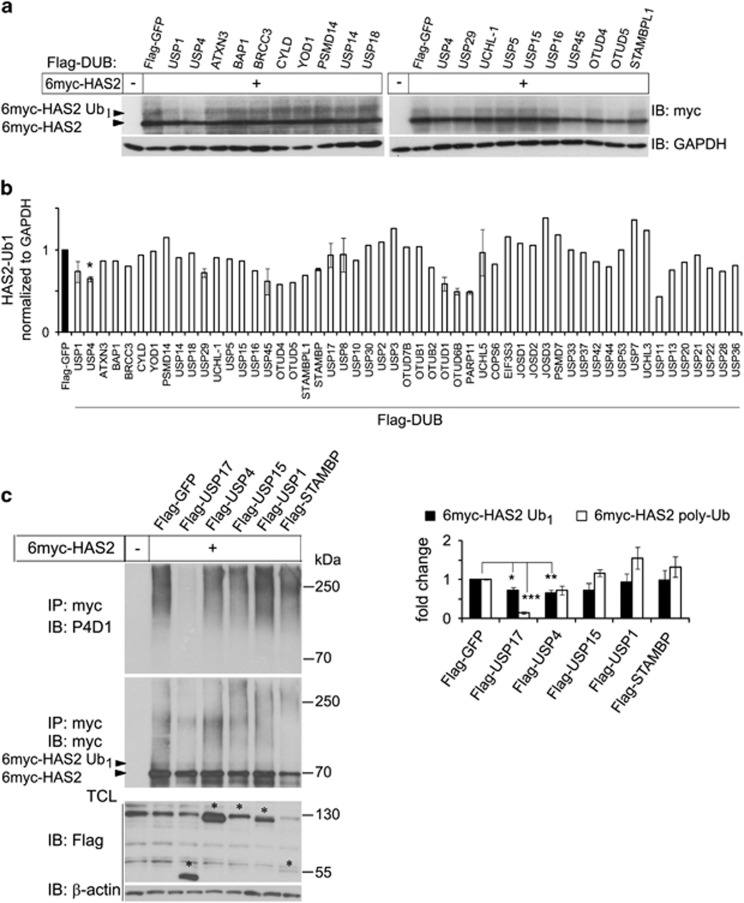
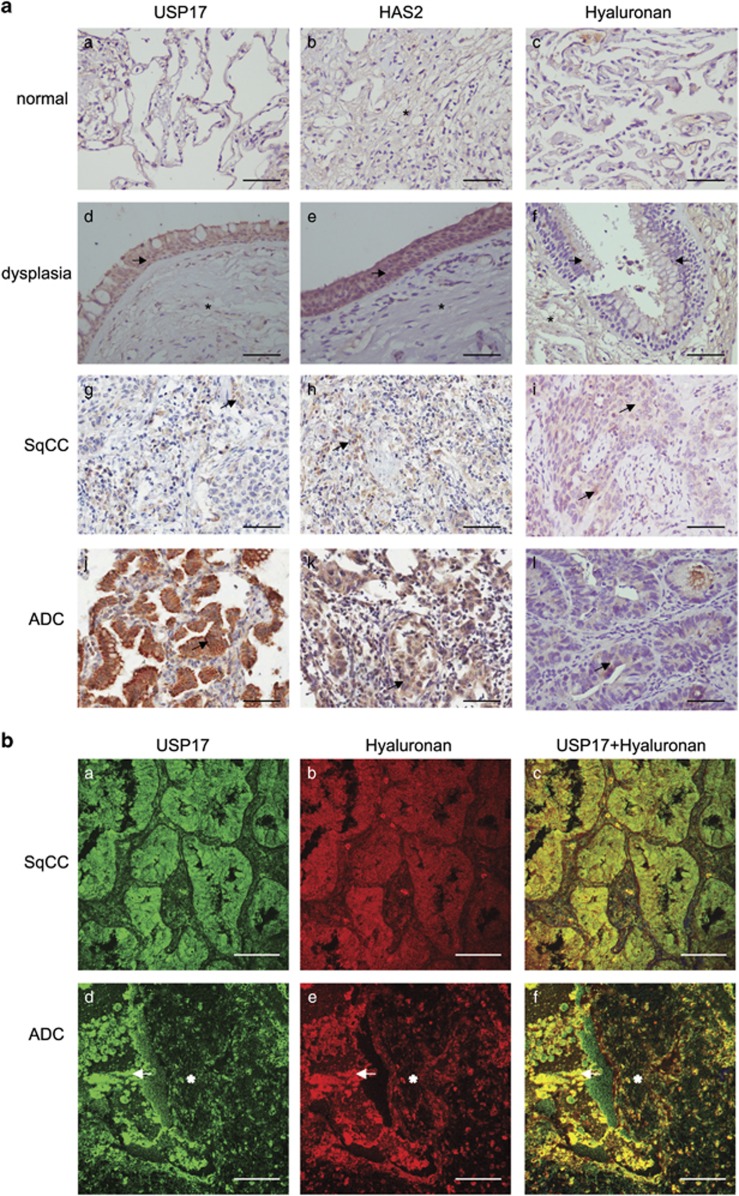
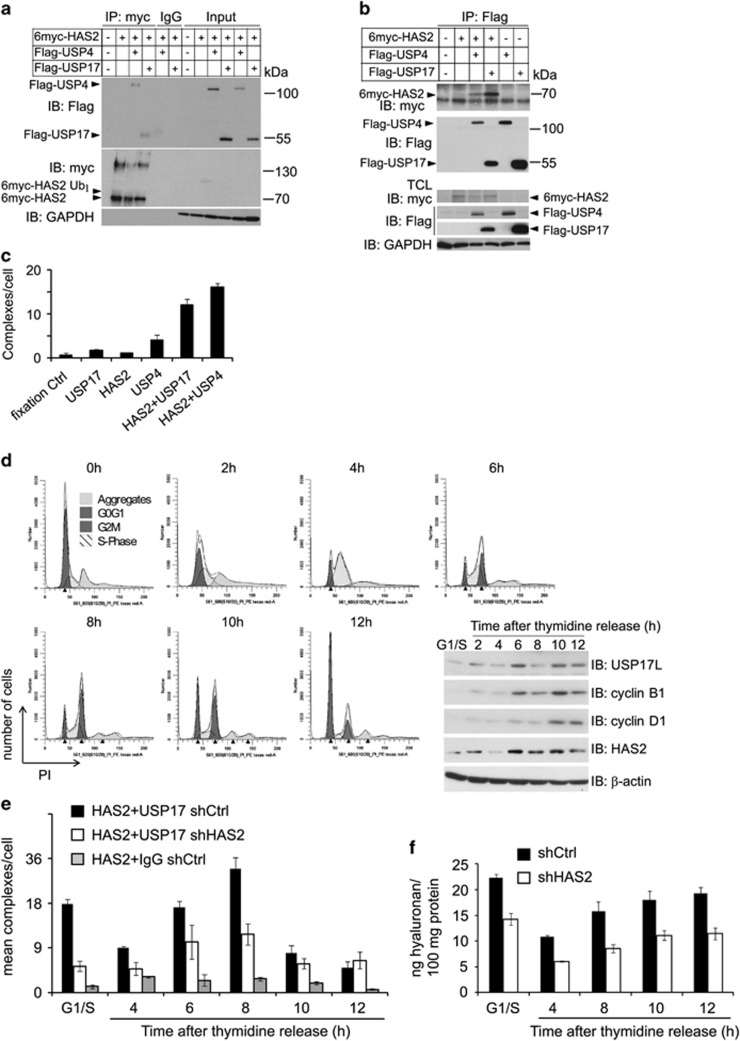
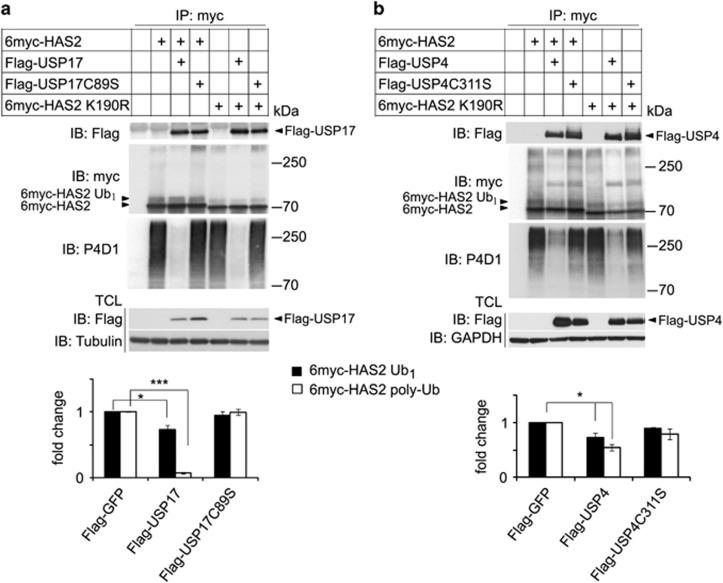
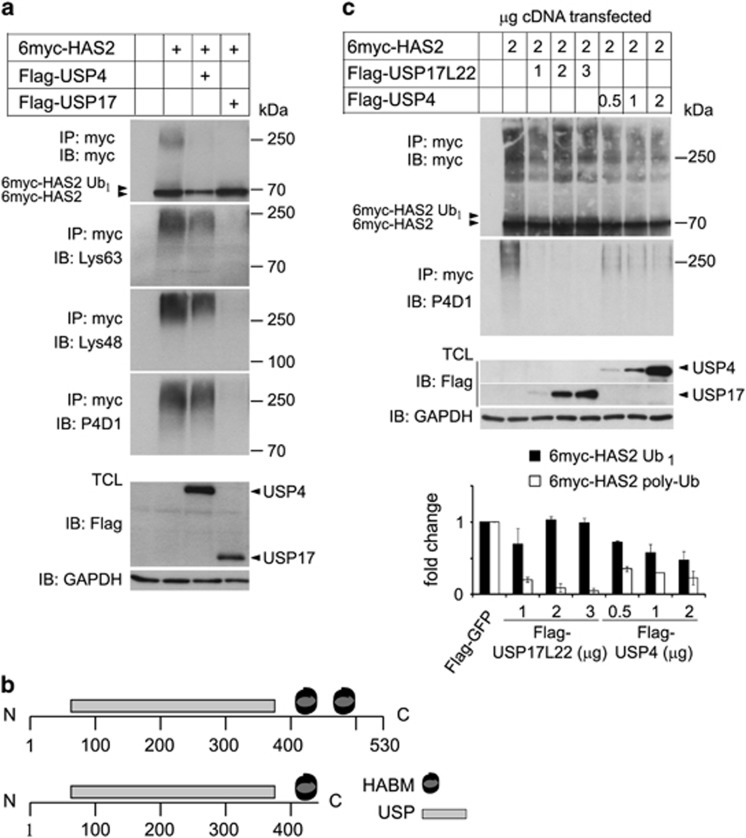
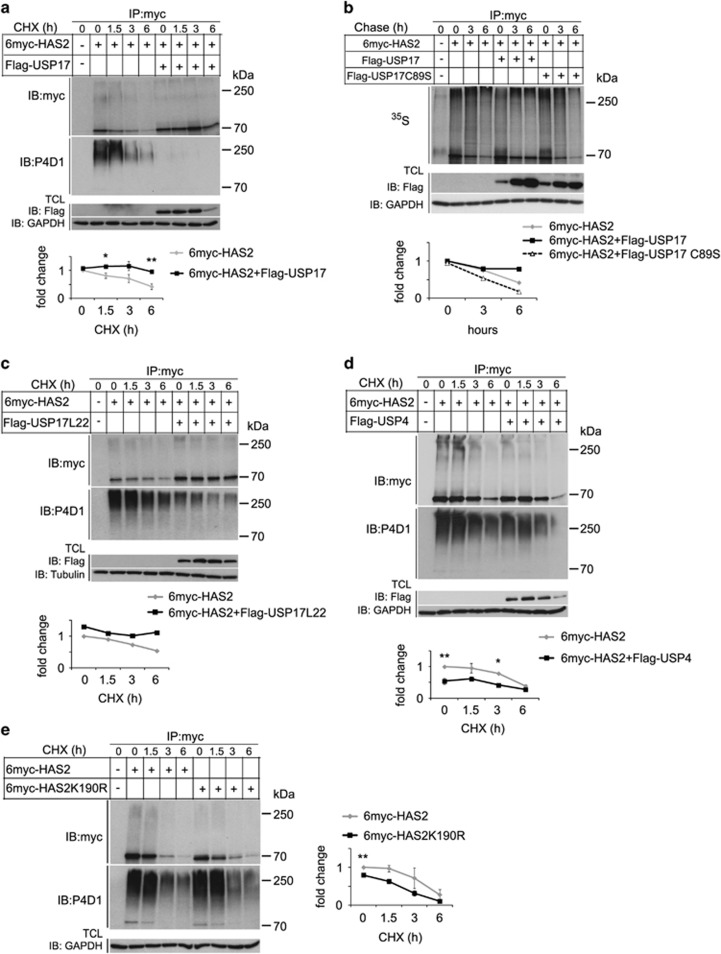
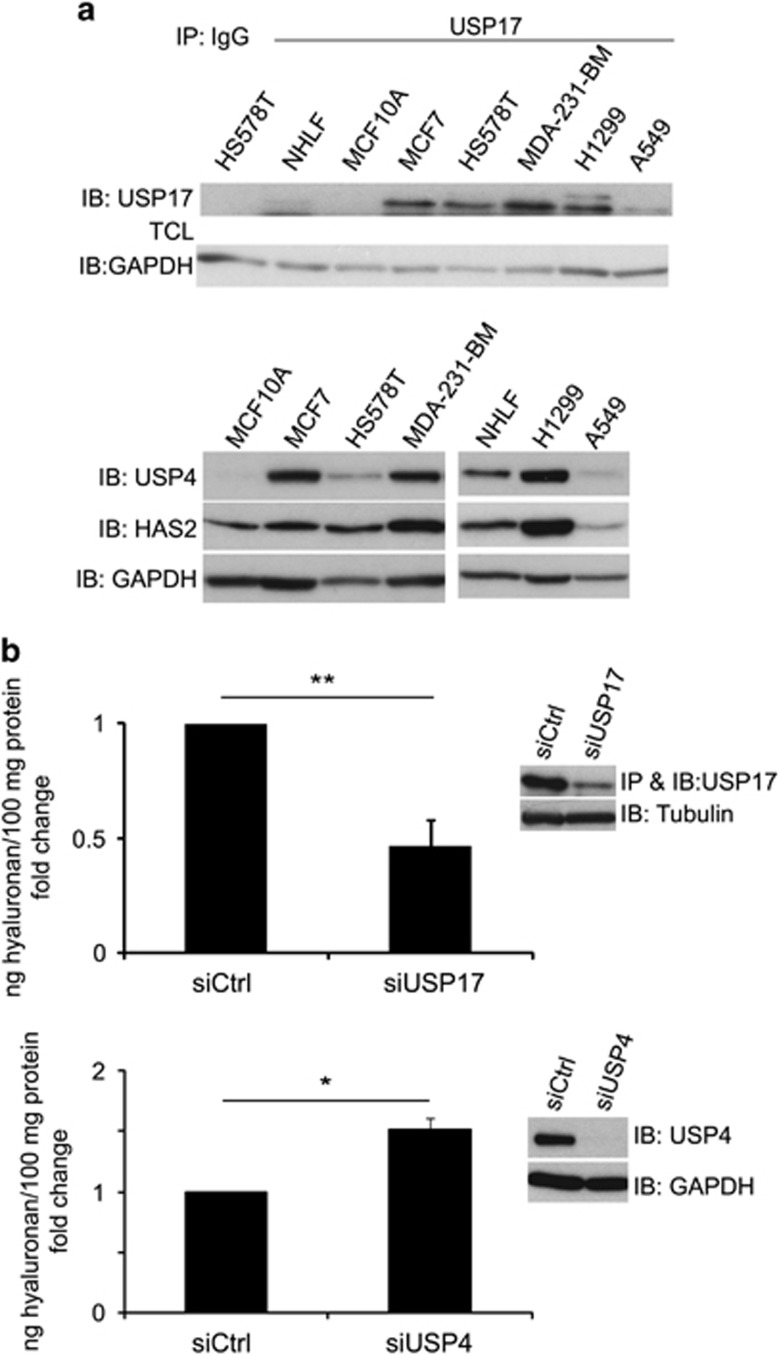
The levels of hyaluronan, a ubiquitous glycosaminoglycan prominent in the extracellular matrix, is balanced through the actions of hyaluronan-synthesizing enzymes (HAS1, 2 and 3) and degrading hyaluronidases (Hyal 1, 2, 3 and PH20). Hyaluronan accumulates in rapidly remodeling tissues, such as breast cancer, due to deregulated expression of the HAS2 gene and/or alterations of HAS2 activity. The activity of HAS2 is regulated by post-translational modifications, including ubiquitination. In order to identify deubiquitinating enzymes (DUBs) that are involved in de-ubiquitination of HAS2, a complementary (cDNA) library of 69 Flag-HA-tagged human DUBs cloned into retroviral vectors was screened in human embryonic kidney (HEK) 293T cells for their ability to de-ubiquitinate myc-tagged HAS2. Several DUBs were found to decrease the ubiquitination of 6myc-HAS2, among which, the most effective were USP17 and USP4. USP17 efficiently removed polyubiquitination, whereas USP4 preferentially removed monoubiquitination of 6myc-HAS2. Co-immunoprecipitation studies revealed interactions between HAS2 and USP17, as well as between HAS2 and USP4, in membrane preparations of HEK293T cells. USP17 significantly stabilized 6myc-HAS2 protein levels, whereas USP4 did not. The silencing of USP17 led to decreased hyaluronan production, whereas the suppression of USP4 increased hyaluronan synthesis. Importantly, high levels of USP17 and HAS2 were detected in a panel of cancer cell lines compared to normal cells, and immunohistochemical stainings revealed higher expression of USP17 and HAS2 in tissues of lung cancer patients compared to normal tissue. In conclusion, USP17 and USP4 differently affect HAS2 ubiquitination, and the stability and function of HAS2.
透明质酸是细胞外基质中一种普遍存在的糖胺聚糖,其水平通过透明质酸合成酶(HAS1、2和3)和降解透明质酸酶(Hyal 1、2、3和PH20)的作用来维持平衡。由于HAS2基因表达失调和/或HAS2活性改变,透明质酸在快速重塑的组织(如乳腺癌)中积累。HAS2的活性受翻译后修饰(包括泛素化)的调控。为了鉴定参与HAS2去泛素化的去泛素化酶(DUB),在人胚肾(HEK)293T细胞中筛选了一个克隆到逆转录病毒载体中的69个带有Flag-HA标签的人DUB互补(cDNA)文库,以检测它们对带有myc标签的HAS2去泛素化的能力。发现几种DUB可降低6myc-HAS2的泛素化,其中最有效的是USP17和USP4。USP17能有效去除多聚泛素化,而USP4优先去除6myc-HAS2的单泛素化。免疫共沉淀研究揭示了在HEK293T细胞膜制剂中HAS2与USP17以及HAS2与USP4之间的相互作用。USP17显著稳定了6myc-HAS2蛋白水平,而USP4则没有。USP17的沉默导致透明质酸产生减少,而USP4的抑制则增加了透明质酸的合成。重要的是,与正常细胞相比,在一组癌细胞系中检测到高水平的USP17和HAS2,免疫组织化学染色显示肺癌患者组织中USP17和HAS2的表达高于正常组织。总之,USP17和USP4对HAS2泛素化、稳定性和功能的影响不同。