Sharma Ira, Singh Avninder, Sharma Karam Chand, Saxena Sunita
National Institute of Pathology, New Delhi, India.
Symbiosis International University, Pune, India. Email:
Asian Pac J Cancer Prev. 2017 May 1;18(5):1307-1313. doi: 10.22034/APJCP.2017.18.5.1307.
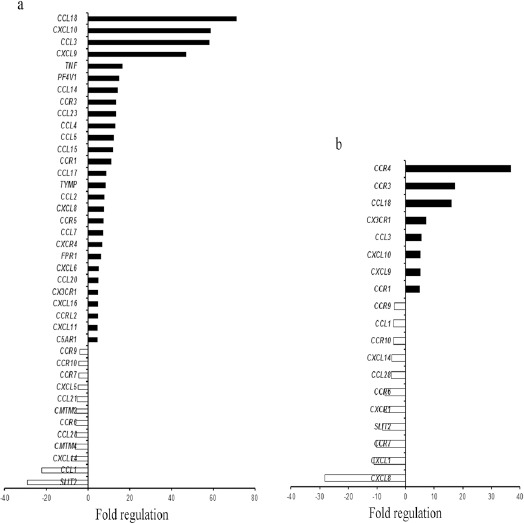
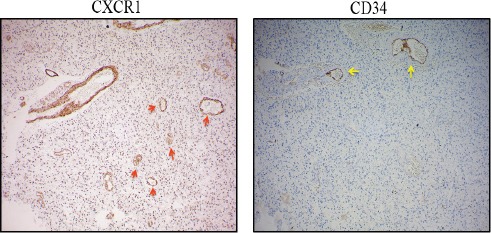
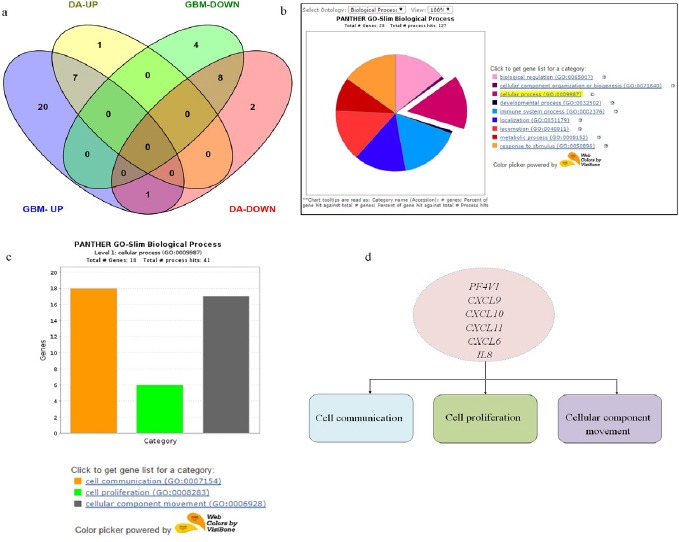
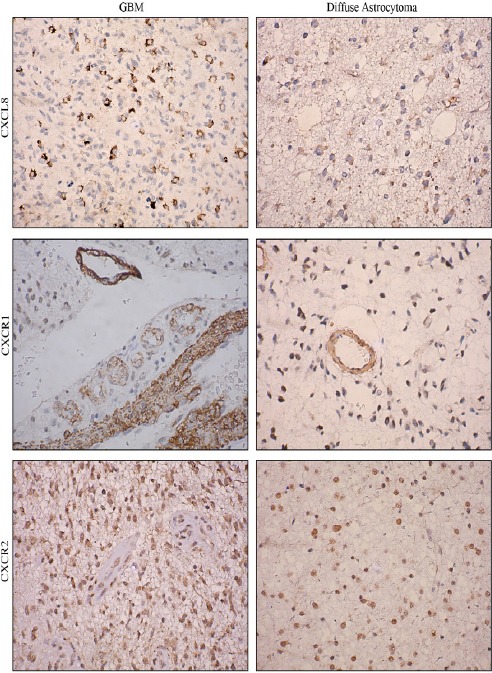
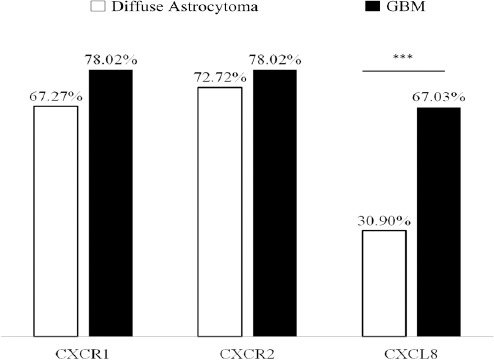
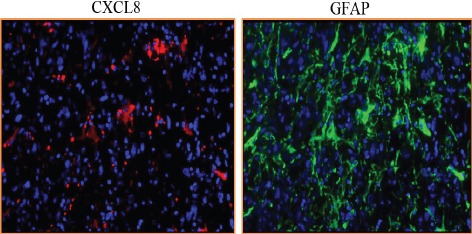
Background: Despite intense interest in molecular characterization and searches for novel therapeutic targets, the glioblastoma remains a formidable clinical challenge. Among many contributors to gliomagenesis, chemokines have drawn special attention due to their involvement in a plethora of biological processes and pathological conditions. In the present study we aimed to elucidate any pro-gliomagenic chemokine axis and probable roles in development of glioblastoma multiforme (GBM). Method: An array of 84 chemokines, chemokine receptors and related genes were studied by real time PCR with comparison between low grade astrocytoma (diffuse astrocytoma – grade II) and high grade astrocytoma (glioblastoma multiforme – grade IV). Gene ontology analysis and database mining were performed to funnel down the important axis in GBM followed by validation at the protein level by immunohistochemistry on tissue microarrays. Results: Gene expression and gene ontology analysis identified CXCL8 as an important chemokine which was more frequently up-regulated in GBM as compared to diffuse astrocytoma. Further we demonstrated localization of CXCL8 and its receptors in glioblastoma possibly affecting autocrine and paracrine signalling that promotes tumor cell proliferation and neovascularisation with vascular mimicry. Conclusion: From these results CXCL8 appears to be an important gliomagenic chemokine which may be involved in GBM growth by promoting tumor cell proliferation and neovascularization via vascular mimicry. Further in vitro and in vivo investigations are required to explore its potential candidature in anti-GBM therapy.
尽管对分子特征化和寻找新的治疗靶点有着浓厚兴趣,但胶质母细胞瘤仍然是一项严峻的临床挑战。在众多导致胶质瘤发生的因素中,趋化因子因其参与大量生物过程和病理状况而受到特别关注。在本研究中,我们旨在阐明任何促胶质瘤发生的趋化因子轴及其在多形性胶质母细胞瘤(GBM)发展中的可能作用。方法:通过实时PCR研究了84种趋化因子、趋化因子受体及相关基因,并比较了低级别星形细胞瘤(弥漫性星形细胞瘤——二级)和高级别星形细胞瘤(多形性胶质母细胞瘤——四级)。进行基因本体分析和数据库挖掘以筛选出GBM中的重要轴,随后通过组织微阵列上的免疫组织化学在蛋白水平进行验证。结果:基因表达和基因本体分析确定CXCL8为一种重要的趋化因子,与弥漫性星形细胞瘤相比,其在GBM中更频繁地上调。此外,我们证明了CXCL8及其受体在胶质母细胞瘤中的定位可能影响自分泌和旁分泌信号传导,从而通过血管拟态促进肿瘤细胞增殖和新血管形成。结论:从这些结果来看,CXCL8似乎是一种重要的促胶质瘤发生的趋化因子,可能通过血管拟态促进肿瘤细胞增殖和新血管形成而参与GBM的生长。需要进一步的体外和体内研究来探索其在抗GBM治疗中的潜在候选地位。