Department of Environmental Medicine and Public Health, Icahn School of Medicine at Mount Sinai, New York, NY, United States.
National Institute of Perinatology (INPer), Mexico City, Mexico.
Neurotoxicology. 2018 Jan;64:85-93. doi: 10.1016/j.neuro.2017.06.006. Epub 2017 Jun 10.
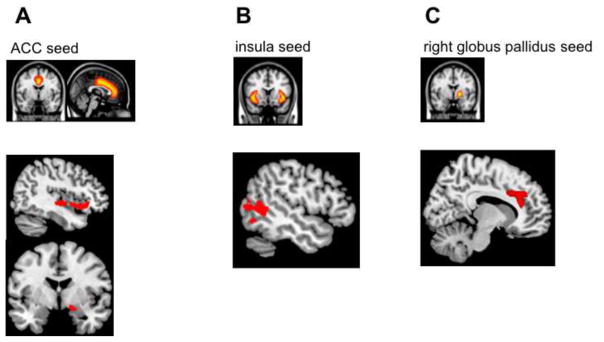
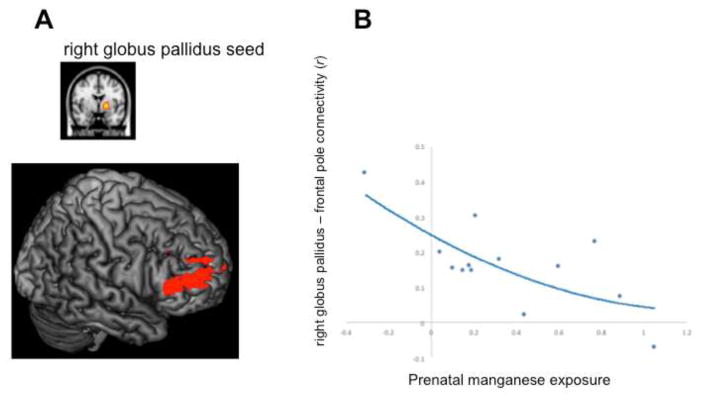
Manganese (Mn) is an essential trace metal that is neurotoxic at high levels of exposure. Disruption of brain maturation processes during the prenatal period may have lasting consequences. During this critical period, the developing human brain is uniquely vulnerable to exposure to environmental toxicants such as Mn, and prenatal Mn exposure has been associated with changes in brain areas involved in emotion processing and regulation. The goal of the present pilot study was to examine whether prenatal Mn exposure is associated with changes in the intrinsic functional connectivity (iFC) of the brain in childhood, focusing on changes in emotional brain areas. We selected 15 subjects (age 6-7 years) from an ongoing longitudinal birth cohort study to participate in a resting state functional magnetic resonance imaging (fMRI) study. Prenatal Mn exposure was determined from maternal blood collected during the 2nd and 3rd trimesters of pregnancy. We used seed-based correlation analyses and independent component analyses to examine whether prenatal Mn exposure was associated with the iFC of the brain in children. We found that the right globus pallidus showed reduced iFC with the dorsal anterior cingulate cortex and lateral prefrontal cortex in children who were exposed to higher prenatal Mn levels, after controlling for sociodemographic confounders (SES, maternal education, child sex, home environment support) and environmental confounders (prenatal lead exposure and air pollution). These findings suggest that prenatal Mn exposure is associated with reduced iFC of brain areas involved in emotion processing and regulation in children. Future studies should investigate whether this reduced iFC mediates the association between prenatal Mn exposure and emotional dysfunction in childhood.
锰(Mn)是一种必需的微量元素,在高暴露水平下具有神经毒性。在产前期间,大脑成熟过程的中断可能会产生持久的后果。在这个关键时期,发育中的人类大脑特别容易受到环境毒物(如 Mn)的暴露,并且产前 Mn 暴露与参与情绪处理和调节的大脑区域的变化有关。本初步研究的目的是研究产前 Mn 暴露是否与儿童时期大脑的内在功能连接(iFC)变化相关,重点关注情绪脑区的变化。我们从正在进行的纵向出生队列研究中选择了 15 名(6-7 岁)受试者参加静息状态功能磁共振成像(fMRI)研究。产前 Mn 暴露是从妊娠第 2 和第 3 个月期间采集的母亲血液中确定的。我们使用基于种子的相关分析和独立成分分析来研究产前 Mn 暴露是否与儿童的大脑 iFC 相关。我们发现,在控制社会经济混杂因素(SES、母亲教育、儿童性别、家庭环境支持)和环境混杂因素(产前铅暴露和空气污染)后,暴露于较高产前 Mn 水平的儿童的右侧苍白球与背侧前扣带皮层和外侧前额叶皮层的 iFC 降低。这些发现表明,产前 Mn 暴露与儿童情绪处理和调节相关脑区的 iFC 降低有关。未来的研究应探讨这种降低的 iFC 是否介导了产前 Mn 暴露与儿童期情绪功能障碍之间的关联。