Maccarrone Mauro
Department of Medicine, Campus Bio-Medico University of RomeRome, Italy.
European Center for Brain Research, IRCCS Santa Lucia FoundationRome, Italy.
Front Mol Neurosci. 2017 May 29;10:166. doi: 10.3389/fnmol.2017.00166. eCollection 2017.
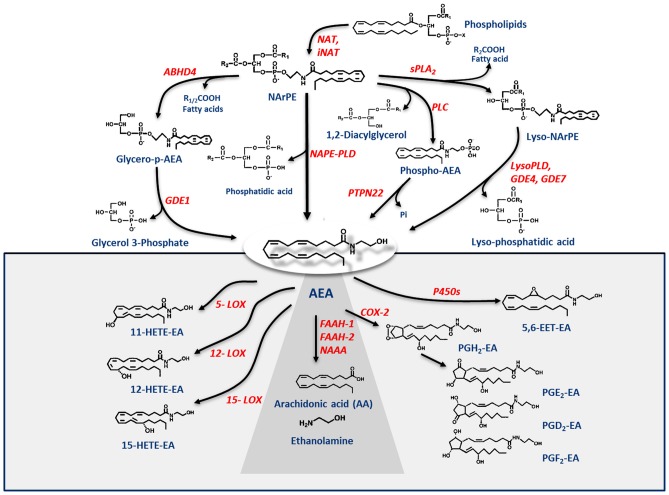
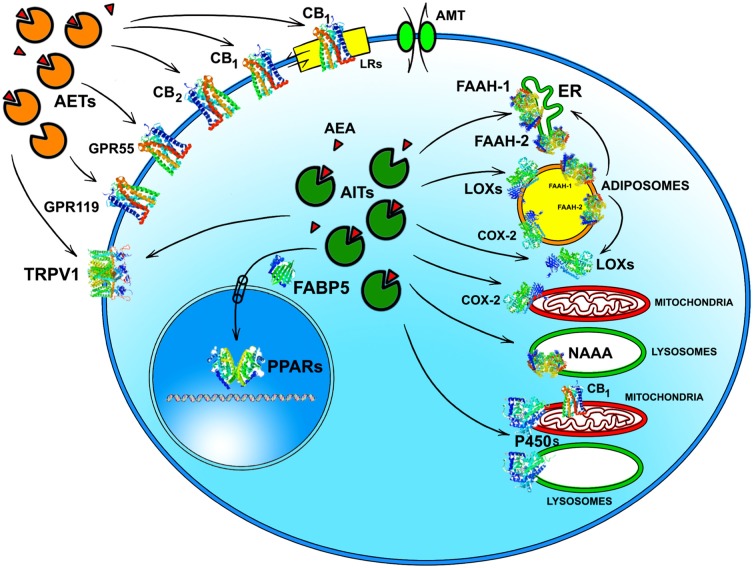
Cannabis extracts have been used for centuries, but its main active principle ∆-tetrahydrocannabinol (THC) was identified about 50 years ago. Yet, it is only 25 years ago that the first endogenous ligand of the same receptors engaged by the cannabis agents was discovered. This "endocannabinoid (eCB)" was identified as -arachidonoylethanolamine (or anandamide (AEA)), and was shown to have several receptors, metabolic enzymes and transporters that altogether drive its biological activity. Here I report on the latest advances about AEA metabolism, with the aim of focusing open questions still awaiting an answer for a deeper understanding of AEA activity, and for translating AEA-based drugs into novel therapeutics for human diseases.
大麻提取物已被使用了几个世纪,但它的主要活性成分Δ-四氢大麻酚(THC)是在大约50年前才被鉴定出来的。然而,直到25年前,大麻制剂所作用的相同受体的首个内源性配体才被发现。这种“内源性大麻素(eCB)”被鉴定为花生四烯酸乙醇胺(或阿南达米德(AEA)),并被证明具有多种受体、代谢酶和转运蛋白,它们共同驱动其生物活性。在此,我报告关于AEA代谢的最新进展,目的是聚焦仍有待解答的开放性问题,以便更深入地理解AEA活性,并将基于AEA的药物转化为治疗人类疾病的新型疗法。