Asatryan Aram, Bazan Nicolas G
Neuroscience Center of Excellence, School of Medicine, Louisiana State University Health New Orleans, New Orleans, Louisiana 70112-2223.
Neuroscience Center of Excellence, School of Medicine, Louisiana State University Health New Orleans, New Orleans, Louisiana 70112-2223.
J Biol Chem. 2017 Jul 28;292(30):12390-12397. doi: 10.1074/jbc.R117.783076. Epub 2017 Jun 14.
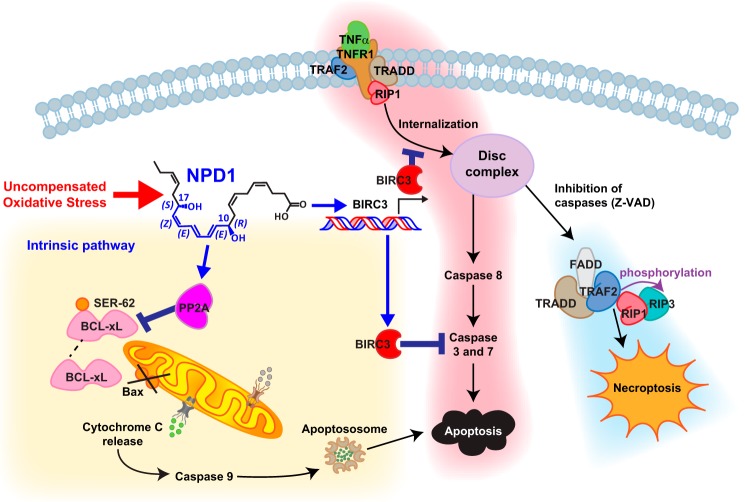
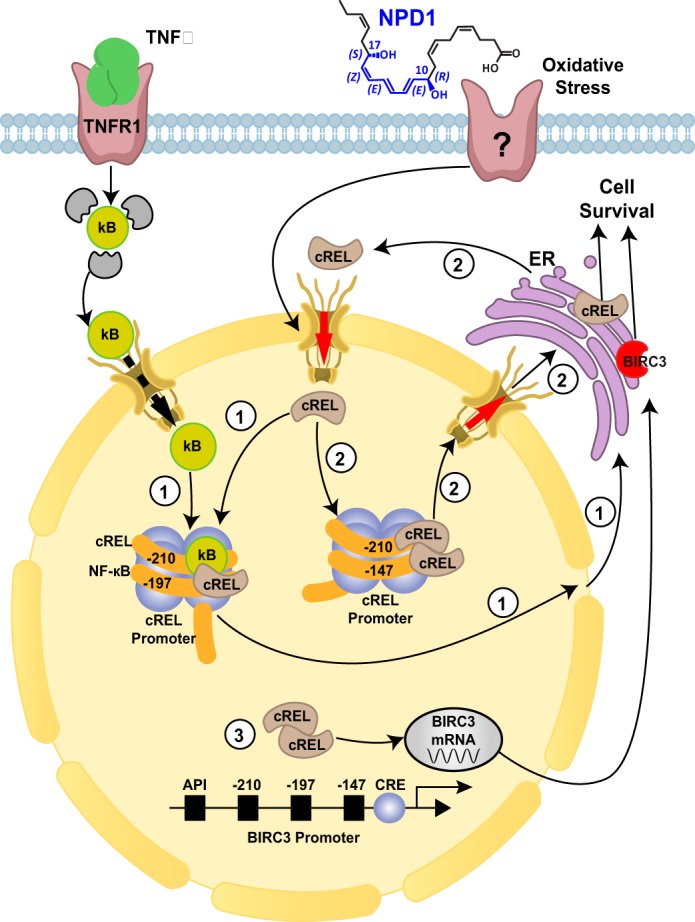
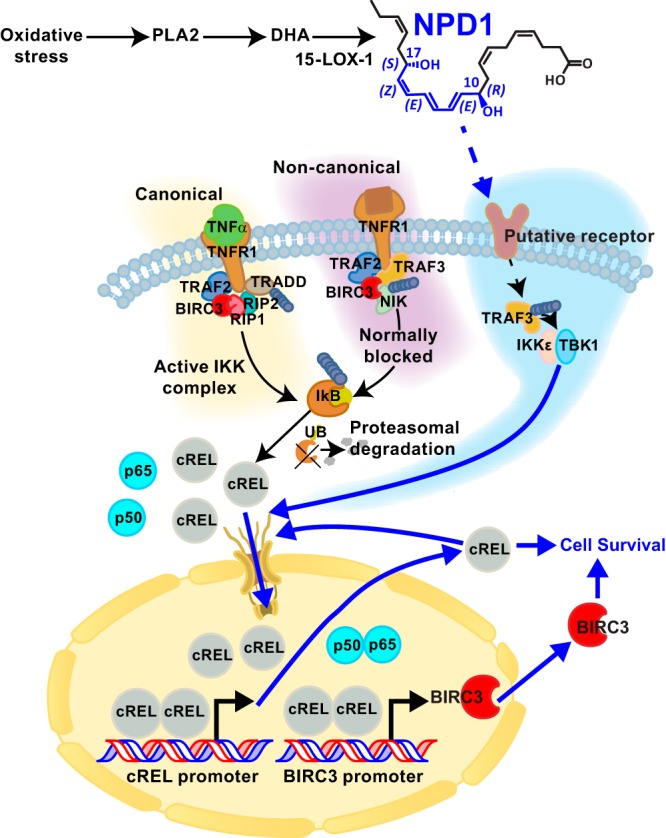
Docosahexaenoic acid, enriched in the brain and retina, generates docosanoids in response to disruptions of cellular homeostasis. Docosanoids include neuroprotectin D1 (NPD1), which is decreased in the CA1 hippocampal area of patients with early-stage Alzheimer's disease (AD). We summarize here how NPD1 elicits neuroprotection by up-regulating c-REL, a nuclear factor (NF)-κB subtype that, in turn, enhances expression of BIRC3 (baculoviral inhibitor of apoptosis repeat-containing protein 3) in the retina and in experimental stroke, leading to neuroprotection. Elucidating the mechanisms of action of docosanoids will contribute to managing diseases, including stroke, AD, age-related macular degeneration, traumatic brain injury, Parkinson's disease, and other neurodegenerations.
二十二碳六烯酸在大脑和视网膜中含量丰富,在细胞内稳态受到破坏时会生成二十二碳六烯酸类化合物。二十二碳六烯酸类化合物包括神经保护素D1(NPD1),在早期阿尔茨海默病(AD)患者的海马CA1区中含量降低。我们在此总结NPD1如何通过上调c-REL引发神经保护作用,c-REL是一种核因子(NF)-κB亚型,反过来又增强视网膜和实验性中风中含杆状病毒凋亡重复序列蛋白3(BIRC3)的表达,从而实现神经保护。阐明二十二碳六烯酸类化合物的作用机制将有助于治疗包括中风、AD、年龄相关性黄斑变性、创伤性脑损伤、帕金森病和其他神经退行性疾病在内的多种疾病。