Keskin Ilknur, Gunal M Yalcin, Ayturk Nilufer, Kilic Ulkan, Ozansoy Mehmet, Kilic Ertugrul
Department of Histology and Embryology, Medipol University, Istanbul, Turkey.
Regenerative and Restorative Medical Research Center (REMER), Medipol University, Istanbul, Turkey.
Neural Regen Res. 2017 May;12(5):761-764. doi: 10.4103/1673-5374.206646.
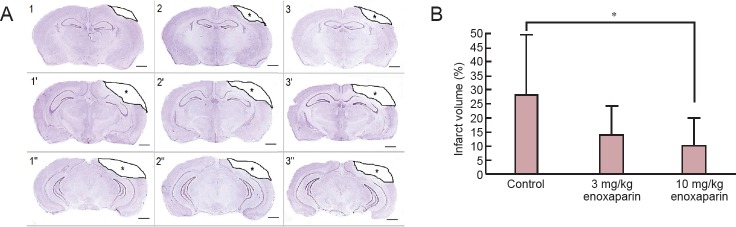
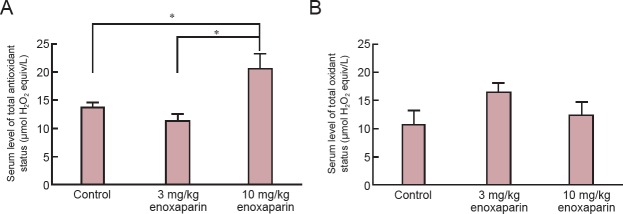
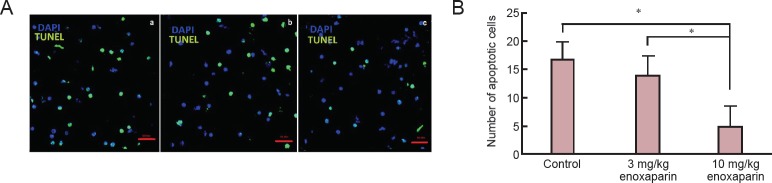
Recent evidence exists that enoxaparin can reduce brain injury because of its anticoagulant activity. To investigate the potential therapeutic effect of enoxaparin on cold-induced traumatic brain injury, at 20 minutes after modeling, male BALB/c mouse models of cold-induced traumatic brain injury were intraperitoneally administered 3 and 10 mg/kg enoxaparin or isotonic saline solution. Twenty-four hours later, enoxaparin at 10 mg/kg greatly reduced infarct volume, decreased cell apoptosis in the cortex and obviously increased serum level of total antioxidant status. By contrast, administration of enoxaparin at 3 mg/kg did not lead to these changes. These findings suggest that enoxaparin exhibits neuroprotective effect on cold-induced traumatic brain injury in a dose-dependent manner.
最近有证据表明,依诺肝素因其抗凝活性可减轻脑损伤。为了研究依诺肝素对冷诱导创伤性脑损伤的潜在治疗作用,在建模后20分钟,对冷诱导创伤性脑损伤的雄性BALB/c小鼠模型腹腔注射3毫克/千克和10毫克/千克依诺肝素或等渗盐溶液。24小时后,10毫克/千克的依诺肝素显著减少了梗死体积,降低了皮质中的细胞凋亡,并明显提高了血清总抗氧化状态水平。相比之下,3毫克/千克依诺肝素的给药并未导致这些变化。这些发现表明,依诺肝素对冷诱导创伤性脑损伤具有剂量依赖性的神经保护作用。