Akasaka Tomonori, Sueta Daisuke, Arima Yuichiro, Tabata Noriaki, Takashio Seiji, Izumiya Yasuhiro, Yamamoto Eiichiro, Tsujita Kenichi, Kojima Sunao, Kaikita Koichi, Kajiwara Ayami, Morita Kazunori, Oniki Kentaro, Saruwatari Junji, Nakagawa Kazuko, Hokimoto Seiji
Department of Cardiovascular Medicine, Graduate School of Medical Sciences, Kumamoto University, Kumamoto, Japan.
Division of Pharmacology and Therapeutics, Graduate School of Medical and Pharmaceutical Sciences, Kumamoto University, Kumamoto, Japan.
Int J Cardiol Heart Vasc. 2017 Apr 12;15:15-20. doi: 10.1016/j.ijcha.2017.03.001. eCollection 2017 Jun.
Categorization as a cytochrome P450 (CYP) 2C19 poor metabolizer (PM) is reported to be an independent risk factor for cardiovascular disease. Epoxyeicosatrienoic acids (EETs) are metabolites of arachidonic acid by CYP2C19 epoxygenases and anti-inflammatory properties, especially in microvascular tissues. We examined the impact of CYP2C19 polymorphisms and EETs on the patients with microvascular angina (MVA) caused by coronary microvascular dysfunction.
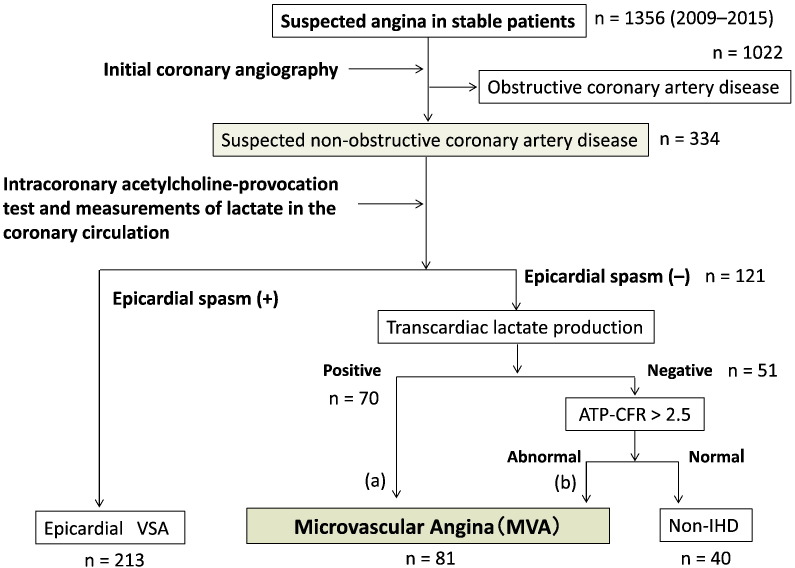
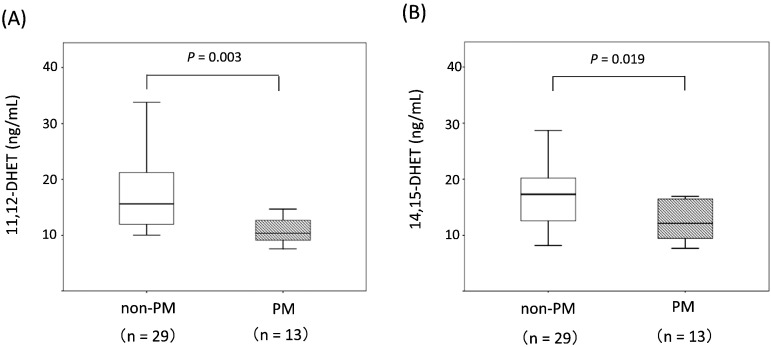
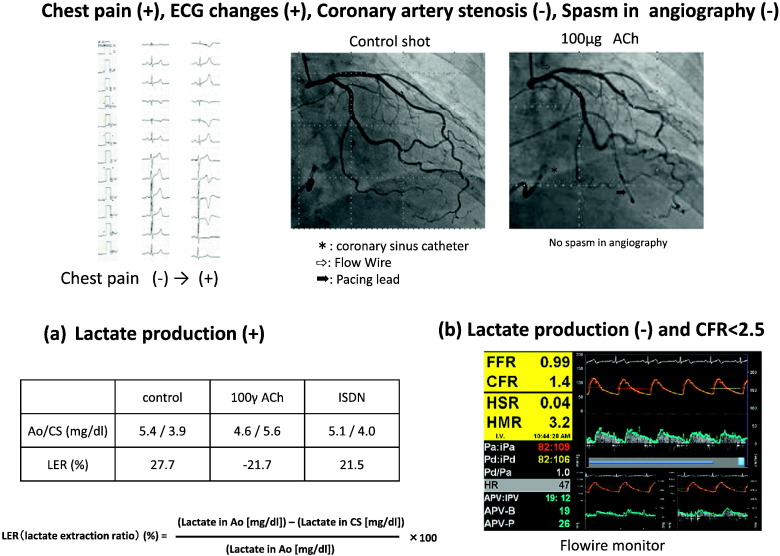
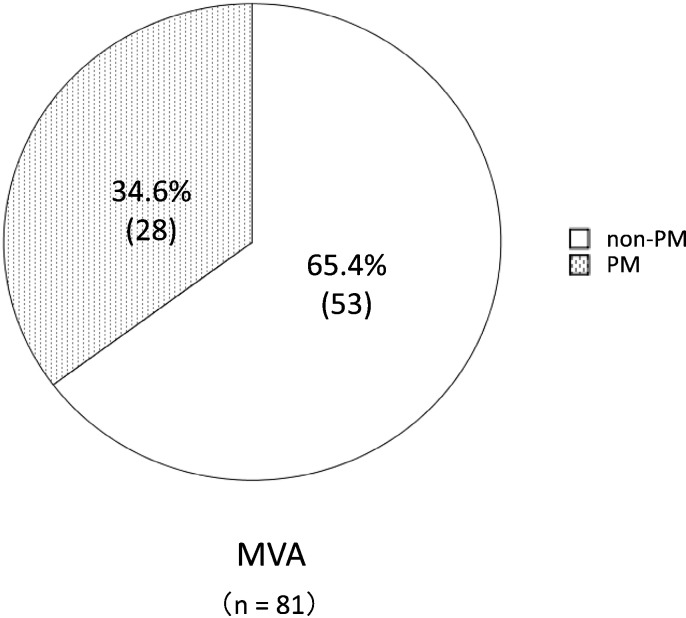
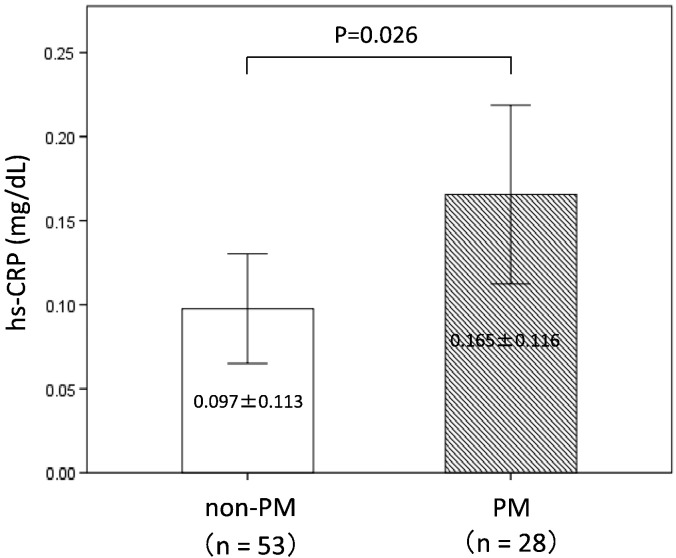
We examined CYP2C19 genotypes in patients with MVA ( = 81). MVA was defined as absence of coronary artery stenosis and epicardial spasms, and the presence of inversion of lactic acid levels between intracoronary and coronary sinuses in acetylcholine-provocation test or the adenosine-triphosphate-induced coronary flow reserve ratio was below 2.5. CYP2C19 PM have two loss-of-functon alleles (*2, *3). We measured serum dihydroxyeicosatrienoic acid (DHET) as representative EET metabolite. In MVA, the patients with CYP2C19 PM were 34.6% and high sense C-reactive protein (hs-CRP) levels in CYP2C19 PM were significantly higher than that of non-PM group (0.165 ± 0.116 vs. 0.097 ± 0.113 mg/dL, = 0.026). Moreover, DHET levels in CYP2C19 PM were significantly lower than that of non-PM (10.4 ± 4.58 vs. 15.6 ± 11.1 ng/mL, = 0.003 (11,12-DHET); 12.1 ± 3.79 vs. 17.3 ± 6.49 ng/mL, = 0.019 (14,15-DHET)).
The decline of EET owing to CYP2C19 variants may affects coronary microvascular dysfunction via chronic inflammation.
据报道,细胞色素P450(CYP)2C19慢代谢型(PM)是心血管疾病的独立危险因素。环氧二十碳三烯酸(EETs)是花生四烯酸经CYP2C19环氧化酶代谢产生的具有抗炎特性的物质,尤其在微血管组织中。我们研究了CYP2C19基因多态性和EETs对因冠状动脉微血管功能障碍引起的微血管性心绞痛(MVA)患者的影响。
我们检测了81例MVA患者的CYP2C19基因型。MVA定义为无冠状动脉狭窄和心外膜痉挛,且在乙酰胆碱激发试验中冠状动脉内与冠状窦之间乳酸水平出现反转,或三磷酸腺苷诱导的冠状动脉血流储备比值低于2.5。CYP2C19 PM有两个功能丧失等位基因(*2,*3)。我们检测血清二羟二十碳三烯酸(DHET)作为代表性的EET代谢产物。在MVA患者中,CYP2C19 PM患者占34.6%,CYP2C19 PM患者的高敏C反应蛋白(hs-CRP)水平显著高于非PM组(0.165±0.116 vs. 0.097±0.113mg/dL,P = 0.026)。此外,CYP2C19 PM患者的DHET水平显著低于非PM患者(11,12-DHET:10.4±4.58 vs. 15.6±11.1ng/mL,P = 0.003;14,15-DHET:12.1±3.79 vs. 17.3±6.49ng/mL,P = 0.019)。
由于CYP2C19变异导致的EET下降可能通过慢性炎症影响冠状动脉微血管功能障碍。