Muche Abebe, Arendt Thomas, Schliebs Reinhard
Department of Human Anatomy, College of Medicine and Health Sciences, University of Gondar, Gondar, Ethiopia.
Paul Flechsig Institute for Brain Research, Medical Faculty, University of Leipzig, Leipzig, Germany.
PLoS One. 2017 Jun 15;12(6):e0178127. doi: 10.1371/journal.pone.0178127. eCollection 2017.
Oxidative stress is thought to be a key player in the pathogenesis of neurodegenerative dementia, including Alzheimer's disease (AD). It has been assumed that oxidative stress contributes to the ß-amyloid deposition in cerebral blood vessels.
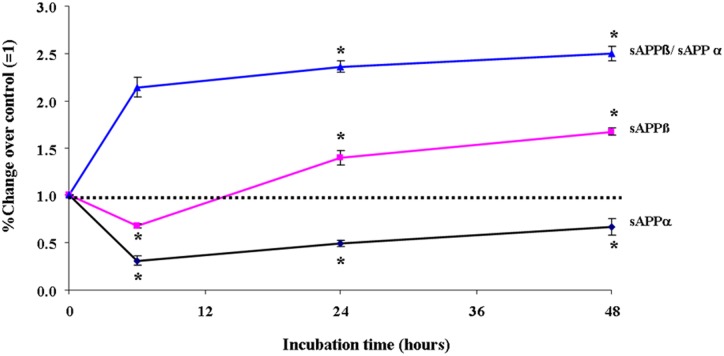
In order to prove this hypothesis, we examined the effect of oxidative stress on the processing of amyloid precursor protein (APP) in primary endothelial cells (EC) derived from cerebral cortical tissue of transgenic Tg2576 mice. Following exposure of EC by 1 μM hydrogen peroxide for up to 48 hours, formation and secretion of APP cleavage products sAPPα and sAPPß into the culture medium as well as the expression of endothelial APP were assessed.
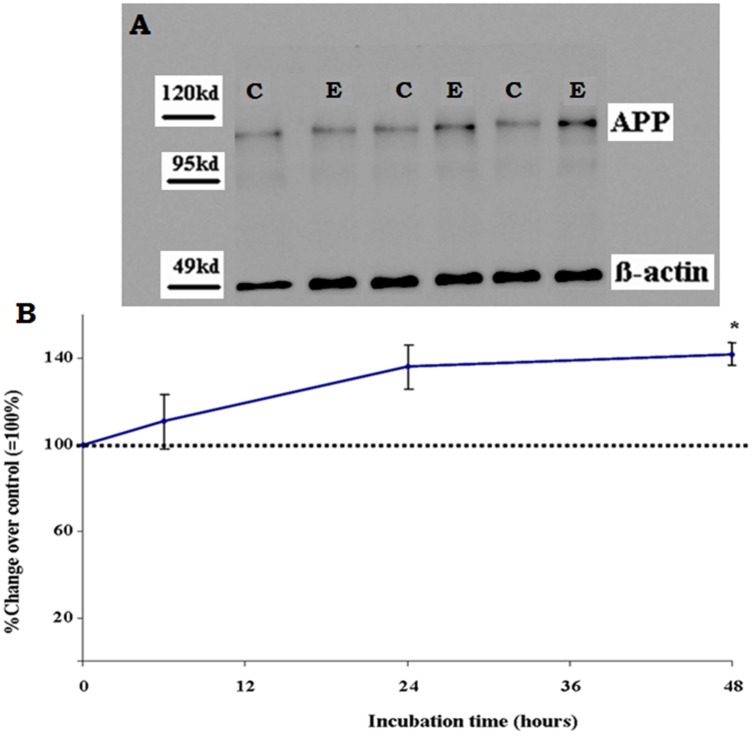
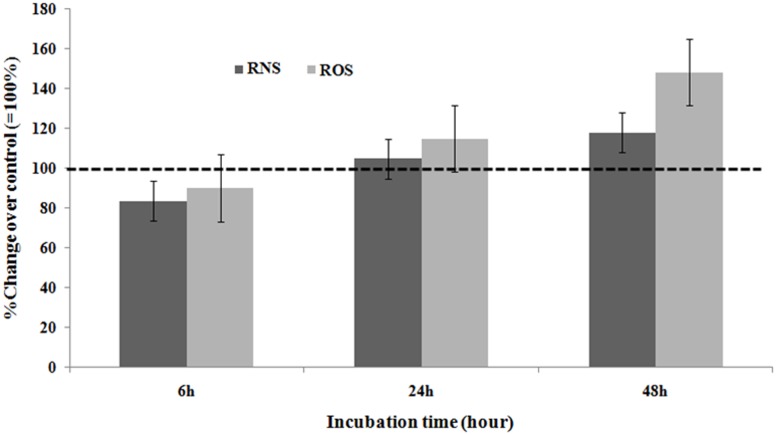
Oxidative stress resulted in enhanced secretion of sAPPß into the culture medium as compared to controls (absence of hydrogen peroxide), which was accompanied by an increased APP expression, induction of VEGF synthesis, nitric oxide and oxygen free radicals productions, and differential changes of endothelial phospo-p42/44 MAPK expression.
The data suggest that oxidative stress may represent a major risk factor in causing Aß deposition in the brain vascular system by initiating the amyloidogenic route of endothelial APP processing. The enhanced β-secretase activity following oxidative stress exposure, possibly promoted by phosphorylation of p42/44 MAPK.
氧化应激被认为是包括阿尔茨海默病(AD)在内的神经退行性痴呆发病机制中的关键因素。据推测,氧化应激会导致脑血管中β-淀粉样蛋白沉积。
为了验证这一假设,我们检测了氧化应激对源自转基因Tg2576小鼠大脑皮质组织的原代内皮细胞(EC)中淀粉样前体蛋白(APP)加工过程的影响。用1μM过氧化氢处理EC长达48小时后,评估APP裂解产物sAPPα和sAPPβ在培养基中的形成和分泌以及内皮APP的表达。
与对照组(无过氧化氢)相比,氧化应激导致sAPPβ在培养基中的分泌增加,同时伴有APP表达增加、VEGF合成诱导、一氧化氮和氧自由基产生以及内皮磷酸化p42/44 MAPK表达的差异变化。
数据表明,氧化应激可能是通过启动内皮APP加工的淀粉样生成途径,导致脑血管系统中Aβ沉积的主要危险因素。氧化应激暴露后β-分泌酶活性增强,可能是由p42/44 MAPK磷酸化促进的。