Bhattacharya Tamanash, Newton Irene L G, Hardy Richard W
Department of Biology, Indiana University, Bloomington, Indiana, United States of America.
PLoS Pathog. 2017 Jun 15;13(6):e1006427. doi: 10.1371/journal.ppat.1006427. eCollection 2017 Jun.
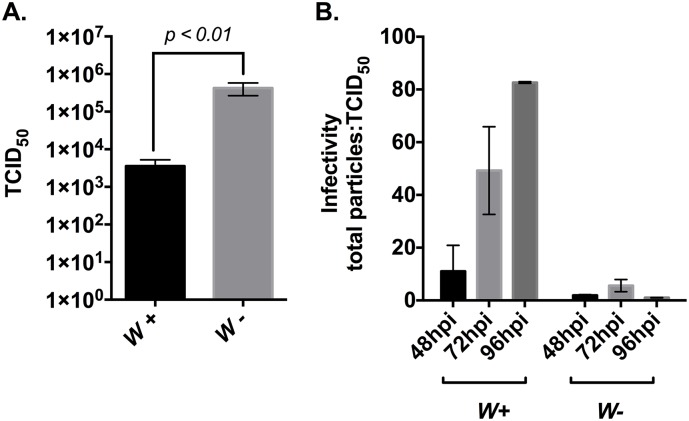
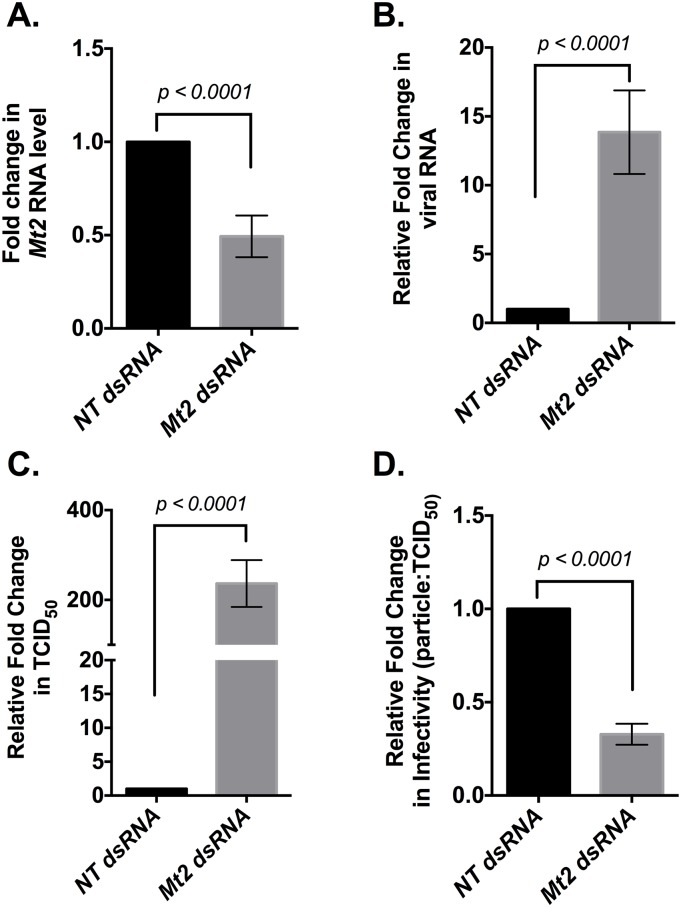
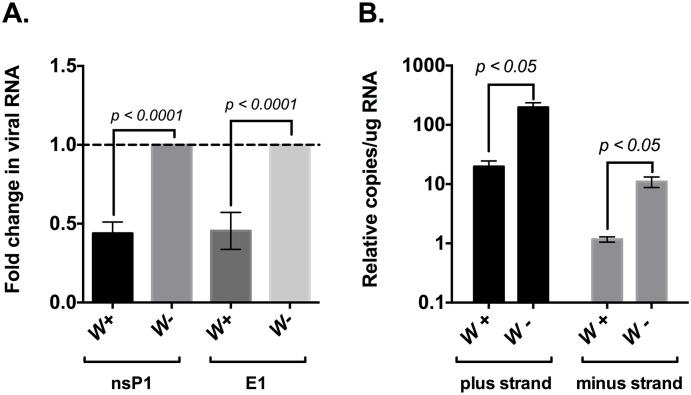
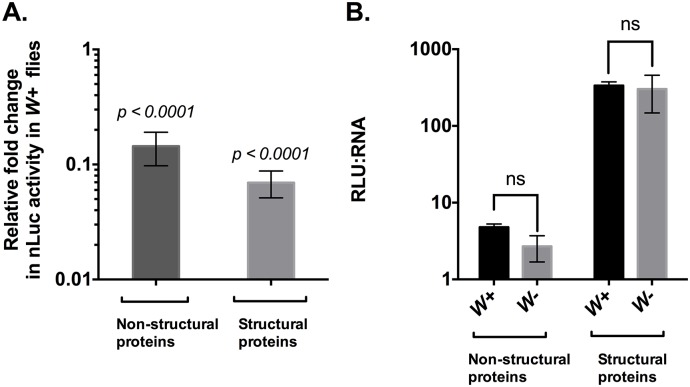
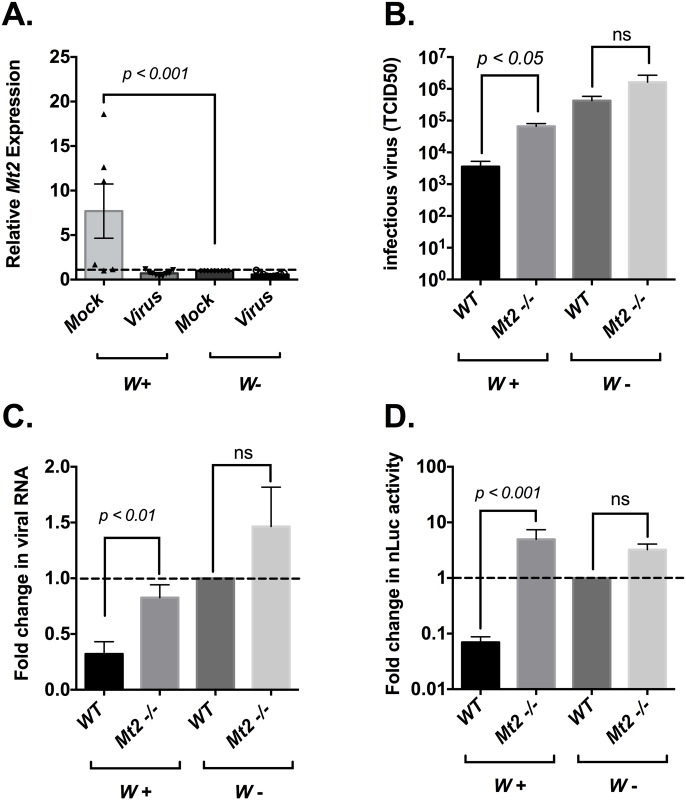
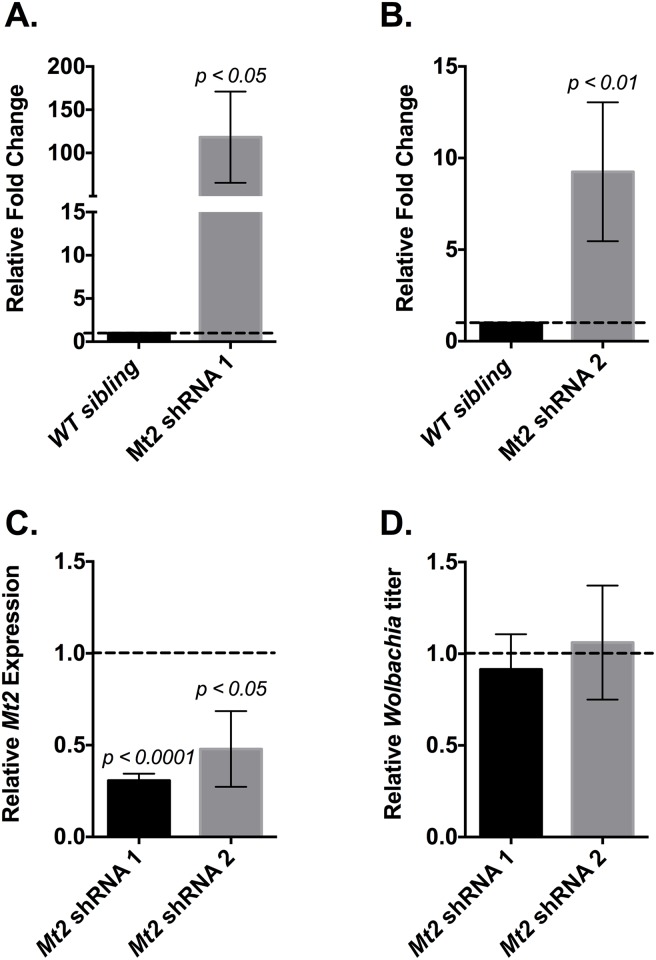
Wolbachia pipientis is an intracellular endosymbiont known to confer host resistance against RNA viruses in insects. However, the causal mechanism underlying this antiviral defense remains poorly understood. To this end, we have established a robust arthropod model system to study the tripartite interaction involving Sindbis virus and Wolbachia strain wMel within its native host, Drosophila melanogaster. By leveraging the power of Drosophila genetics and a parallel, highly tractable D. melanogaster derived JW18 cell culture system, we determined that in addition to reducing infectious virus production, Wolbachia negatively influences Sindbis virus particle infectivity. This is further accompanied by reductions in viral transcript and protein levels. Interestingly, unchanged ratio of proteins to viral RNA copies suggest that Wolbachia likely does not influence the translational efficiency of viral transcripts. Additionally, expression analyses of candidate host genes revealed D. melanogaster methyltransferase gene Mt2 as an induced host factor in the presence of Wolbachia. Further characterization of viral resistance in Wolbachia-infected flies lacking functional Mt2 revealed partial recovery of virus titer relative to wild-type, accompanied by complete restoration of viral RNA and protein levels, suggesting that Mt2 acts at the stage of viral genome replication. Finally, knockdown of Mt2 in Wolbachia uninfected JW18 cells resulted in increased virus infectivity, thus demonstrating its previously unknown role as an antiviral factor against Sindbis virus. In conclusion, our findings provide evidence supporting the role of Wolbachia-modulated host factors towards RNA virus resistance in arthropods, alongside establishing Mt2's novel antiviral function against Sindbis virus in D. melanogaster.
嗜吞噬细胞无形体(Wolbachia pipientis)是一种细胞内共生菌,已知可赋予昆虫宿主对RNA病毒的抗性。然而,这种抗病毒防御的因果机制仍知之甚少。为此,我们建立了一个强大的节肢动物模型系统,以研究辛德毕斯病毒(Sindbis virus)与嗜吞噬细胞无形体菌株wMel在其天然宿主黑腹果蝇(Drosophila melanogaster)内的三方相互作用。通过利用黑腹果蝇遗传学的力量以及一个平行的、易于操作的源自黑腹果蝇的JW18细胞培养系统,我们确定,除了减少传染性病毒的产生外,嗜吞噬细胞无形体还会对辛德毕斯病毒颗粒的感染性产生负面影响。这还伴随着病毒转录本和蛋白质水平的降低。有趣的是,蛋白质与病毒RNA拷贝数的比例不变,这表明嗜吞噬细胞无形体可能不会影响病毒转录本的翻译效率。此外,对候选宿主基因的表达分析显示,在存在嗜吞噬细胞无形体的情况下,黑腹果蝇甲基转移酶基因Mt2是一种被诱导的宿主因子。对缺乏功能性Mt2的感染嗜吞噬细胞无形体的果蝇中的病毒抗性进行进一步表征发现,相对于野生型,病毒滴度部分恢复,同时病毒RNA和蛋白质水平完全恢复,这表明Mt2在病毒基因组复制阶段发挥作用。最后,在未感染嗜吞噬细胞无形体的JW18细胞中敲低Mt2导致病毒感染性增加,从而证明了其作为针对辛德毕斯病毒的抗病毒因子的先前未知作用。总之,我们的研究结果提供了证据,支持嗜吞噬细胞无形体调节的宿主因子在节肢动物对RNA病毒抗性中的作用,同时确立了Mt2对黑腹果蝇中辛德毕斯病毒的新型抗病毒功能。