Zhang Chao, Lu Yan, Feng Qidi, Wang Xiaoji, Lou Haiyi, Liu Jiaojiao, Ning Zhilin, Yuan Kai, Wang Yuchen, Zhou Ying, Deng Lian, Liu Lijun, Yang Yajun, Li Shilin, Ma Lifeng, Zhang Zhiying, Jin Li, Su Bing, Kang Longli, Xu Shuhua
Chinese Academy of Sciences (CAS) Key Laboratory of Computational Biology, Max Planck Independent Research Group on Population Genomics, CAS-MPG Partner Institute for Computational Biology (PICB), Shanghai Institutes for Biological Sciences, CAS, Shanghai, 200031, China.
University of Chinese Academy of Sciences, Beijing, 100049, China.
Genome Biol. 2017 Jun 15;18(1):115. doi: 10.1186/s13059-017-1242-y.
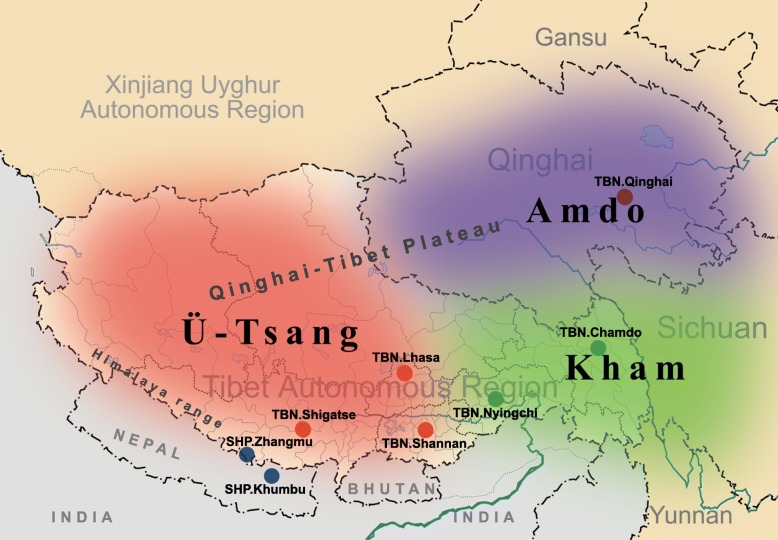
The genetic relationships reported by recent studies between Sherpas and Tibetans are controversial. To gain insights into the population history and the genetic basis of high-altitude adaptation of the two groups, we analyzed genome-wide data in 111 Sherpas (Tibet and Nepal) and 177 Tibetans (Tibet and Qinghai), together with available data from present-day human populations.
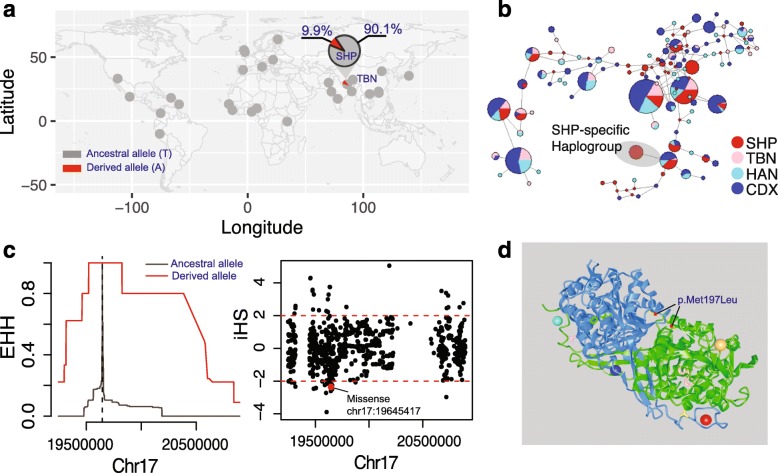
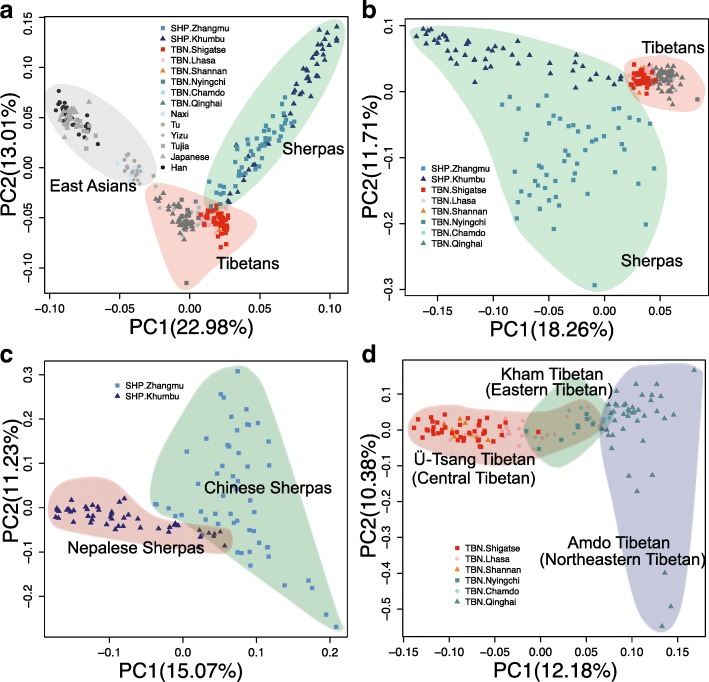
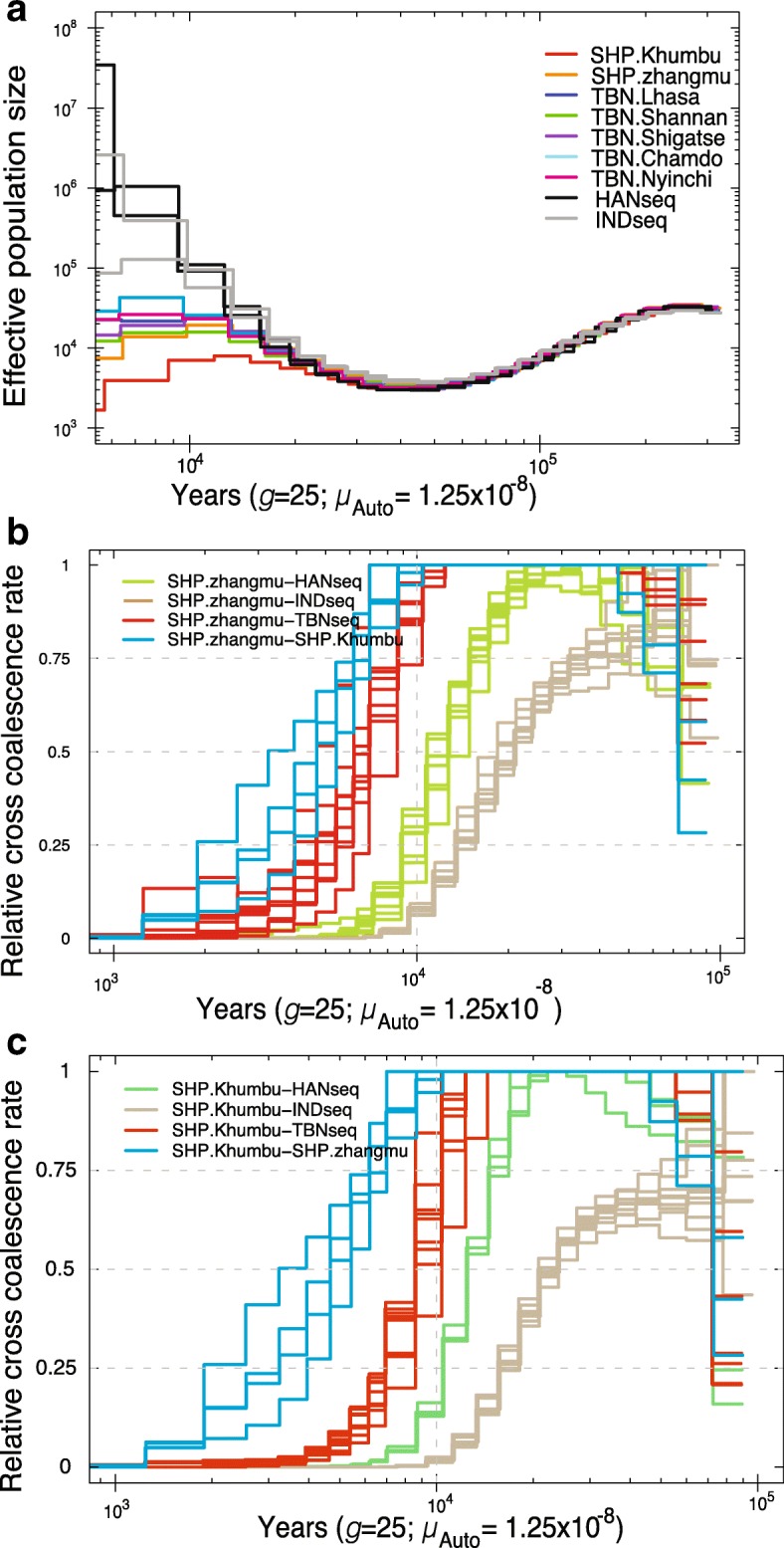
Sherpas and Tibetans show considerable genetic differences and can be distinguished as two distinct groups, even though the divergence between them (3200-11,300 years ago) is much later than that between Han Chinese and either of the two groups (6200-16,000 years ago). Sub-population structures exist in both Sherpas and Tibetans, corresponding to geographical or linguistic groups. Differentiation of genetic variants between Sherpas and Tibetans associated with adaptation to either high-altitude or ultraviolet radiation were identified and validated by genotyping additional Sherpa and Tibetan samples.
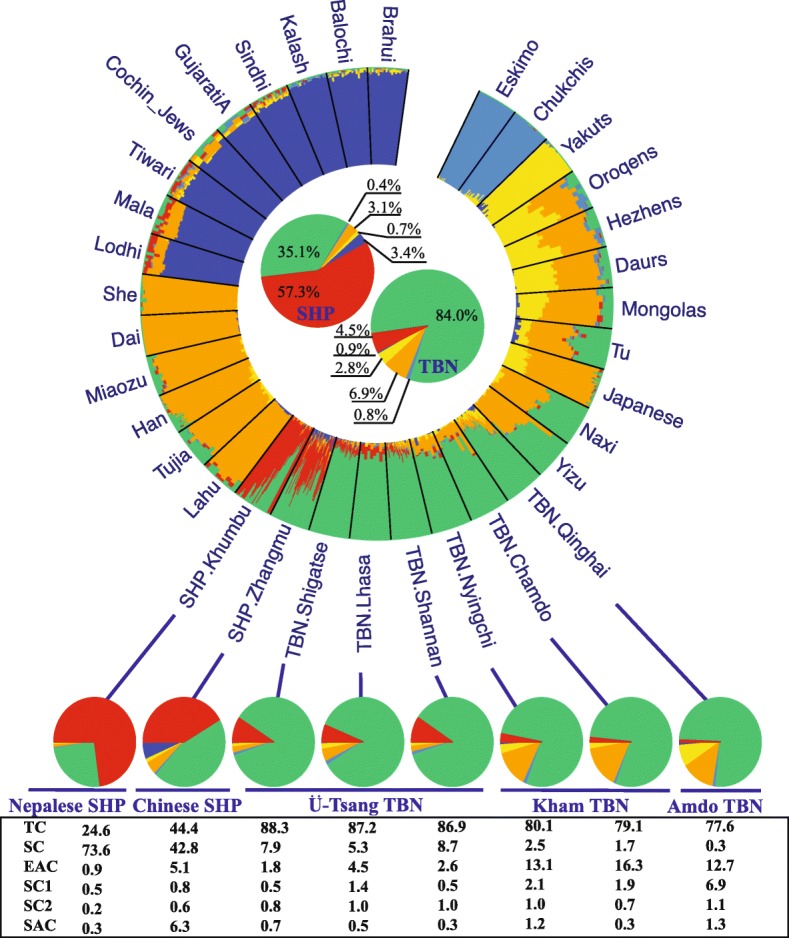
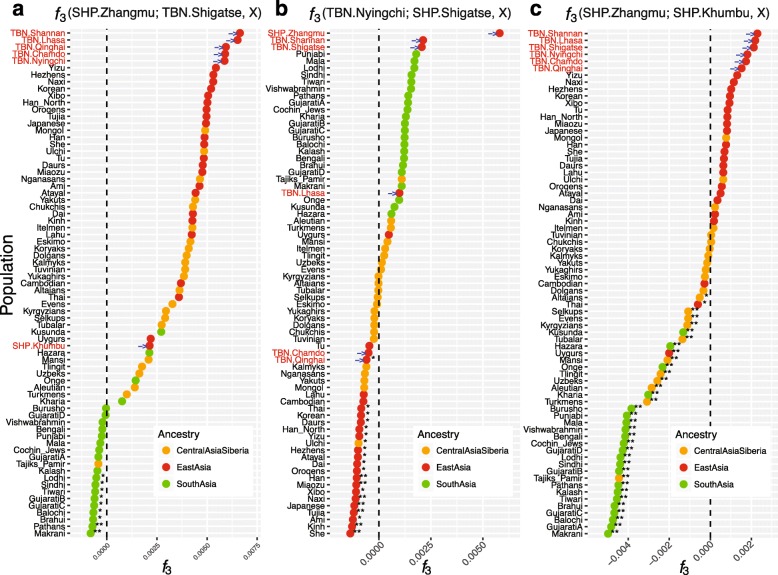
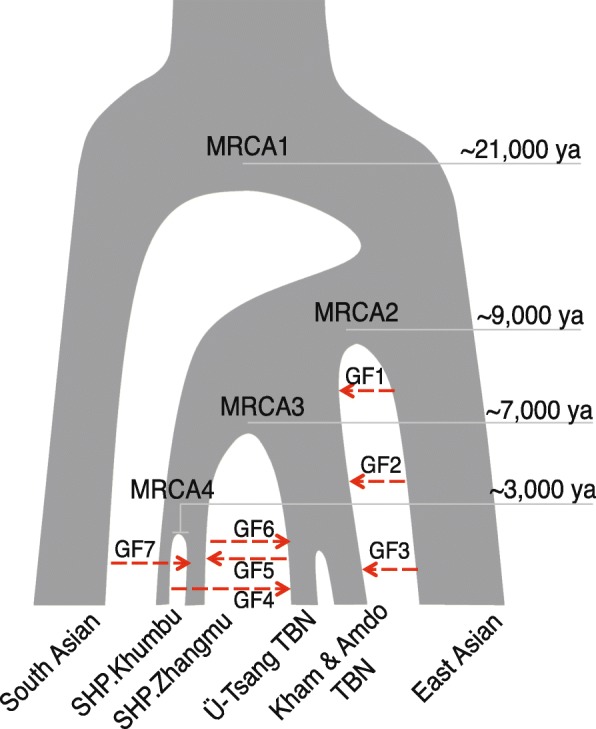
Our analyses indicate that both Sherpas and Tibetans are admixed populations, but the findings do not support the previous hypothesis that Tibetans derive their ancestry from Sherpas and Han Chinese. Compared to Tibetans, Sherpas show higher levels of South Asian ancestry, while Tibetans show higher levels of East Asian and Central Asian/Siberian ancestry. We propose a new model to elucidate the differentiated demographic histories and local adaptations of Sherpas and Tibetans.
近期研究报道的夏尔巴人和藏族之间的遗传关系存在争议。为深入了解这两个群体的群体历史以及高原适应的遗传基础,我们分析了111名夏尔巴人(来自西藏和尼泊尔)和177名藏族人(来自西藏和青海)的全基因组数据,以及现代人类群体的现有数据。
夏尔巴人和藏族人表现出相当大的遗传差异,可被区分为两个不同的群体,尽管他们之间的分化(约3200 - 11300年前)比汉族与这两个群体中任何一个的分化(约6200 - 16000年前)要晚得多。夏尔巴人和藏族内部均存在亚群体结构,与地理或语言群体相对应。通过对更多夏尔巴人和藏族样本进行基因分型,鉴定并验证了夏尔巴人和藏族之间与高原适应或紫外线辐射相关的基因变异的分化。
我们的分析表明,夏尔巴人和藏族都是混合群体,但研究结果不支持之前藏族的祖先来自夏尔巴人和汉族的假设。与藏族相比,夏尔巴人显示出更高水平的南亚血统,而藏族则显示出更高水平的东亚和中亚/西伯利亚血统。我们提出了一个新模型来阐明夏尔巴人和藏族不同的人口历史和局部适应性。