Ziembik Magdalena A, Bender Timothy P, Larner James M, Brautigan David L
Center for Cell Signaling, University of Virginia School of Medicine, Charlottesville, VA 22908, U.S.A.
Department of Microbiology, Immunology & Cancer Biology, University of Virginia School of Medicine, Charlottesville, VA 22908, U.S.A.
Biochem Soc Trans. 2017 Jun 15;45(3):693-701. doi: 10.1042/BST20160169.
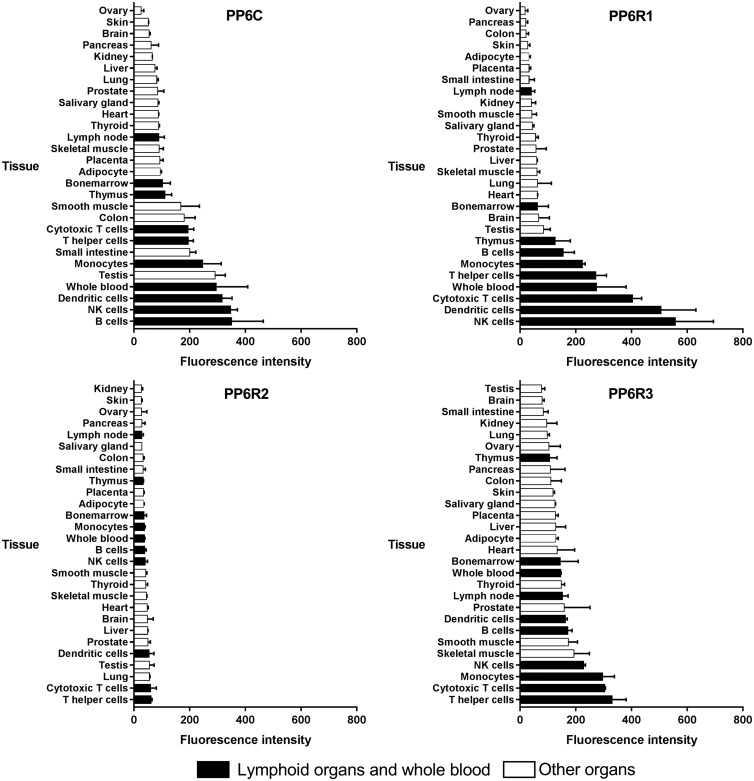
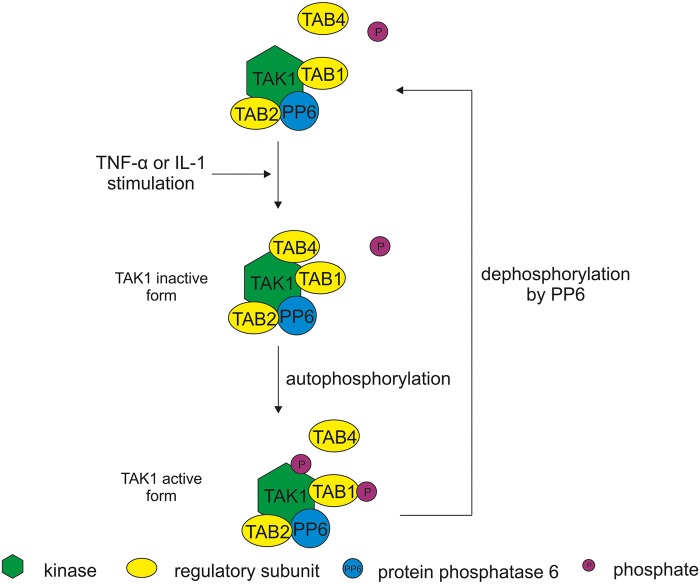
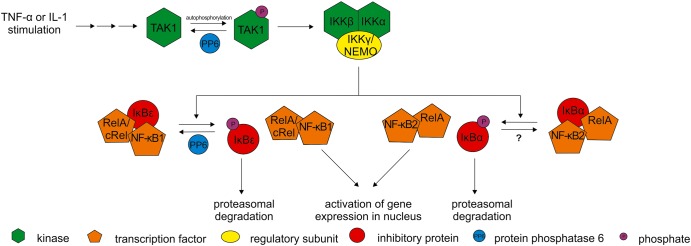
Protein phosphatase-6 (PP6) is a member of the PPP family of Ser/Thr phosphatases involved in intracellular signaling. PP6 is conserved among all eukaryotes, and genetics in model organisms indicates it has non-redundant functions relative to other PPP phosphatases. PP6 functions in association with conserved SAPS subunits and, in vertebrate species, forms heterotrimers with Ankrd subunits. Multiple studies have demonstrated how PP6 exerts negative control at different steps of nuclear factor kappaB signaling. Expression of PP6 catalytic subunit and the PPP6R1 subunit is especially high in hematopoietic cells and lymphoid tissues. Recent efforts at conditionally knocking out genes for PP6c or PP6R1 (SAPS1) have revealed distinctive effects on development of and signaling in lymphocytes.
蛋白磷酸酶6(PP6)是参与细胞内信号传导的丝氨酸/苏氨酸磷酸酶PPP家族的成员。PP6在所有真核生物中都是保守的,模式生物中的遗传学研究表明,相对于其他PPP磷酸酶,它具有非冗余功能。PP6与保守的SAPS亚基结合发挥作用,在脊椎动物中,它与锚蛋白重复结构域(Ankrd)亚基形成异源三聚体。多项研究已经证明了PP6如何在核因子κB信号传导的不同步骤发挥负调控作用。PP6催化亚基和PPP6R1亚基(SAPS1)在造血细胞和淋巴组织中的表达尤其高。最近有条件地敲除PP6c或PP6R1(SAPS1)基因的研究揭示了其对淋巴细胞发育和信号传导的独特影响。