Pugach Cameron, Leder Helmut, Graham Daniel J
Department of Psychology, John Jay College of Criminal JusticeNew York, NY, United States.
Faculty of Psychology, University of ViennaVienna, Austria.
Front Hum Neurosci. 2017 May 31;11:289. doi: 10.3389/fnhum.2017.00289. eCollection 2017.
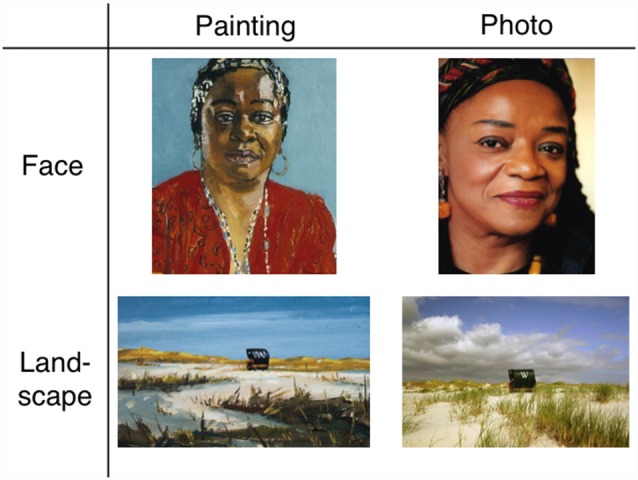
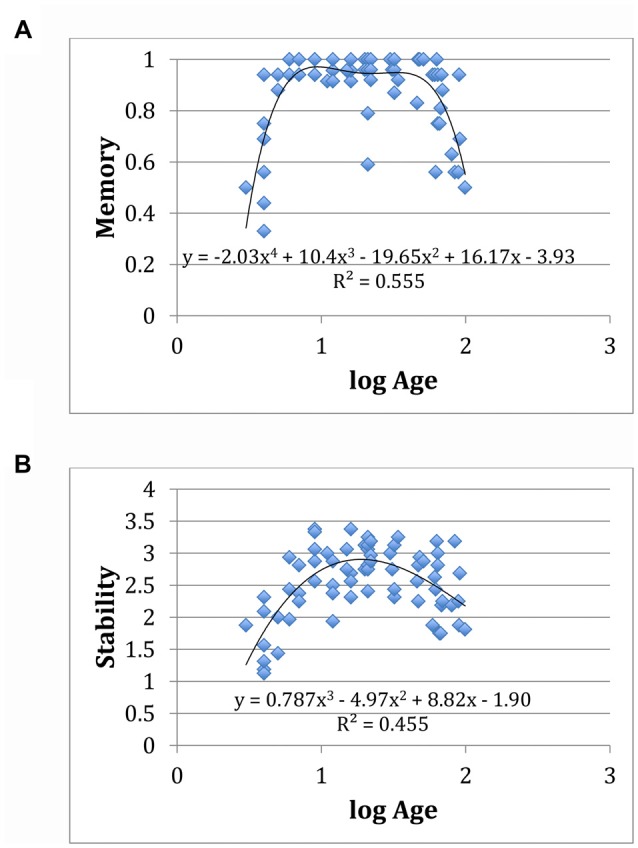
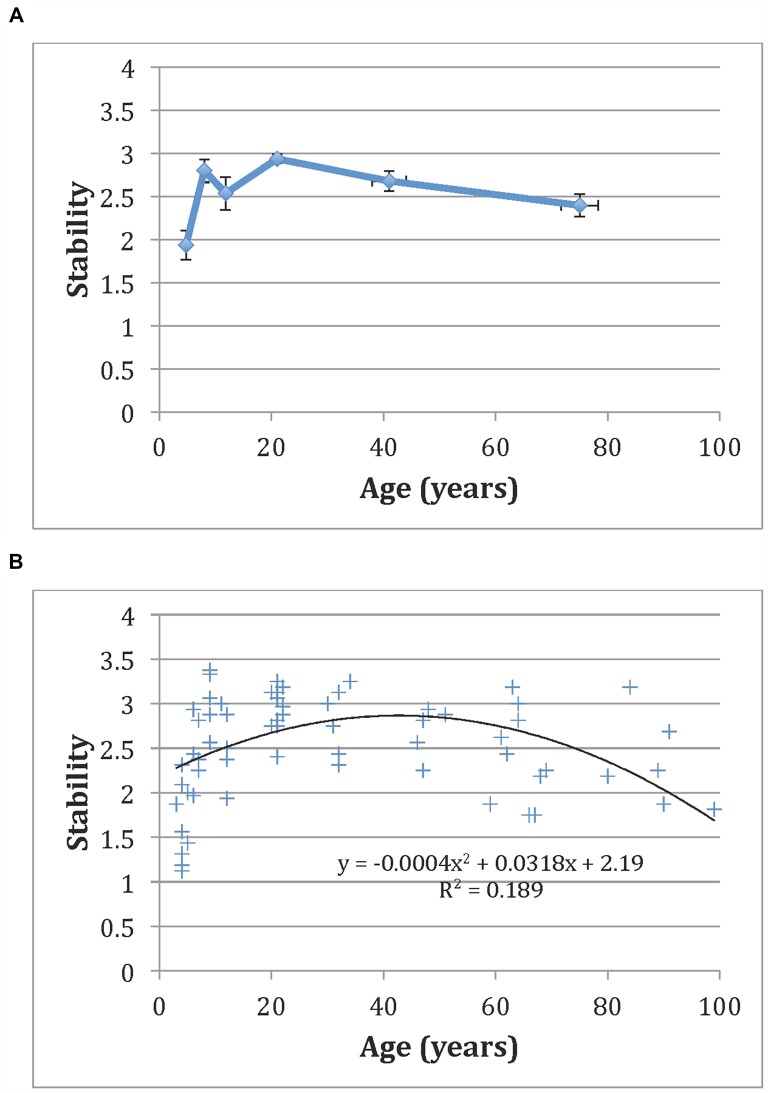
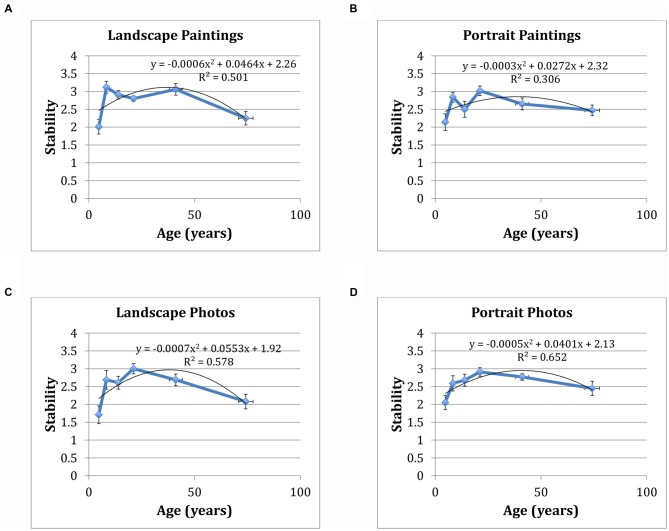
How stable are human aesthetic preferences, and how does stability change over the lifespan? Here we investigate the stability of aesthetic taste in a cross-sectional study. We employed a simple rank-order preference task using paintings and photographs of faces and landscapes. In each of the four stimulus classes, we find that aesthetic stability generally follows an inverted U-shaped function, with the greatest degree of stability appearing in early to middle adulthood. We propose that one possible interpretation of this result is that it indicates a role for cognitive control (i.e., the ability to adapt cognition to current situations) in the construction of aesthetic taste, since cognitive control performance follows a generally similar trajectory across the lifespan. However, human aesthetic stability is on the whole rather low: even the most stable age groups show ranking changes of at least 1 rank per item over a 2-week span. We discuss possible implications for these findings in terms of existing theories of visual aesthetics and in terms of methodological considerations, though we acknowledge that other interpretations of our results are possible.
人类的审美偏好有多稳定,以及这种稳定性在整个生命周期中是如何变化的?在此,我们通过一项横断面研究来探究审美品味的稳定性。我们采用了一种简单的排序偏好任务,使用面部和风景的绘画及照片。在这四类刺激物中,我们发现审美稳定性通常呈现倒U形函数,在成年早期到中期出现最大程度的稳定性。我们提出,这一结果的一种可能解释是,它表明认知控制(即让认知适应当前情境的能力)在审美品味的构建中发挥了作用,因为认知控制能力在整个生命周期中遵循大致相似的轨迹。然而,人类的审美稳定性总体上相当低:即使是最稳定的年龄组在两周时间内每项的排名变化也至少有1位。我们从现有的视觉美学理论以及方法论考量方面讨论了这些发现可能带来的影响,不过我们承认对我们结果的其他解释也是有可能的。