Assefa Nega, Semahegn Agumasie
College of Health and Medical Science, Haramaya University, P.O. Box 1494, Harar, Ethiopia.
Fertil Res Pract. 2016 Jun 9;2:10. doi: 10.1186/s40738-016-0023-8. eCollection 2016.
Population growth is determined by fertility, mortality and migration rates. Fertility is the prime determinant of population growth, which is highly associated with family planning, literacy, urbanization, and expansion of health system. In many part of Africa, its level is more than twice the replacement level. In Ethiopia, a significant decline in fertility mainly in the urban setting has been reported over the past decade, yet there is a paucity of information on the level of the decline. Therefore, this analysis aims to assess the level of fertility in Harar Health and Demographic Surveillance System (Harar HDSS) Eastern Ethiopia.
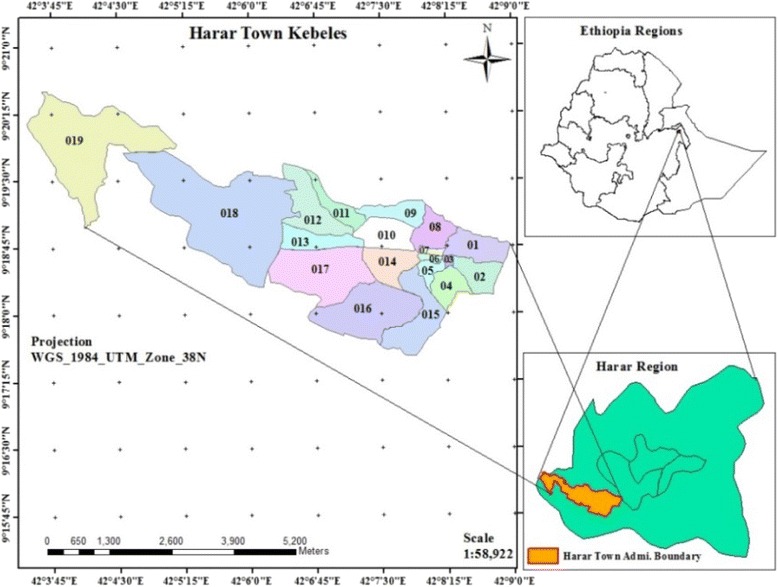
Harar HDSS is an urban HDSS located in the city of Harar, eastern Ethiopia. It was established in 2011. All the population under surveillance are followed regularly and updated every six month for any change in the population demographic characteristics. Data were collected on a face-to-face interview to record demographic and socio-economic characteristics. Data were entered into customized HRS-2 software used for capturing longitudinal data and exported to computational software for analysis. For this analysis fertility data of the year 2013 were used. Fertility levels were analyzed using descriptive statistics.
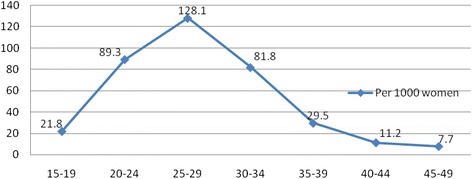
The total population of Harar HDSS in 2013 was 30,055. Of these, 15,701 (52.2 %) were females and 14, 354 (47.8 %) were males. The crude birth rate and general fertility rate for the year 2013 were 20.3 and 64 births per 1000, respectively. In 2013, the Total Fertility Rate (TFR) was 1.9 births per women of reproductive age. The 25 to 29 age group has the highest age-specific fertility rates (128.1 births per 1000 women), followed by the 20 to 24 year old women (89.3 births per 1000 women).
Total fertility rate was relatively low. However, there were a significant number of births among adolescent women. Improving and sustaining access for reproductive health care for young women is highly recommended.
人口增长由生育率、死亡率和迁移率决定。生育率是人口增长的主要决定因素,与计划生育、识字率、城市化及卫生系统的扩展密切相关。在非洲许多地区,其水平超过更替水平的两倍。在埃塞俄比亚,过去十年间有报告称生育率显著下降,主要发生在城市地区,但关于下降程度的信息却很匮乏。因此,本分析旨在评估埃塞俄比亚东部哈勒尔卫生与人口监测系统(哈勒尔HDSS)的生育率水平。
哈勒尔HDSS是位于埃塞俄比亚东部哈勒尔市的一个城市HDSS。它于2011年建立。对所有受监测人口进行定期跟踪,并每六个月更新一次人口的任何人口统计学特征变化。通过面对面访谈收集数据,以记录人口统计学和社会经济特征。数据录入用于收集纵向数据的定制HRS - 2软件,并导出到计算软件进行分析。本分析使用了2013年的生育率数据。使用描述性统计分析生育率水平。
2013年哈勒尔HDSS的总人口为30,055人。其中,女性15,701人(52.2%),男性14,354人(47.8%)。2013年的粗出生率和一般生育率分别为每1000人20.3例和64例出生。2013年,总和生育率为每育龄妇女1.9例出生。25至29岁年龄组的年龄别生育率最高(每1000名妇女128.1例出生),其次是20至24岁的妇女(每1000名妇女89.3例出生)。
总和生育率相对较低。然而,青少年女性中有大量生育。强烈建议改善并持续为年轻女性提供生殖健康护理服务。