Manko Anna, Motta Jean-Paul, Cotton James A, Feener Troy, Oyeyemi Ayodele, Vallance Bruce A, Wallace John L, Buret Andre G
Department of Biological Sciences, University of Calgary, Calgary, Alberta, Canada.
Inflammation Research Network, University of Calgary, Calgary, Alberta, Canada.
PLoS One. 2017 Jun 16;12(6):e0178647. doi: 10.1371/journal.pone.0178647. eCollection 2017.
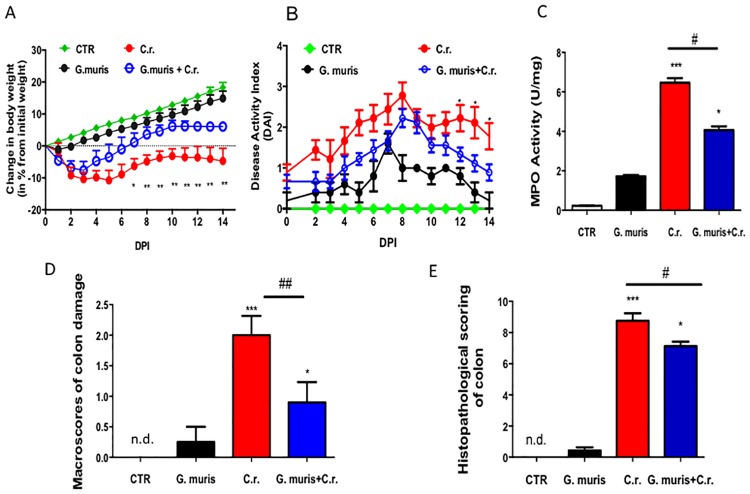
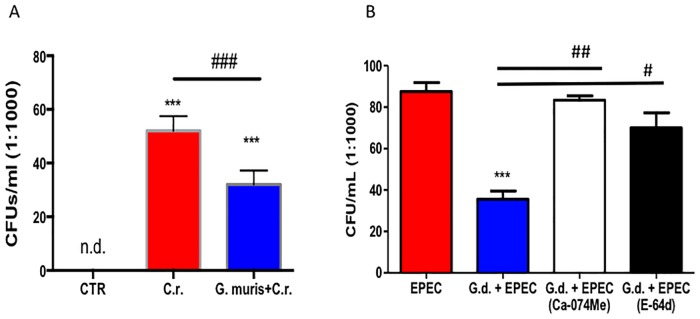
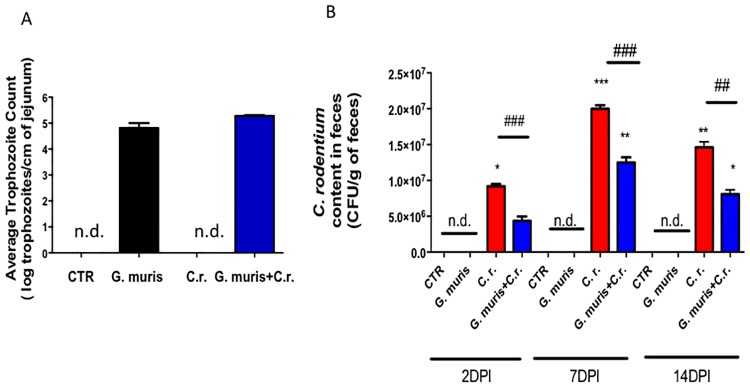
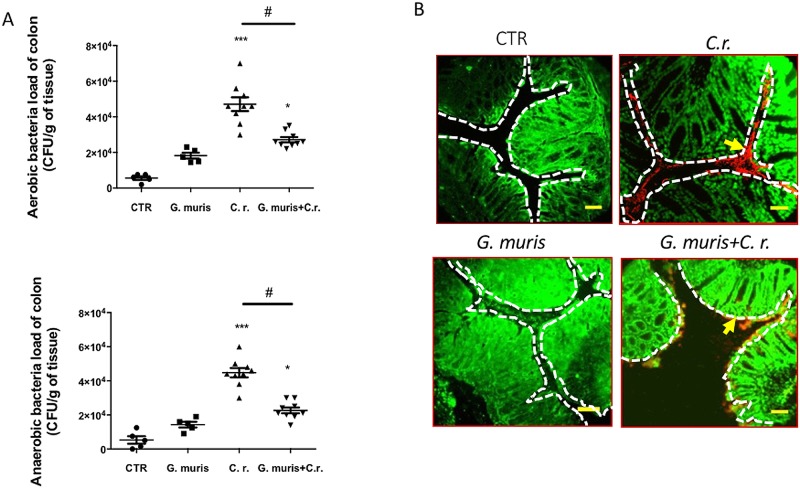
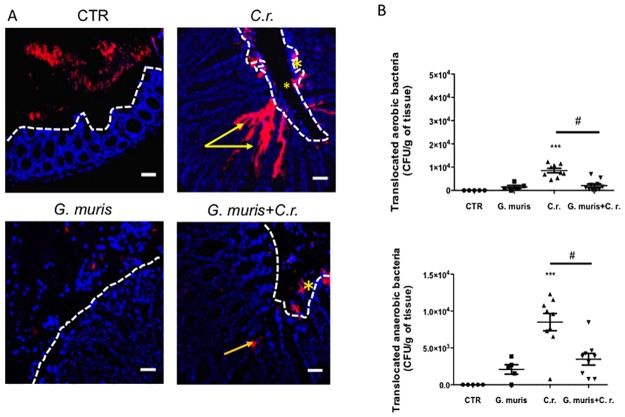
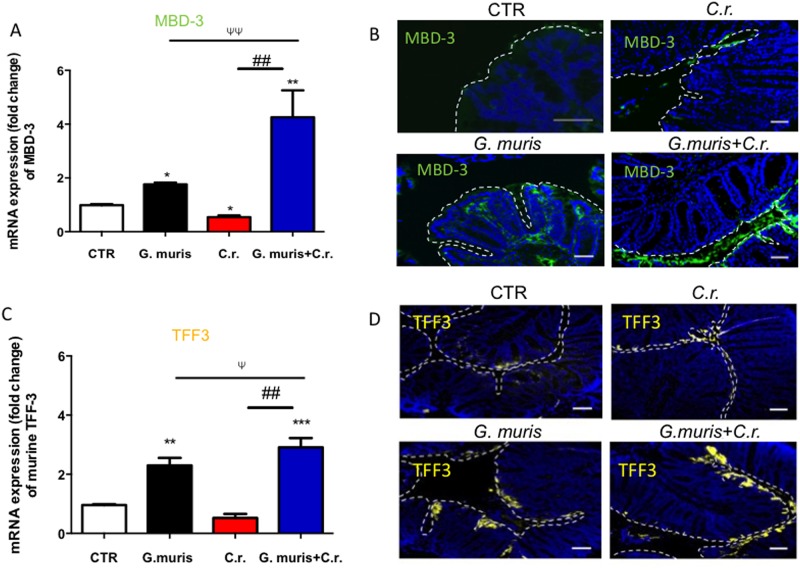
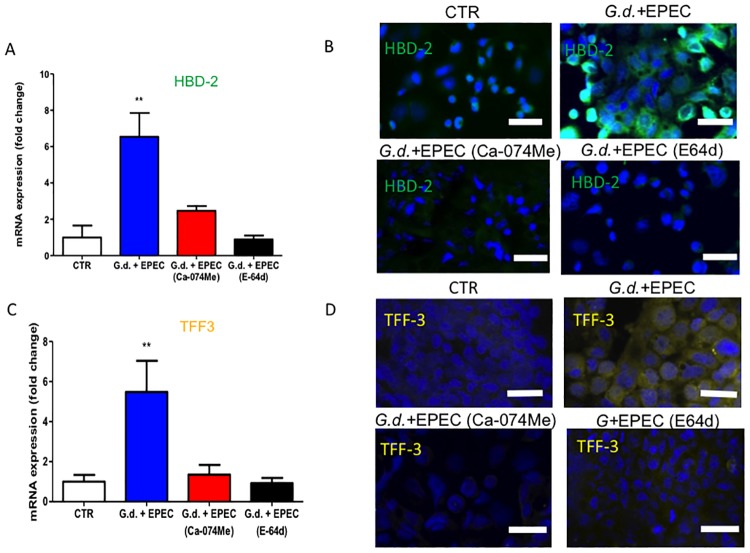
Our understanding of polymicrobial gastrointestinal infections and their effects on host biology remains incompletely understood. Giardia duodenalis is an ubiquitous intestinal protozoan parasite infecting animals and humans. Concomitant infections with Giardia and other gastrointestinal pathogens commonly occur. In countries with poor sanitation, Giardia infection has been associated with decreased incidence of diarrheal disease and fever, and reduced serum inflammatory markers release, via mechanisms that remain obscure. This study analyzed Giardia spp. co-infections with attaching and effacing (A/E) pathogens, and assessed whether and how the presence of Giardia modulates host responses to A/E enteropathogens, and alters intestinal disease outcome. In mice infected with the A/E pathogen Citrobacter rodentium, co-infection with Giardia muris significantly attenuated weight loss, macro- and microscopic signs of colitis, bacterial colonization and translocation, while concurrently enhancing the production and secretion of antimicrobial peptides (AMPs) mouse β-defensin 3 and trefoil factor 3 (TFF3). Co-infection of human intestinal epithelial cells (Caco-2) monolayers with G. duodenalis trophozoites and enteropathogenic Escherichia coli (EPEC) enhanced the production of the AMPs human β-defensin 2 (HBD-2) and TFF3; this effect was inhibited with treatment of G. duodenalis with cysteine protease inhibitors. Collectively, these results suggest that Giardia infections are capable of reducing enteropathogen-induced colitis while increasing production of host AMPs. Additional studies also demonstrated that Giardia was able to directly inhibit the growth of pathogenic bacteria. These results reveal novel mechanisms whereby Giardia may protect against gastrointestinal disease induced by a co-infecting A/E enteropathogen. Our findings shed new light on how microbial-microbial interactions in the gut may protect a host during concomitant infections.
我们对多种微生物引起的胃肠道感染及其对宿主生物学影响的理解仍不完整。十二指肠贾第鞭毛虫是一种普遍存在的肠道原生动物寄生虫,可感染动物和人类。贾第鞭毛虫与其他胃肠道病原体的合并感染很常见。在卫生条件差的国家,贾第鞭毛虫感染与腹泻病和发热发病率降低以及血清炎症标志物释放减少有关,但其机制尚不清楚。本研究分析了贾第鞭毛虫与黏附性和蚀损性(A/E)病原体的合并感染,并评估了贾第鞭毛虫的存在是否以及如何调节宿主对A/E肠道病原体的反应,并改变肠道疾病的结局。在感染A/E病原体鼠柠檬酸杆菌的小鼠中,与鼠贾第鞭毛虫的合并感染显著减轻了体重减轻、结肠炎的宏观和微观体征、细菌定植和易位,同时增强了抗菌肽(AMPs)小鼠β-防御素3和三叶因子3(TFF3)的产生和分泌。人肠道上皮细胞(Caco-2)单层与十二指肠贾第鞭毛虫滋养体和肠致病性大肠杆菌(EPEC)的合并感染增强了AMPs人β-防御素2(HBD-2)和TFF3的产生;用半胱氨酸蛋白酶抑制剂处理十二指肠贾第鞭毛虫可抑制这种作用。总的来说,这些结果表明,贾第鞭毛虫感染能够减轻肠道病原体诱导 的结肠炎,同时增加宿主AMPs的产生。其他研究还表明,贾第鞭毛虫能够直接抑制病原菌的生长。这些结果揭示了贾第鞭毛虫可能预防由合并感染的A/E肠道病原体引起的胃肠道疾病的新机制。我们的发现为肠道中的微生物-微生物相互作用在合并感染期间如何保护宿主提供了新的线索。