Department of Cellular and Integrative Physiology, University of Nebraska Medical Center, Omaha, NE, 68198, USA.
Department of Anesthesiology, University of Nebraska Medical Center, Omaha, NE, 68198, USA.
Sci Rep. 2017 Jun 16;7(1):3639. doi: 10.1038/s41598-017-03776-9.
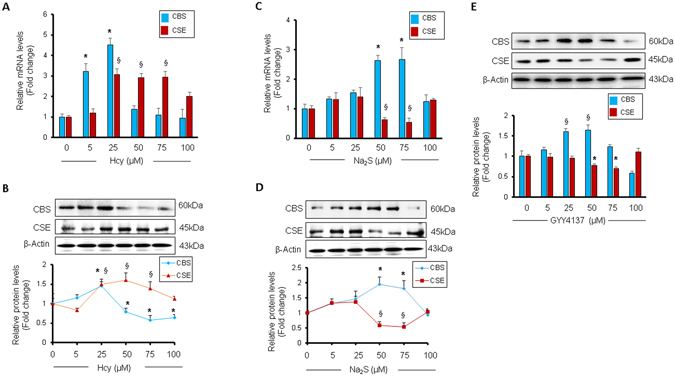
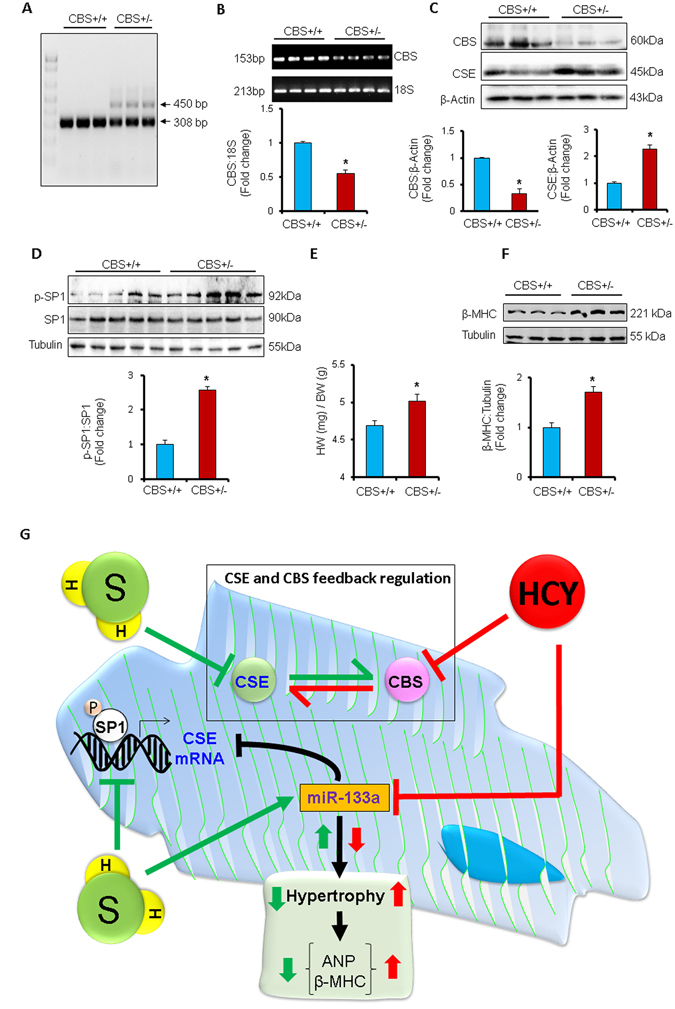
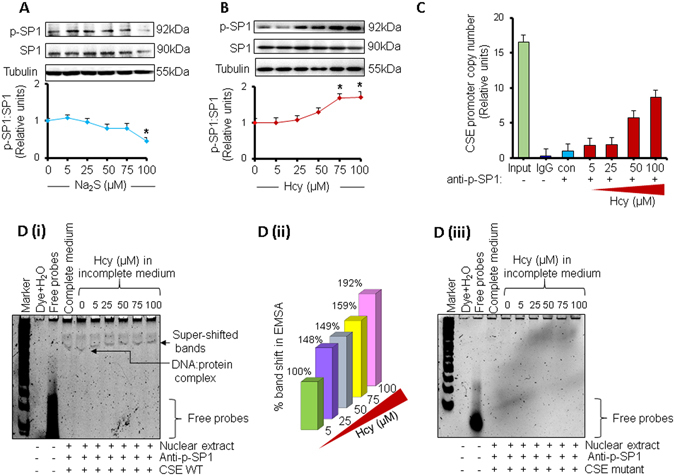
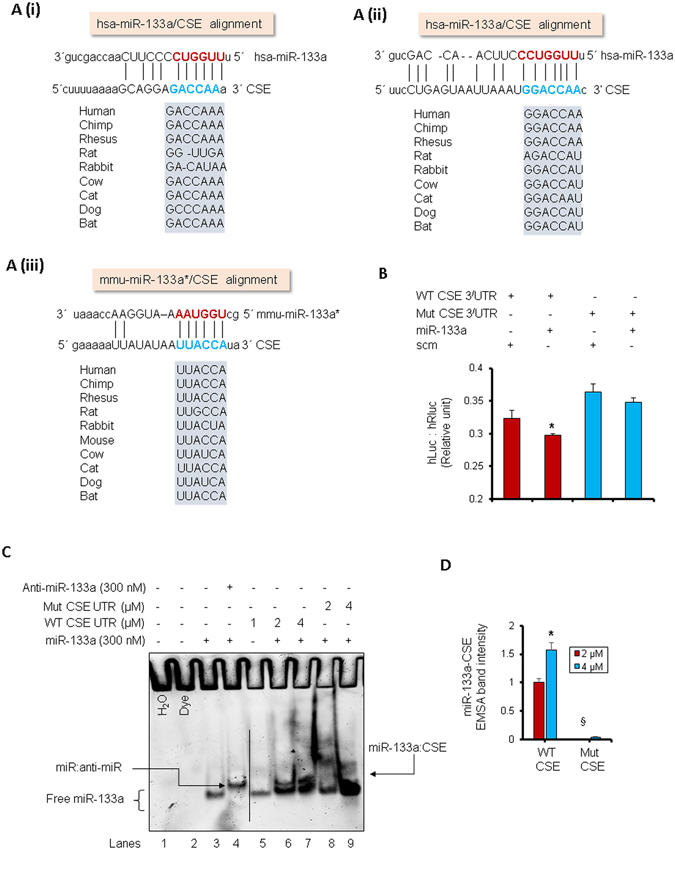
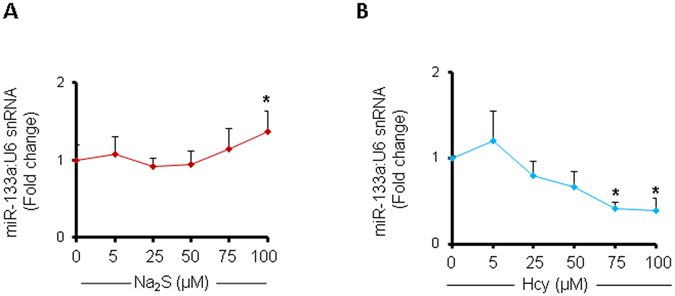
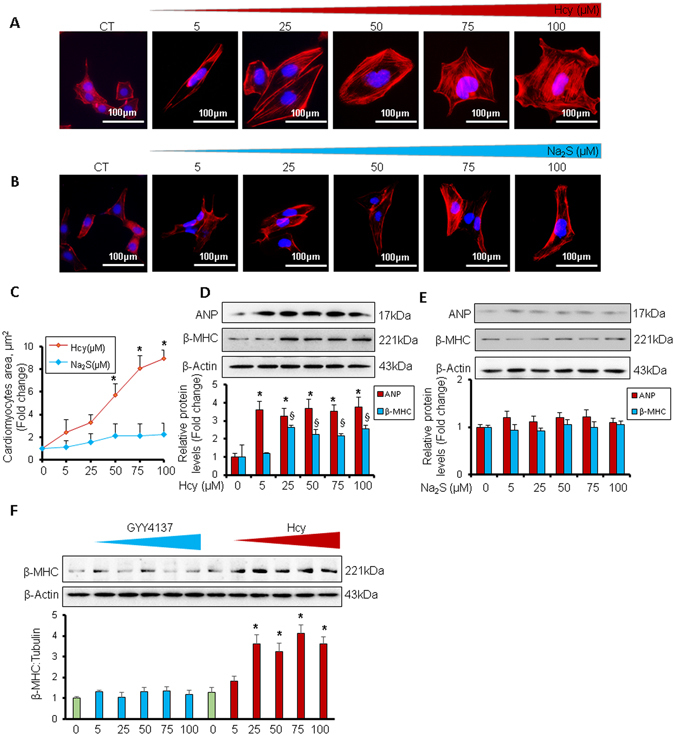
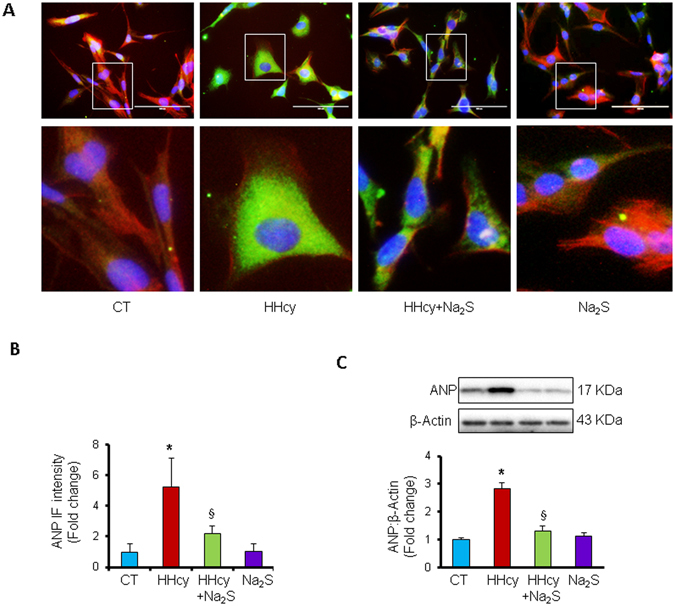
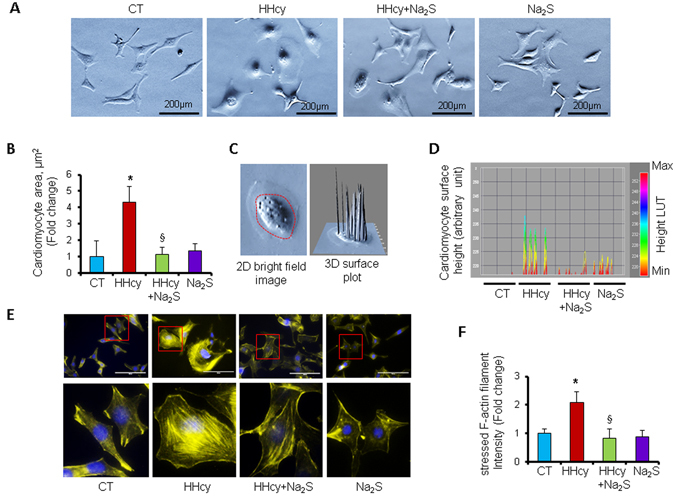
Hydrogen sulfide (HS), a cardioprotective gas, is endogenously produced from homocysteine by cystathionine beta synthase (CBS) and cystathionine gamma lyase (CSE) enzymes. However, effect of HS or homocysteine on CBS and CSE expression, and cross-talk between CBS and CSE are unclear. We hypothesize that homocysteine and HS regulate CBS and CSE expressions in a dose dependent manner in cardiomyocytes, and CBS deficiency induces cardiac CSE expression. To test the hypothesis, we treated murine atrial HL1 cardiomyocytes with increasing doses of homocysteine or NaS/GYY4137, a HS donor, and measured the levels of CBS and CSE. We found that homocysteine upregulates CSE but downregulates CBS whereas NaS/GYY4137 downregulates CSE but upregulates CBS in a dose-dependent manner. Moreover, the NaS-treatment downregulates specificity protein-1 (SP1), an inducer for CSE, and upregulates miR-133a that targets SP1 and inhibits cardiomyocytes hypertrophy. Conversely, in the homocysteine-treated cardiomyocytes, CBS and miR-133a were downregulated and hypertrophy was induced. In vivo studies using CBS+/-, a model for hyperhomocysteinemia, and sibling CBS+/+ control mice revealed that deficiency of CBS upregulates cardiac CSE, plausibly by inducing SP1. In conclusion, we revealed a novel mechanism for HS-mediated regulation of homocysteine metabolism in cardiomyocytes, and a negative feedback regulation between CBS and CSE in the heart.
硫化氢(HS)是一种内源性产生的心脏保护气体,由胱硫醚-β 合酶(CBS)和胱硫醚-γ 裂解酶(CSE)从同型半胱氨酸中产生。然而,HS 或同型半胱氨酸对 CBS 和 CSE 表达的影响,以及 CBS 和 CSE 之间的相互作用尚不清楚。我们假设同型半胱氨酸和 HS 以剂量依赖的方式调节心肌细胞中的 CBS 和 CSE 表达,并且 CBS 缺乏会诱导心脏 CSE 表达。为了验证这一假设,我们用不同剂量的同型半胱氨酸或 HS 供体 NaS/GYY4137 处理鼠心房 HL1 心肌细胞,并测量 CBS 和 CSE 的水平。我们发现,同型半胱氨酸上调 CSE 但下调 CBS,而 NaS/GYY4137 则以剂量依赖的方式下调 CSE 但上调 CBS。此外,NaS 处理下调了 CSE 的诱导因子特异性蛋白-1(SP1),并上调了靶向 SP1 并抑制心肌细胞肥大的 miR-133a。相反,在同型半胱氨酸处理的心肌细胞中,CBS 和 miR-133a 下调,诱导了肥大。使用 CBS+/-(高同型半胱氨酸血症的模型)和同型半胱氨酸处理的心肌细胞中,CBS 和 miR-133a 下调,诱导了肥大。体内研究使用 CBS+/-(高同型半胱氨酸血症的模型)和同型半胱氨酸处理的心肌细胞中,CBS 和 miR-133a 下调,诱导了肥大。体内研究使用 CBS+/-(高同型半胱氨酸血症的模型)和同型半胱氨酸处理的心肌细胞中,CBS 和 miR-133a 下调,诱导了肥大。体内研究使用 CBS+/-(高同型半胱氨酸血症的模型)和同型半胱氨酸处理的心肌细胞中,CBS 和 miR-133a 下调,诱导了肥大。体内研究使用 CBS+/+ 对照小鼠揭示了 CBS 缺乏会通过诱导 SP1 而上调心脏 CSE。总之,我们揭示了 HS 介导的心肌细胞中同型半胱氨酸代谢调节的新机制,以及心脏中 CBS 和 CSE 之间的负反馈调节。