Yang Ting, Zhang Xing-Mei, Tarnawski Laura, Peleli Maria, Zhuge Zhengbing, Terrando Niccolo, Harris Robert A, Olofsson Peder S, Larsson Erik, Persson A Erik G, Lundberg Jon O, Weitzberg Eddie, Carlstrom Mattias
Dept. of Physiology and Pharmacology, Karolinska Institutet, Stockholm, Sweden; Dept. of Medicine, Div. of Nephrology (T.Y.), Dept. of Anesthesiology (N.T.), Duke University Medical Center, Durham, NC, USA.
Dept. of Clinical Neuroscience, Karolinska Institutet, Center for Molecular Medicine, Karolinska University Hospital Solna, Stockholm, Sweden.
Redox Biol. 2017 Oct;13:320-330. doi: 10.1016/j.redox.2017.06.002. Epub 2017 Jun 9.
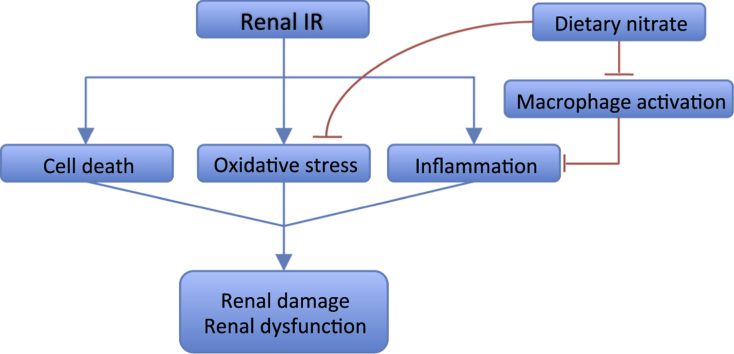
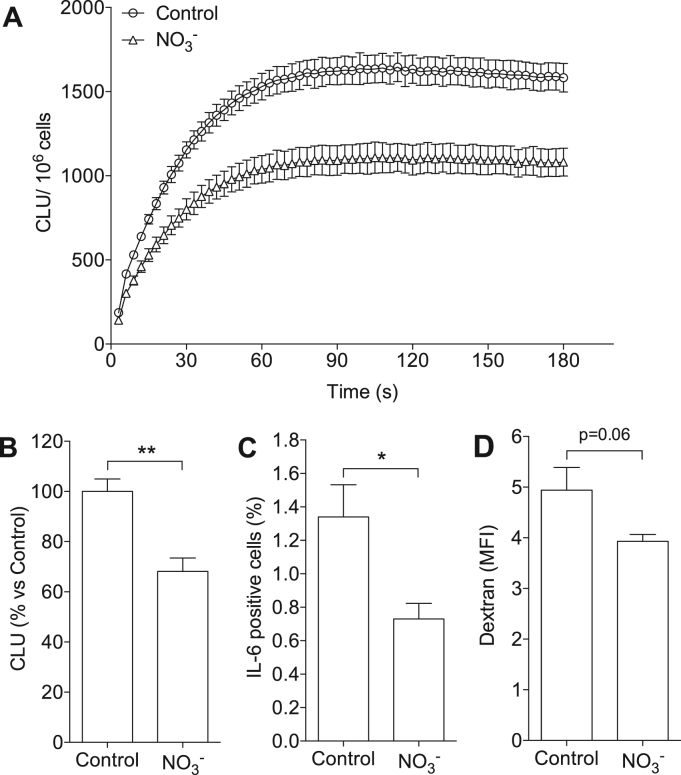
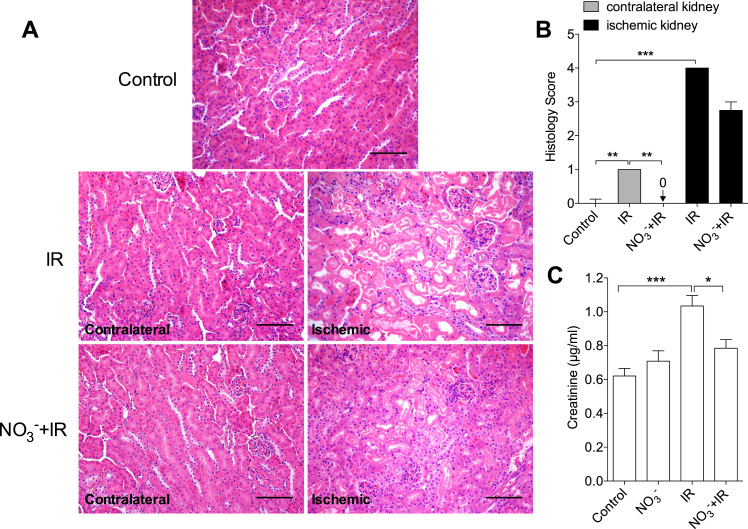
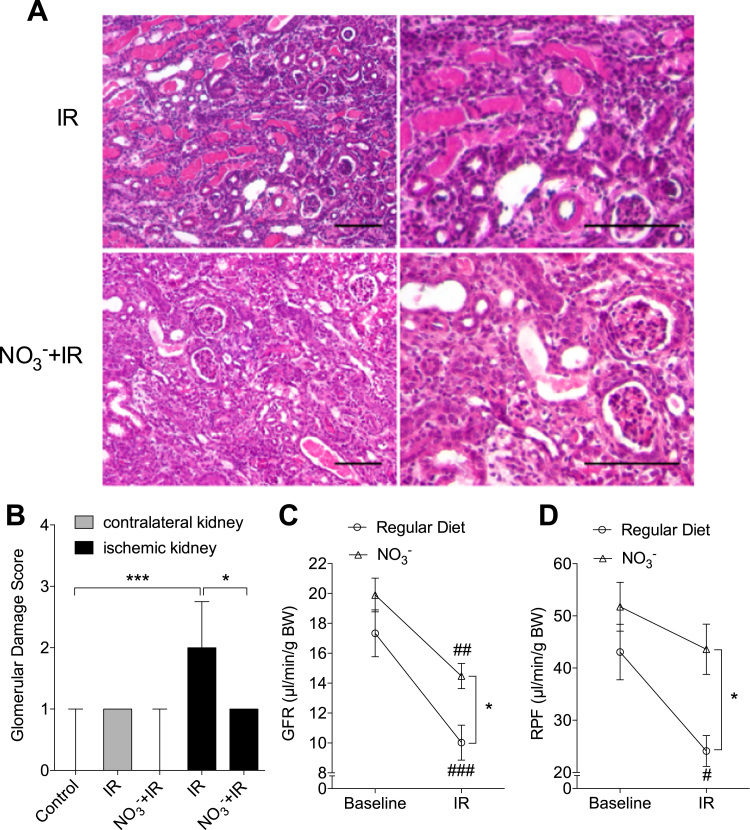
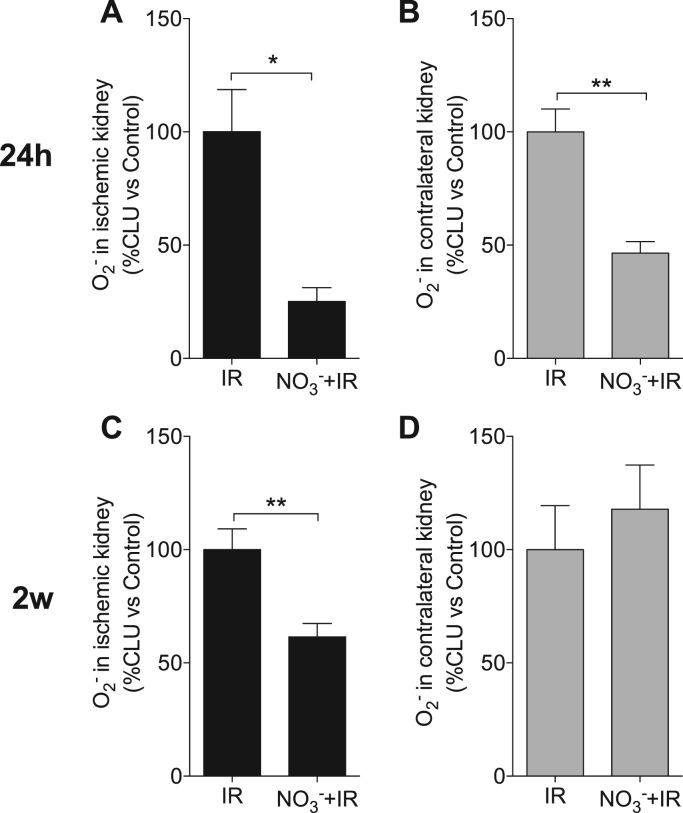
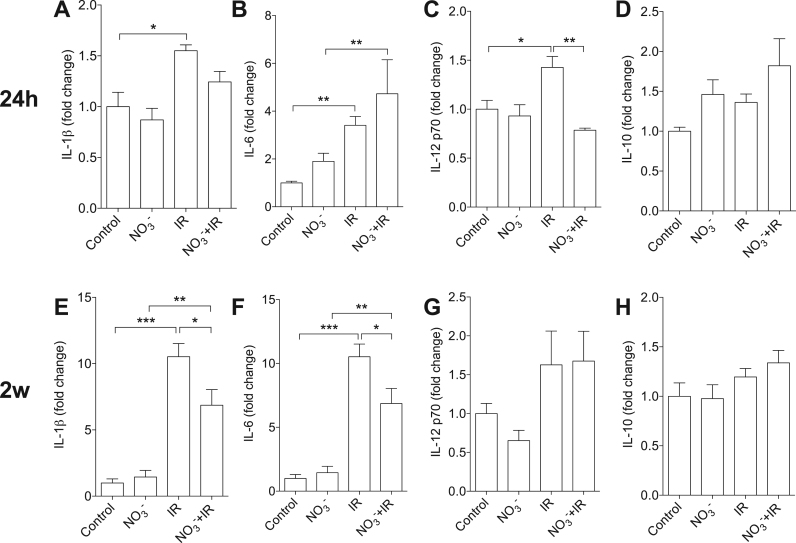
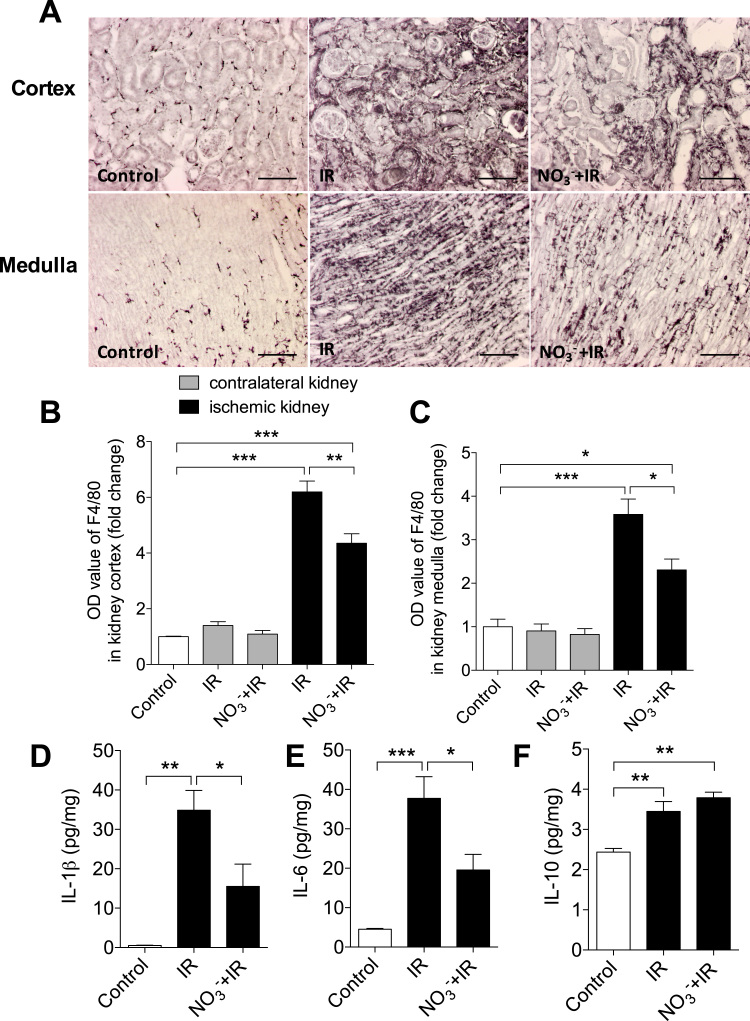
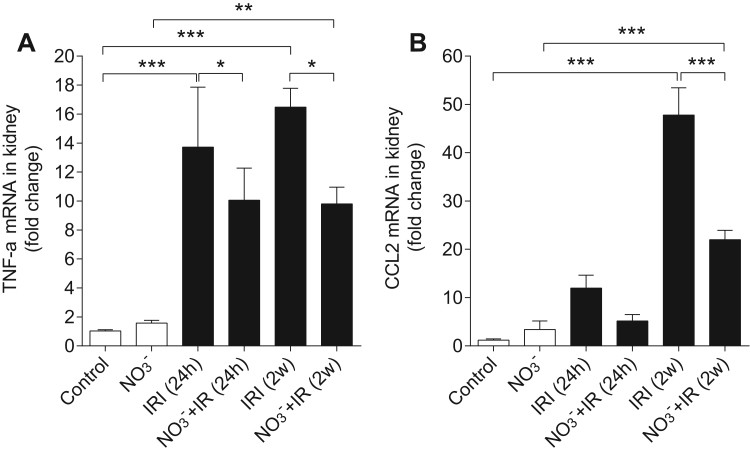
Ischemia-reperfusion (IR) injury involves complex pathological processes in which reduction of nitric oxide (NO) bioavailability is suggested as a key factor. Inorganic nitrate can form NO in vivo via NO synthase-independent pathways and may thus provide beneficial effects during IR. Herein we evaluated the effects of dietary nitrate supplementation in a renal IR model. Male mice (C57BL/6J) were fed nitrate-supplemented chow (1.0mmol/kg/day) or standard chow for two weeks prior to 30min ischemia and during the reperfusion period. Unilateral renal IR caused profound tubular and glomerular damage in the ischemic kidney. Renal function, assessed by plasma creatinine levels, glomerular filtration rate and renal plasma flow, was also impaired after IR. All these pathologies were significantly improved by nitrate. Mechanistically, nitrate treatment reduced renal superoxide generation, pro-inflammatory cytokines (IL-1β, IL-6 and IL-12 p70) and macrophage infiltration in the kidney. Moreover, nitrate reduced mRNA expression of pro-inflammatory cytokines and chemo attractors, while increasing anti-inflammatory cytokines in the injured kidney. In another cohort of mice, two weeks of nitrate supplementation lowered superoxide generation and IL-6 expression in bone marrow-derived macrophages. Our study demonstrates protective effect of dietary nitrate in renal IR injury that may be mediated via modulation of oxidative stress and inflammatory responses. These novel findings suggest that nitrate supplementation deserve further exploration as a potential treatment in patients at high risk of renal IR injury.
缺血再灌注(IR)损伤涉及复杂的病理过程,其中一氧化氮(NO)生物利用度降低被认为是一个关键因素。无机硝酸盐可通过不依赖一氧化氮合酶的途径在体内形成NO,因此可能在IR期间产生有益作用。在此,我们评估了在肾脏IR模型中补充膳食硝酸盐的效果。雄性小鼠(C57BL/6J)在30分钟缺血前和再灌注期间,连续两周喂食补充硝酸盐的饲料(1.0mmol/kg/天)或标准饲料。单侧肾脏IR导致缺血肾脏出现严重的肾小管和肾小球损伤。通过血浆肌酐水平、肾小球滤过率和肾血浆流量评估的肾功能在IR后也受到损害。所有这些病理变化都因硝酸盐而得到显著改善。从机制上讲,硝酸盐处理减少了肾脏中超氧化物的产生、促炎细胞因子(IL-1β、IL-6和IL-12 p70)以及巨噬细胞浸润。此外,硝酸盐降低了受损肾脏中促炎细胞因子和趋化因子的mRNA表达,同时增加了抗炎细胞因子。在另一组小鼠中,两周的硝酸盐补充降低了骨髓来源巨噬细胞中超氧化物的产生和IL-6的表达。我们的研究表明,膳食硝酸盐对肾脏IR损伤具有保护作用,这可能是通过调节氧化应激和炎症反应介导的。这些新发现表明,补充硝酸盐作为肾脏IR损伤高危患者的潜在治疗方法值得进一步探索。