Kitano Haruhisa, Chung Joon-Yong, Noh Kyung Hee, Lee Young-Ho, Kim Tae Woo, Lee Seok Hyung, Eo Soo-Heang, Cho Hyung Jun, Choi Chel Hun, Inoue Shuhei, Hanaoka Jun, Fukuoka Junya, Hewitt Stephen M
Experimental Pathology Laboratory, Laboratory of Pathology, Center for Cancer Research, National Cancer Institute, National Institutes of Health, Bethesda, MD, 20892, USA.
Department of Pathology, Nagasaki University Graduate School of Biomedical Sciences, 1-12-4, Sakamoto, Nagasaki, 852-8523, Japan.
J Transl Med. 2017 Jun 17;15(1):138. doi: 10.1186/s12967-017-1241-5.
The interaction of vascular endothelial growth factor-C (VEGF-C)/VEGF-D/VEGF receptor-3 is considered to be a major driver of lymphangiogenesis, however the mechanism of this process remains unclear. We aimed to investigate the possible lymphangiogenic significance of synaptonemal complex protein 3 (SCP3) in non-small cell lung cancer (NSCLC).
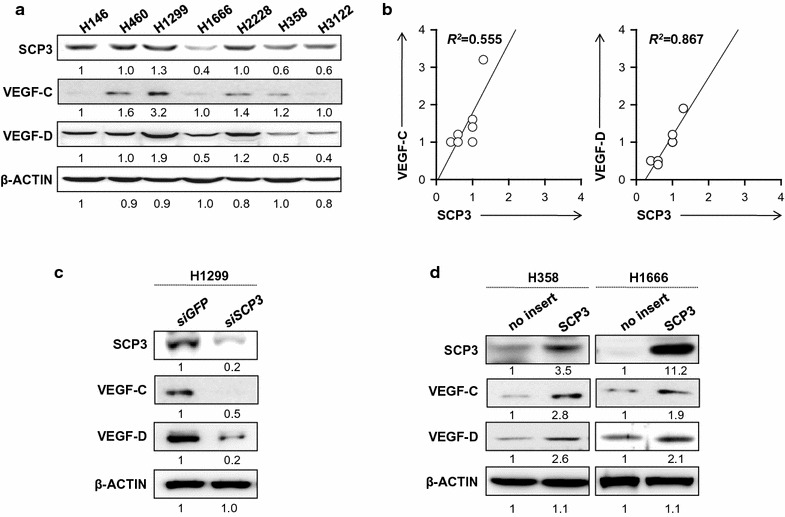
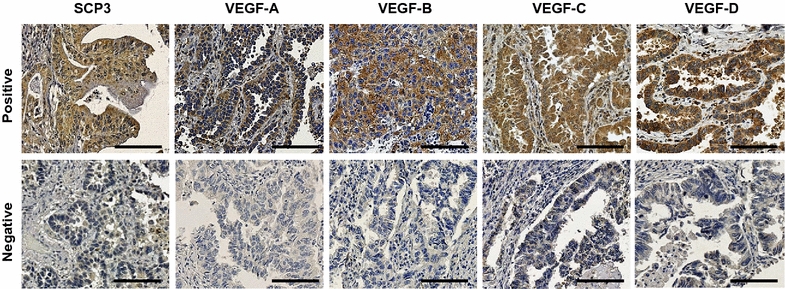
The expression of SCP3, VEGF-C, and VEGF-D were measured and examined a correlation between SCP3 and VEGF-C or VEGF-D in various human lung cancer cell lines. Subsequently, we assessed SCP3, VEGF-A, VEGF-B, VEGF-C, and VEGF-D expression in archival tumor tissues from 89 NSCLC patients with lymph node (LN) metastasis by combined immunohistochemistry with quantitative digital image analysis.
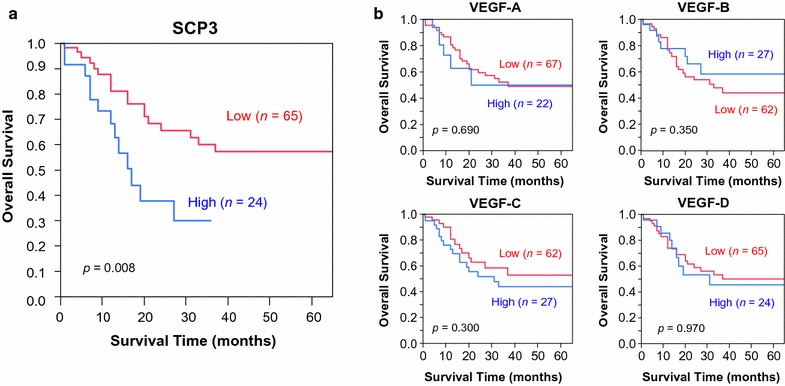
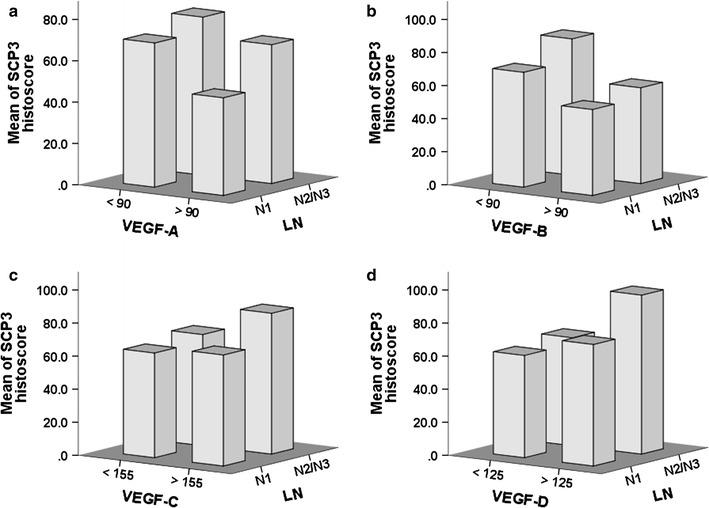
Positive correlations between SCP3 and VEGF-C expression (R = 0.743) and VEGF-D expression (R = 0.932) were detected in various human lung cancer cell lines. The high expression of SCP3, VEGF-A, VEGF-B, VEGF-C, and VEGF-D were detected in 24 (27.0%), 22 (24.7%), 27 (30.3%), 27 (30.3%), and 24 cases (27.0%), respectively. Notably, SCP3 positively correlated with VEGF-C and VEGF-D expression (for both, P < 0.001) and negatively correlated with VEGF-A and VEGF-B expression (P = 0.029 and P = 0.026, respectively). In multivariate analysis of patients with LN metastasis, SCP3 expression predicted worse overall survival (hazard ratio = 1.86, P = 0.008).
SCP3 is associated with lymphangiogenesis and provides insight into the SCP3-VEGF-C/VEGF-D axis based cancer therapy strategy.
血管内皮生长因子-C(VEGF-C)/VEGF-D/VEGF受体-3的相互作用被认为是淋巴管生成的主要驱动因素,然而这一过程的机制仍不清楚。我们旨在研究联会复合体蛋白3(SCP3)在非小细胞肺癌(NSCLC)中可能的淋巴管生成意义。
检测多种人肺癌细胞系中SCP3、VEGF-C和VEGF-D的表达,并分析SCP3与VEGF-C或VEGF-D之间的相关性。随后,我们通过联合免疫组织化学和定量数字图像分析,评估了89例有淋巴结(LN)转移的NSCLC患者存档肿瘤组织中SCP3、VEGF-A、VEGF-B、VEGF-C和VEGF-D的表达。
在多种人肺癌细胞系中检测到SCP3与VEGF-C表达(R = 0.743)和VEGF-D表达(R = 0.932)呈正相关。SCP3、VEGF-A、VEGF-B、VEGF-C和VEGF-D的高表达分别在24例(27.0%)、22例(24.7%)、27例(30.3%)、27例(30.3%)和24例(27.0%)中被检测到。值得注意的是,SCP3与VEGF-C和VEGF-D表达呈正相关(两者P均<0.001),与VEGF-A和VEGF-B表达呈负相关(分别为P = 0.029和P = 0.026)。在对有LN转移患者的多因素分析中,SCP3表达预示总体生存期较差(风险比 = 1.86,P = 0.008)。
SCP3与淋巴管生成相关,并为基于SCP3-VEGF-C/VEGF-D轴的癌症治疗策略提供了见解。