Divison of Infection and Immunology, Graduate School of Medicine, Korea University, Seoul, South Korea.
Cancer Res. 2010 Apr 15;70(8):3062-70. doi: 10.1158/0008-5472.CAN-09-3856.
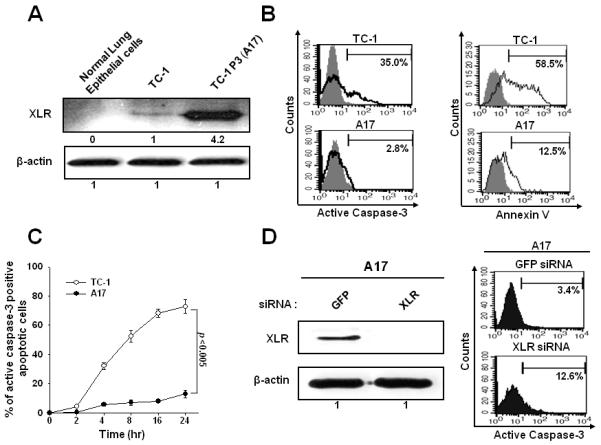
Tumor immune escape is a major obstacle in cancer immunotherapy, but the mechanisms involved remain poorly understood. We have previously developed an immune evasion tumor model using an in vivo immune selection strategy and revealed Akt-mediated immune resistance to antitumor immunity induced by various cancer immunotherapeutic agents. In the current study, we used microarray gene analysis to identify an Akt-activating candidate molecule overexpressed in immune-resistant tumors compared with parental tumors. X-linked lymphocyte-regulated protein pM1 (XLR) gene was the most upregulated in immune-resistant tumors compared with parental tumor cells. Furthermore, the retroviral transduction of XLR in parental tumor cells led to activation of Akt, resulting in upregulation of antiapoptotic proteins and the induction of immune resistance phenotype in parental tumor cells. In addition, we found that transduction of parental tumor cells with other homologous genes from the mouse XLR family, such as synaptonemal complex protein 3 (SCP3) and XLR-related, meiosis-regulated protein (XMR) and its human counterpart of SCP3 (hSCP3), also led to activation of Akt, resulting in the upregulation of antiapoptotic proteins and induction of immune resistance phenotype. Importantly, characterization of a panel of human cervical cancers revealed relatively higher expression levels of hSCP3 in human cervical cancer tissue compared with normal cervical tissue. Thus, our data indicate that ectopic expression of XLR and its homologues in tumor cells represents a potentially important mechanism for tumor immune evasion and serves as a promising molecular target for cancer immunotherapy.
肿瘤免疫逃逸是癌症免疫治疗的主要障碍,但相关机制仍知之甚少。我们之前使用体内免疫选择策略开发了一种免疫逃逸肿瘤模型,并揭示了 Akt 介导的对各种癌症免疫治疗药物诱导的抗肿瘤免疫的抵抗作用。在本研究中,我们使用微阵列基因分析鉴定了与亲本肿瘤相比在免疫抵抗肿瘤中过度表达的 Akt 激活候选分子。与亲本肿瘤细胞相比,X 连锁淋巴细胞调节蛋白 pM1(XLR)基因在免疫抵抗肿瘤中上调最为明显。此外,将 XLR 逆转录病毒转导至亲本肿瘤细胞中导致 Akt 激活,导致抗凋亡蛋白上调,并诱导亲本肿瘤细胞中出现免疫抵抗表型。此外,我们发现将其他同源基因(如联会复合体蛋白 3(SCP3)和 XLR 相关减数调控蛋白(XMR)及其人类 SCP3 同源物(hSCP3))转导至亲本肿瘤细胞也导致 Akt 激活,从而导致抗凋亡蛋白上调并诱导免疫抵抗表型。重要的是,对一组人宫颈癌的特征分析表明,与正常宫颈组织相比,hSCP3 在人宫颈癌组织中的表达水平相对较高。因此,我们的数据表明,肿瘤细胞中 XLR 及其同源物的异位表达代表了肿瘤免疫逃逸的一个潜在重要机制,并为癌症免疫治疗提供了一个有前途的分子靶标。