Moore Lauren R, Rajpal Gautam, Dillingham Ian T, Qutob Maya, Blumenstein Kate G, Gattis Danielle, Hung Gene, Kordasiewicz Holly B, Paulson Henry L, McLoughlin Hayley S
Department of Neurology, University of Michigan, Ann Arbor, MI 48109-2200, USA.
Ionis Pharmaceuticals, Carlsbad, CA 92008, USA.
Mol Ther Nucleic Acids. 2017 Jun 16;7:200-210. doi: 10.1016/j.omtn.2017.04.005. Epub 2017 Apr 12.
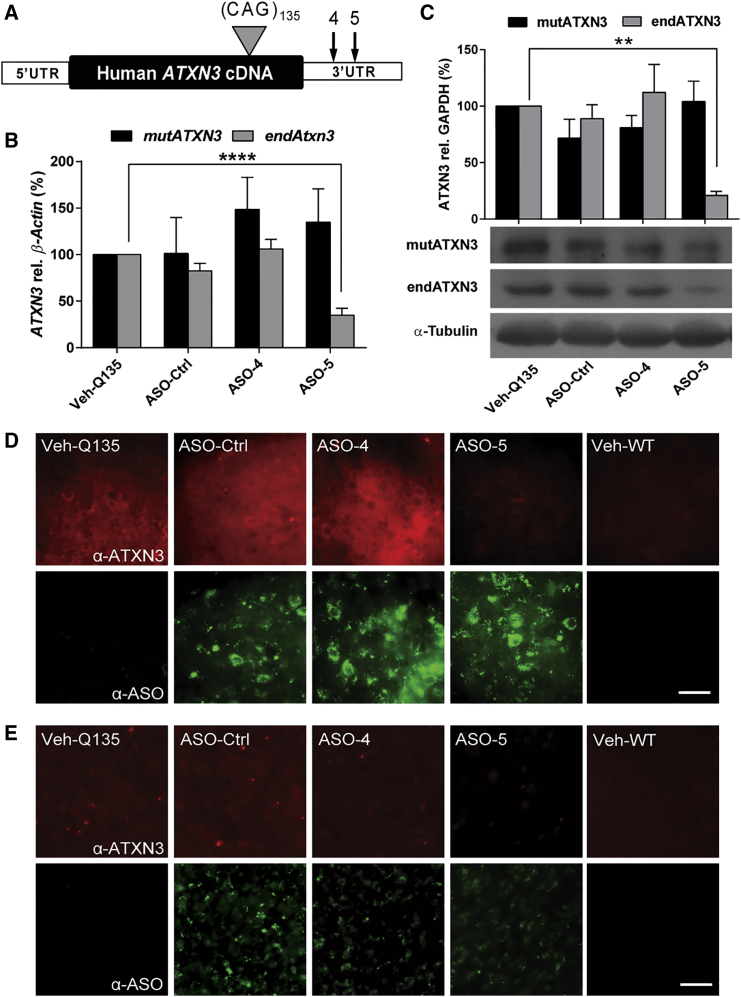
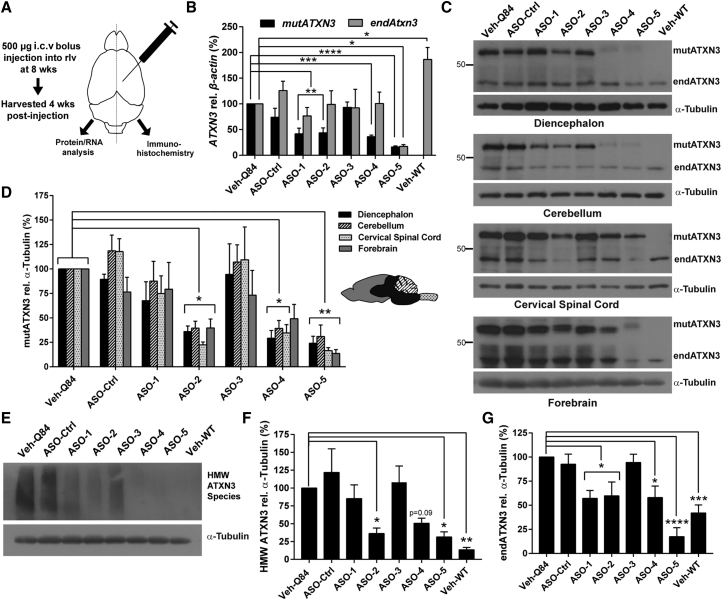
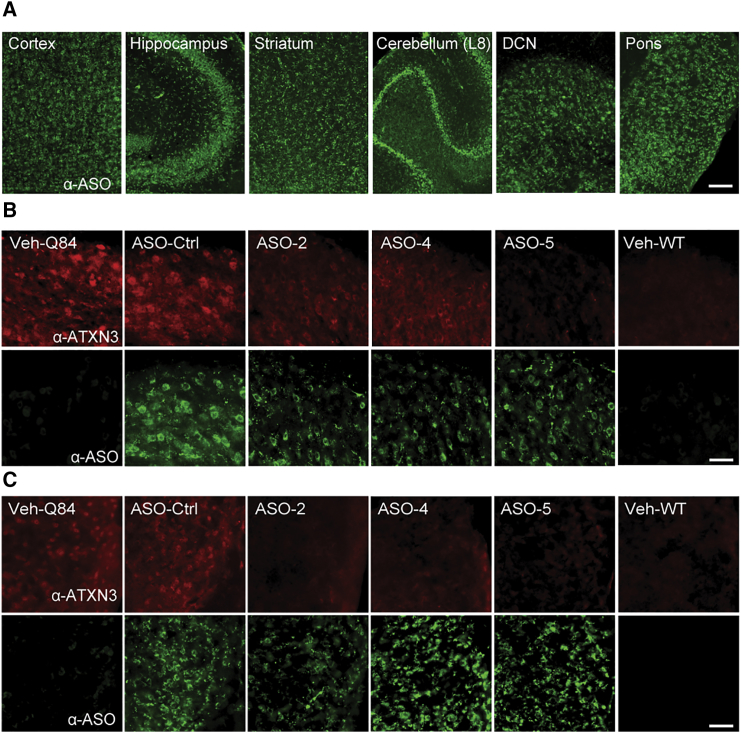
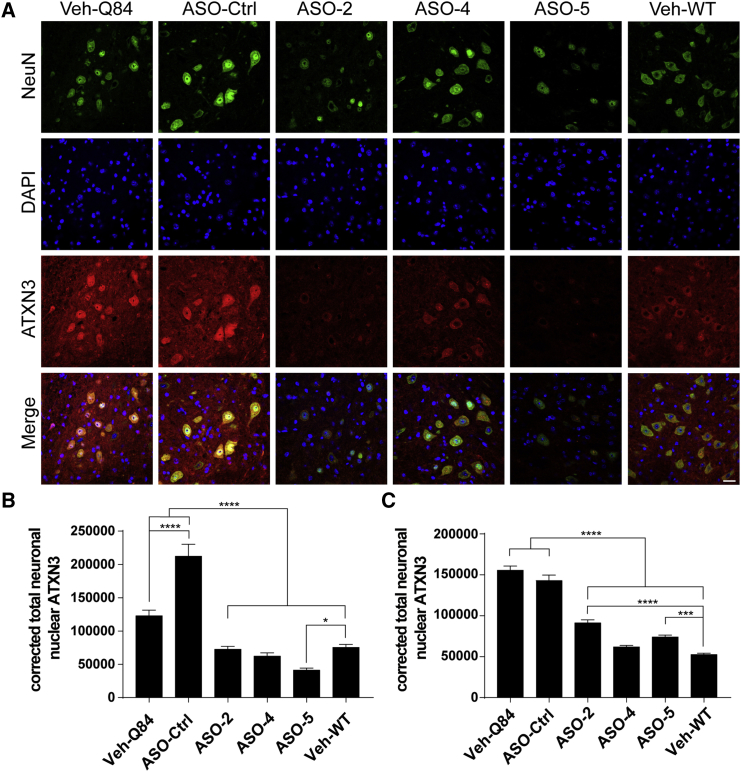
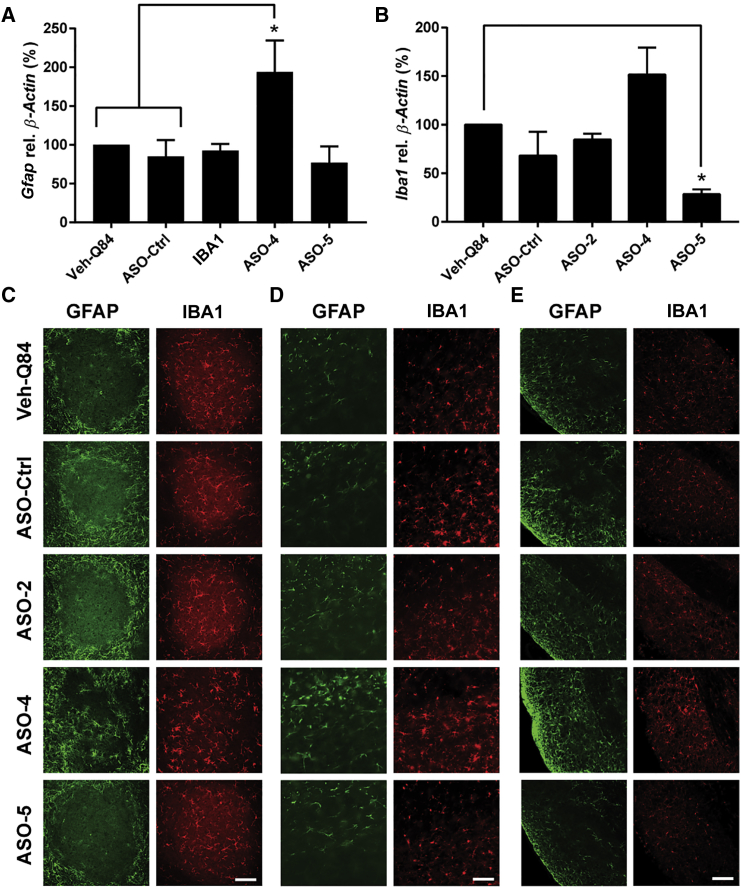
The most common dominantly inherited ataxia, spinocerebellar ataxia type 3 (SCA3), is an incurable neurodegenerative disorder caused by a CAG repeat expansion in the ATXN3 gene that encodes an abnormally long polyglutamine tract in the disease protein, ATXN3. Mice lacking ATXN3 are phenotypically normal; hence, disease gene suppression offers a compelling approach to slow the neurodegenerative cascade in SCA3. Here we tested antisense oligonucleotides (ASOs) that target human ATXN3 in two complementary mouse models of SCA3: yeast artificial chromosome (YAC) MJD-Q84.2 (Q84) mice expressing the full-length human ATXN3 gene and cytomegalovirus (CMV) MJD-Q135 (Q135) mice expressing a human ATXN3 cDNA. Intracerebroventricular injection of ASOs resulted in widespread delivery to the most vulnerable brain regions in SCA3. In treated Q84 mice, three of five tested ASOs reduced disease protein levels by >50% in the diencephalon, cerebellum, and cervical spinal cord. Two ASOs also significantly reduced mutant ATXN3 in the mouse forebrain and resulted in no signs of astrogliosis or microgliosis. In Q135 mice expressing a single ATXN3 isoform via a cDNA transgene, ASOs did not result in similar robust ATXN3 silencing. Our results indicate that ASOs targeting full-length human ATXN3 would likely be well tolerated and could lead to a preventative therapy for SCA3.
最常见的显性遗传性共济失调,即3型脊髓小脑共济失调(SCA3),是一种无法治愈的神经退行性疾病,由ATXN3基因中的CAG重复序列扩增引起,该基因编码的疾病蛋白ATXN3中有异常长的多聚谷氨酰胺链。缺乏ATXN3的小鼠在表型上是正常的;因此,抑制疾病基因提供了一种引人注目的方法来减缓SCA3中的神经退行性级联反应。在这里,我们在两种互补的SCA3小鼠模型中测试了靶向人类ATXN3的反义寡核苷酸(ASO):表达全长人类ATXN3基因的酵母人工染色体(YAC)MJD-Q84.2(Q84)小鼠和表达人类ATXN3 cDNA的巨细胞病毒(CMV)MJD-Q135(Q135)小鼠。脑室内注射ASO导致其广泛递送至SCA3中最易受损的脑区。在接受治疗的Q84小鼠中,五种测试的ASO中有三种在间脑、小脑和颈脊髓中使疾病蛋白水平降低了50%以上。两种ASO还显著降低了小鼠前脑中的突变型ATXN3,且未出现星形胶质细胞增生或小胶质细胞增生的迹象。在通过cDNA转基因表达单一ATXN3异构体的Q135小鼠中,ASO并未导致类似的强大的ATXN3沉默。我们的结果表明,靶向全长人类ATXN3的ASO可能具有良好的耐受性,并可能导致SCA3的预防性治疗。