Department of Neurology, University of Michigan, Ann Arbor, MI.
Ionis Pharmaceuticals, Carlsbad, CA.
Ann Neurol. 2018 Jul;84(1):64-77. doi: 10.1002/ana.25264. Epub 2018 Aug 6.
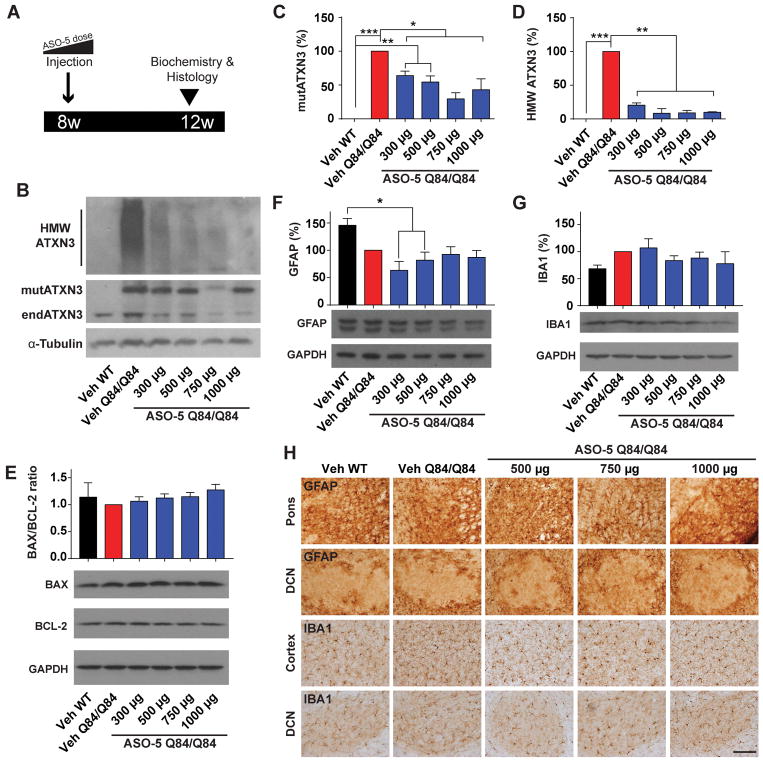
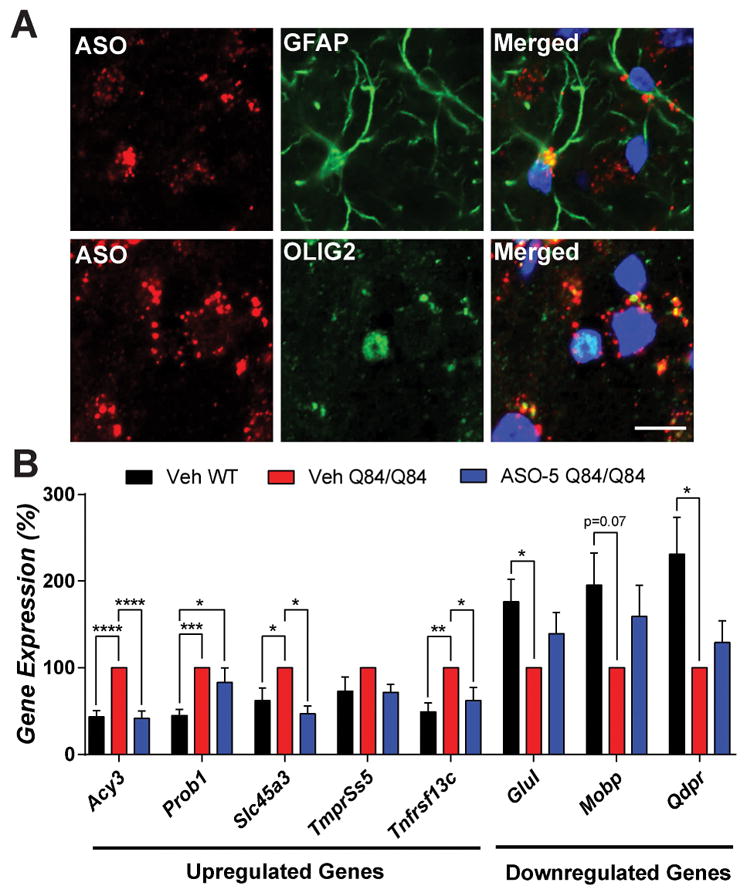
Spinocerebellar ataxia type 3 (SCA3), also known as Machado-Joseph disease, is the most common dominantly inherited ataxia. Despite advances in understanding this CAG repeat/polyglutamine expansion disease, there are still no therapies to alter its progressive fatal course. Here, we investigate whether an antisense oligonucleotide (ASO) targeting the SCA3 disease gene, ATXN3, can prevent molecular, neuropathological, electrophysiological, and behavioral features of the disease in a mouse model of SCA3.
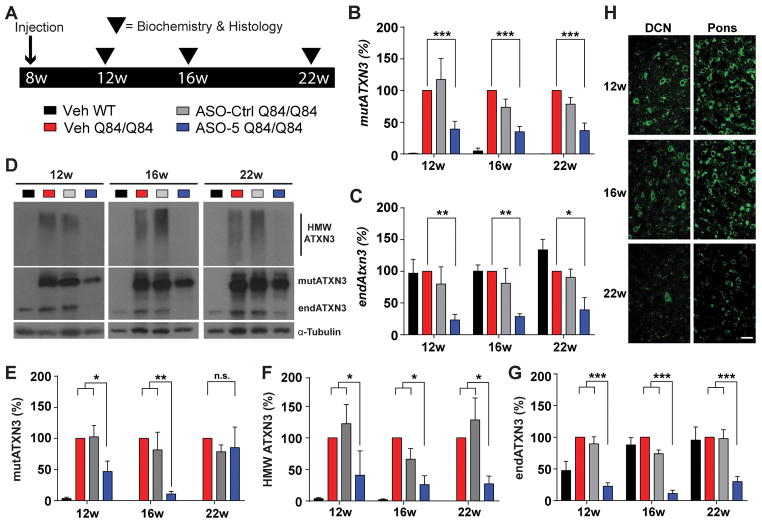
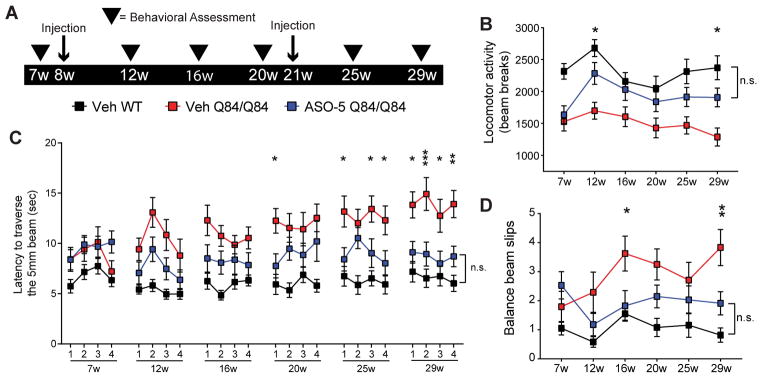
The top ATXN3-targeting ASO from an in vivo screen was injected intracerebroventricularly into early symptomatic transgenic SCA3 mice that express the full human disease gene and recapitulate key disease features. Following a single ASO treatment at 8 weeks of age, mice were evaluated longitudinally for ATXN3 suppression and rescue of disease-associated pathological changes. Mice receiving an additional repeat injection at 21 weeks were evaluated longitudinally up to 29 weeks for motor performance.
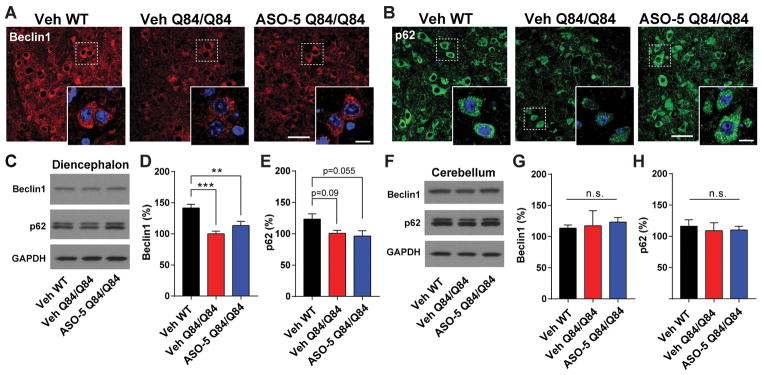
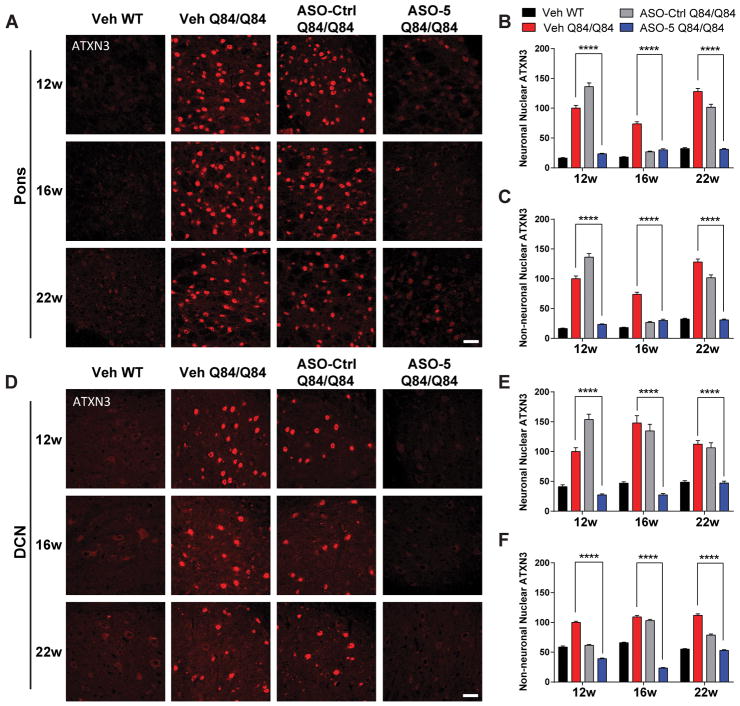
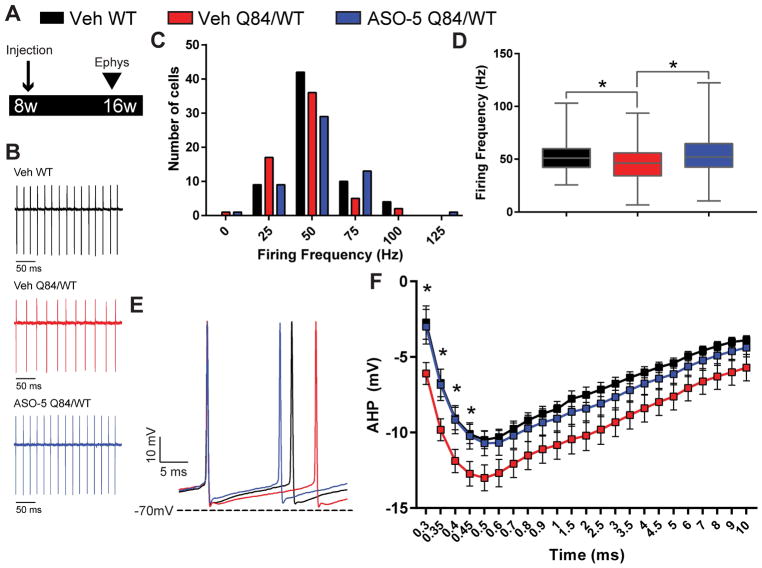
The ATXN3-targeting ASO achieved sustained reduction of polyglutamine-expanded ATXN3 up to 8 weeks after treatment and prevented oligomeric and nuclear accumulation of ATXN3 up to at least 14 weeks after treatment. Longitudinal ASO therapy rescued motor impairment in SCA3 mice, and this rescue was associated with a recovery of defects in Purkinje neuron firing frequency and afterhyperpolarization.
This preclinical study established efficacy of ATXN3-targeted ASOs as a disease-modifying therapeutic strategy for SCA3. These results support further efforts to develop ASOs for human clinical trials in this polyglutamine disease as well as in other dominantly inherited disorders caused by toxic gain of function. Ann Neurol 2018;83:64-77.
脊髓小脑共济失调 3 型(SCA3),又称 Machado-Joseph 病,是最常见的显性遗传性共济失调。尽管人们对这种 CAG 重复/多聚谷氨酰胺扩展疾病的认识有所提高,但仍没有能够改变其进行性致命病程的治疗方法。在这里,我们研究了一种针对 SCA3 疾病基因 ATXN3 的反义寡核苷酸(ASO)是否可以预防 SCA3 小鼠模型中的分子、神经病理学、电生理学和行为特征。
从体内筛选中选择的针对 ATXN3 的最佳 ASO 通过脑室内注射到表达完整人类疾病基因并重现关键疾病特征的早期有症状转基因 SCA3 小鼠中。在 8 周龄时进行单次 ASO 治疗后,对小鼠进行长期评估,以确定 ATXN3 的抑制和疾病相关病理变化的挽救情况。在 21 周时接受额外重复注射的小鼠,在 29 周之前进行长期评估,以评估运动表现。
该 ATXN3 靶向 ASO 在治疗后 8 周内持续降低多聚谷氨酰胺扩展的 ATXN3,并且至少在治疗后 14 周内阻止了 ATXN3 的寡聚体和核积累。长期 ASO 治疗可挽救 SCA3 小鼠的运动障碍,并且这种挽救与浦肯野神经元放电频率和后超极化缺陷的恢复有关。
这项临床前研究确立了针对 ATXN3 的 ASO 作为 SCA3 的疾病修饰治疗策略的疗效。这些结果支持进一步努力开发针对这种多聚谷氨酰胺疾病以及其他由毒性获得性功能引起的显性遗传性疾病的人类临床试验中的 ASO。神经病学年鉴 2018;83:64-77。