Di Minno Giovanni, Navarro David, Perno Carlo Federico, Canaro Mariana, Gürtler Lutz, Ironside James W, Eichler Hermann, Tiede Andreas
Dipartimento di Medicina Clinica e Chirurgia, Regional Reference Centre for Coagulation Disorders, Federico II University, Via S. Pansini 5, 80131, Naples, Italy.
Department of Microbiology, Microbiology Service, Hospital Clínico Universitario, School of Medicine, University of Valencia, Valencia, Spain.
Ann Hematol. 2017 Aug;96(8):1253-1270. doi: 10.1007/s00277-017-3028-4. Epub 2017 Jun 18.
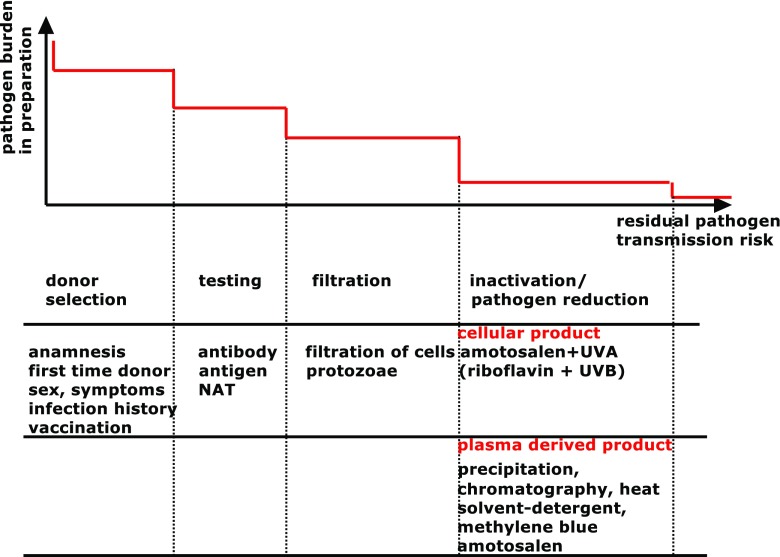
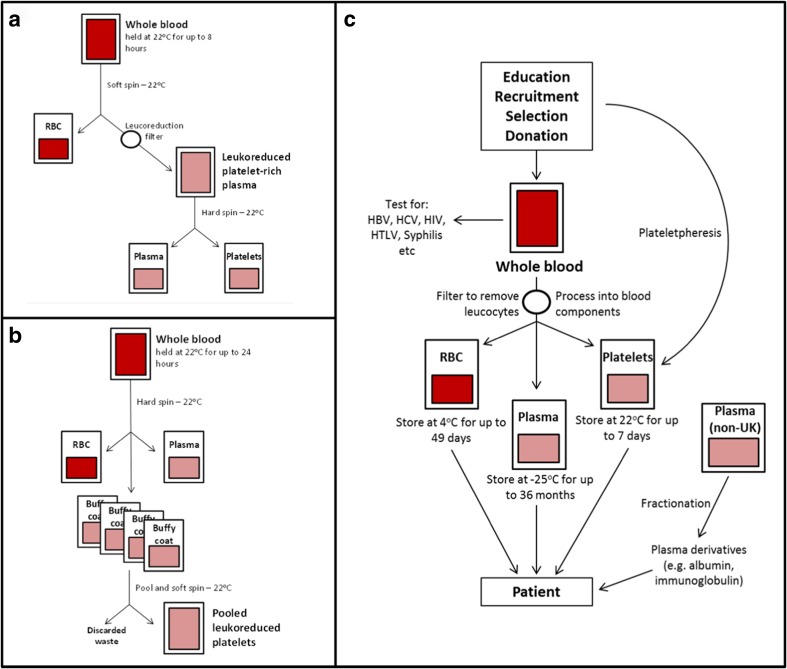
Patients with blood disorders (including leukaemia, platelet function disorders and coagulation factor deficiencies) or acute bleeding receive blood-derived products, such as red blood cells, platelet concentrates and plasma-derived products. Although the risk of pathogen contamination of blood products has fallen considerably over the past three decades, contamination is still a topic of concern. In order to counsel patients and obtain informed consent before transfusion, physicians are required to keep up to date with current knowledge on residual risk of pathogen transmission and methods of pathogen removal/inactivation. Here, we describe pathogens relevant to transfusion of blood products and discuss contemporary pathogen removal/inactivation procedures, as well as the potential risks associated with these products: the risk of contamination by infectious agents varies according to blood product/region, and there is a fine line between adequate inactivation and functional impairment of the product. The cost implications of implementing pathogen inactivation technology are also considered.
患有血液疾病(包括白血病、血小板功能障碍和凝血因子缺乏症)或急性出血的患者会接受血液衍生产品,如红细胞、血小板浓缩物和血浆衍生产品。尽管在过去三十年中,血液制品病原体污染的风险已大幅下降,但污染仍是一个令人担忧的问题。为了在输血前为患者提供咨询并获得知情同意,医生需要及时了解病原体传播残留风险和病原体去除/灭活方法的最新知识。在此,我们描述与血液制品输血相关的病原体,并讨论当代病原体去除/灭活程序以及与这些产品相关的潜在风险:感染性因子污染的风险因血液制品/地区而异,并且在产品充分灭活和功能受损之间存在微妙的界限。还考虑了实施病原体灭活技术的成本影响。