Akel Reem, Anouti Bilal, Tfayli Arafat
Division of Hematology and Oncology, Department of Internal Medicine, American University of Beirut, Beirut, Lebanon.
Case Rep Oncol. 2017 May 23;10(2):456-461. doi: 10.1159/000475709. eCollection 2017 May-Aug.
Antitumor immunotherapy has become a major player in cancer therapy. Ipilimumab is a humanized monoclonal antibody against the cytotoxic T lymphocyte-associated antigen 4 (CTLA-4), an important downregulator of T-cell activation. Ipilimumab has demonstrated tumor regression and improvement in overall survival in patients with metastatic melanoma. Unfortunately, immune activation induced by this drug has been associated with several immune-mediated adverse effects, namely diarrhea and colitis.
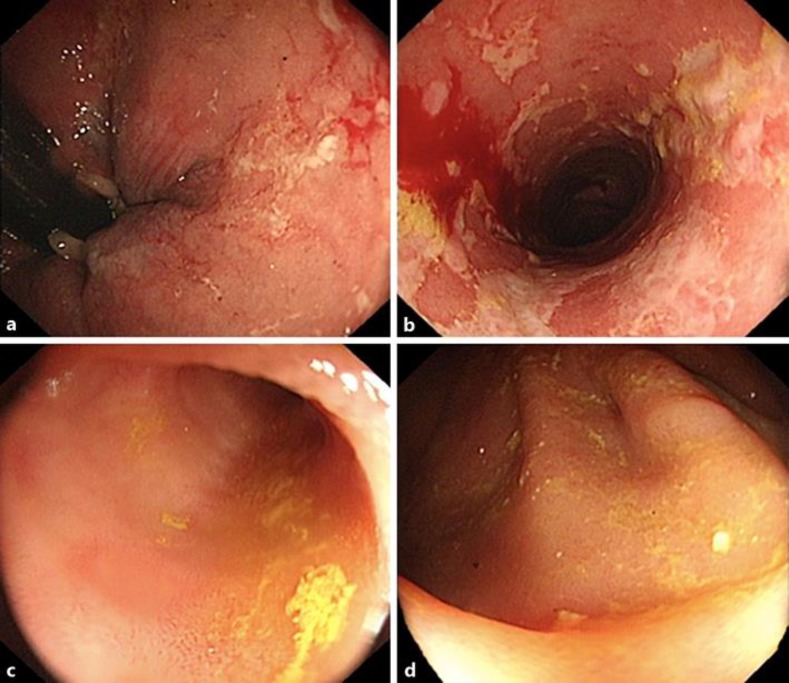
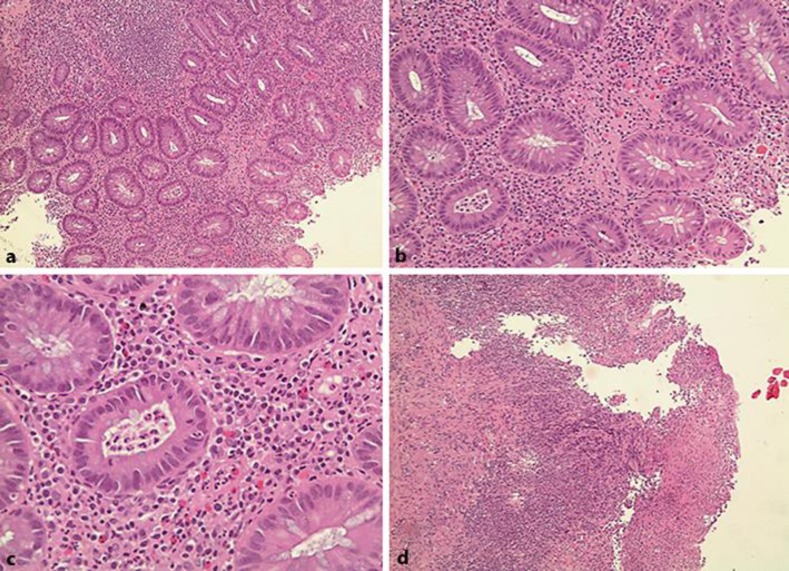
We report the case of a 71-year-old male patient diagnosed with BRAF wild-type metastatic melanoma treated with three cycles of ipilimumab, after which he developed grade 3 enteritis. The patient improved on treatment with steroids, and ipilimumab was permanently discontinued at this point. Three years later, the patient's diarrhea returned and colonoscopy revealed active chronic colitis with ulceration resembling inflammatory bowel disease. He was started on Asacol (mesalamine). The patient did not report extraintestinal symptoms typically associated with inflammatory bowel disease, nor did he have a personal or family history of bowel disorders. Moreover, his presentation was not typical of inflammatory bowel disease in the elderly.
Our findings suggest a link between ipilimumab-induced grade 3 enteritis and late-onset inflammatory bowel disease-like syndrome. To our knowledge, the case is the first in the literature to report late-onset inflammatory bowel disease-like syndrome years after discontinuation of ipilimumab treatment.
抗肿瘤免疫疗法已成为癌症治疗的主要手段。伊匹木单抗是一种针对细胞毒性T淋巴细胞相关抗原4(CTLA-4)的人源化单克隆抗体,CTLA-4是T细胞活化的重要负调节因子。伊匹木单抗已在转移性黑色素瘤患者中显示出肿瘤消退和总生存期改善。不幸的是,该药物诱导的免疫激活与几种免疫介导的不良反应相关,即腹泻和结肠炎。
我们报告了一例71岁男性患者,诊断为BRAF野生型转移性黑色素瘤,接受了三个周期的伊匹木单抗治疗,之后出现了3级肠炎。患者经类固醇治疗后病情好转,此时伊匹木单抗被永久停用。三年后,患者腹泻复发,结肠镜检查显示为活动性慢性结肠炎伴溃疡,类似炎症性肠病。他开始服用艾迪莎(美沙拉嗪)。患者未报告通常与炎症性肠病相关的肠外症状,也没有肠道疾病的个人或家族史。此外,他的表现并不典型于老年人的炎症性肠病。
我们的研究结果表明伊匹木单抗诱导的3级肠炎与迟发性炎症性肠病样综合征之间存在联系。据我们所知,该病例是文献中首例报告在停用伊匹木单抗治疗数年之后出现迟发性炎症性肠病样综合征的病例。